
Perch
Perca
Description
How to identify
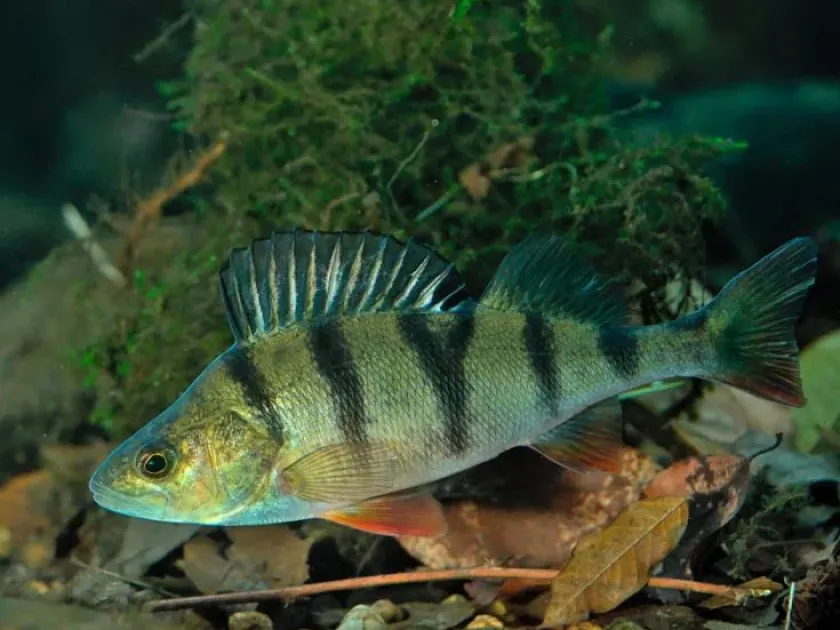
The European perch (Latin: Perca fluviatilis) is a predatory fish species belonging to the Percidae family and the Perciformes order.
It is characterized by a deep, laterally compressed body covered with small, ctenoid scales. The dorsal side typically features a dark greenish hue.
The most distinctive visual trait is the presence of 5 to 9 dark, vertical bands along its flanks, which provide excellent camouflage in aquatic vegetation.
The dorsal fin is split into two parts: the anterior, spiny portion and the posterior, soft portion, which serves as a defense mechanism against predators.
Adult specimens typically reach lengths of 15 to 30 cm, although, under optimal environmental conditions, some individuals can grow significantly larger.
What it damages
In the agricultural and aquaculture sectors, the perch is often viewed as a pest when it infiltrates ponds intended for raising other fish species.
As an aggressive predator, the perch consumes the fry of target species such as carp, leading to significant economic losses for commercial fish farms.
Perch populations compete for limited resources, including zooplankton and aquatic insect larvae, effectively stripping the pond of natural food supplies.
Their high reproductive rate and competitive nature allow them to dominate artificial ecosystems, displacing more desirable and less aggressive fish species.
In irrigation systems or agricultural reservoirs, their presence can destabilize the ecological balance, impacting the overall productivity of the water body.
When it appears
Perch activity intensifies during the spring and summer months, corresponding with rising water temperatures and increased metabolic rates.
Spawning occurs early in the spring, typically between March and April, when the fish migrate to shallow areas to lay eggs on aquatic plants or debris.
Throughout the summer, perch are highly active, hunting in the littoral zones where they utilize cover to ambush their prey throughout the day.
During the autumn, perch continue to feed intensively to build up energy reserves before the onset of winter temperatures.
In winter, while their activity levels decrease, they do not enter true hibernation and continue to impact the aquatic ecosystem even under ice cover.
Signs of infestation
A primary indicator of a perch infestation is the rapid and unexplained disappearance of fry or juvenile fish within the aquaculture pond.
Frequent captures during routine net sampling or monitoring indicate that the perch population has successfully established itself within the system.
Visual observation of small fish scattering at the surface near shorelines often suggests predatory activity by perch hiding within the vegetation.
A noticeable decline in the density of beneficial aquatic insects and small invertebrates serves as a strong signal of predator dominance.
The presence of spiked dorsal fins in catch records is a clear confirmation of the species' presence in the controlled water environment.
Control measures
Physical barriers such as fine-mesh filters on inlet pipes are essential to prevent the eggs and juveniles of perch from entering aquaculture ponds.
Complete drainage and thorough drying of ponds between production cycles are highly effective for eliminating perch populations and their eggs.
Regular systematic harvesting using nets and traps helps maintain the perch population below a threshold that would cause significant economic damage.
Biological control methods, such as stocking higher-level predators, can be utilized to keep the perch population in check within larger water bodies.
Strict biosecurity measures, including the inspection of stocking materials, are critical to prevent accidental introduction of unwanted species into farming zones.
Taxonomy
- Latin name
- Perca
- Family
- Percidae
- EPPO code
- PECASP
Discussion
No discussions yet — be the first.