
Rose aphid
Pentatrichopus
Description
How to identify
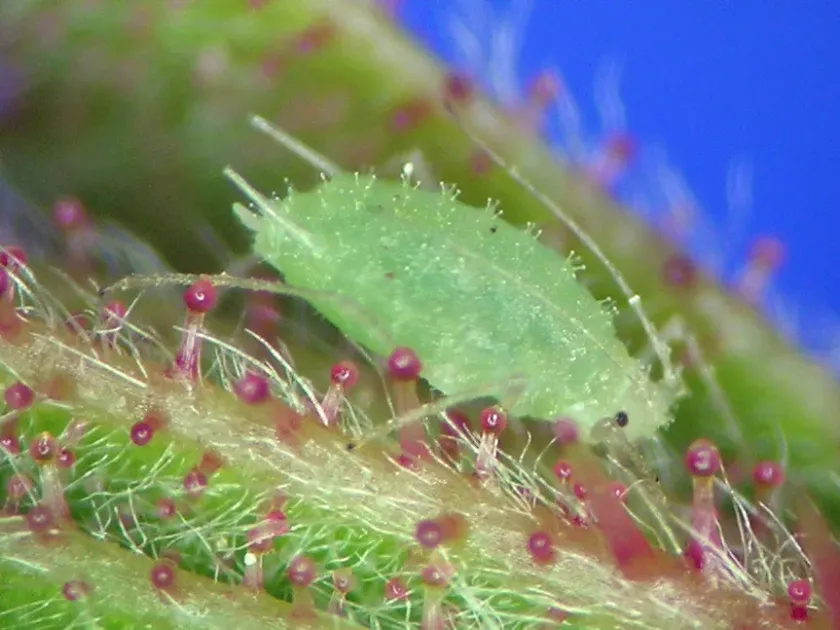
The rose aphid (genus Pentatrichopus) is a small sap-sucking insect belonging to the family Aphididae. These pests are typically 1.5 to 2.5 mm long and possess a body color that ranges from pale yellow to light green, providing effective camouflage among rose leaves.
The genus is identified by specific setal structures on its body, which differentiates it from other common aphid species. They exhibit both wingless and winged morphs, where winged individuals allow for rapid dispersal across gardens during the peak season.
These insects reproduce through a cycle that involves both sexual and asexual phases. During the growing season, they reproduce via parthenogenesis, allowing populations to explode in size within just a few days.
Colonies are frequently found on the undersides of leaves and on tender new shoots. They are social insects that thrive in high-density groups, often accompanied by symbiotic ant species.
Close inspection of the underside of leaves will reveal these tiny insects, often clustered together. Their presence is usually indicated by the rapid discoloration of young foliage.
What it damages
Rose aphids target plants of the Rosaceae family, primarily ornamental and garden roses. They pierce the epidermis of the plant with their mouthparts to extract nutrient-rich phloem sap.
The damage caused by Pentatrichopus includes the stunting of shoot growth, curling of leaves, and the deformation of developing flower buds. This renders the plant aesthetically unappealing and disrupts its natural growth trajectory.
Aphids excrete a sticky, sugar-rich substance known as honeydew. This substance accumulates on the foliage and serves as a substrate for sooty mold, a dark fungal growth that inhibits photosynthesis.
Furthermore, these aphids act as vectors for various plant viruses. Once transmitted, these viruses can cause irreversible systemic damage to the rose bush, leading to long-term decline.
In commercial nursery settings, a significant infestation can lead to the total loss of marketable stock, as affected flowers fail to bloom properly or show severe physical deformity.
When it appears
The life cycle initiates in early spring as overwintering eggs hatch upon the emergence of new rose shoots. This marks the start of the first generation of the season.
Population density typically peaks during the warm, dry weather of late spring and early summer. During these months, the insects multiply rapidly, taking advantage of the high availability of tender plant tissue.
As autumn approaches and day length decreases, the population produces sexual forms that lay eggs. These eggs are laid on the woody stems of the rose bush, remaining dormant throughout the winter until spring.
The rate of reproduction is highly sensitive to environmental factors. Extended periods of warmth favor population growth, while heavy rainfall can physically dislodge colonies from the plant.
Gardeners must remain vigilant from the moment the first leaves appear in March or April, as early intervention is crucial to preventing a season-long infestation.
Signs of infestation
The most immediate sign of an infestation is the appearance of curled or wrinkled foliage at the tips of new shoots. These leaves often appear paler than the rest of the plant.
- Sticky residue (honeydew) covering the leaves and stems.
- Increased ant activity around the rose bushes.
- Yellowing and wilting of buds.
- Presence of discarded white molted skins on the leaf surfaces.
- Deformed or stunted growth of new terminal shoots.
Observing a large number of ants on a rose bush is a strong indicator of an aphid colony, as ants 'farm' the aphids for their sugary honeydew secretions.
If buds are failing to open or are covered in a sticky substance, it is highly likely that an active colony of Pentatrichopus is present and requires immediate management.
Control measures
Cultural control is the first line of defense. This includes pruning back heavily infested shoots in early spring to remove overwintering eggs and reduce the initial population size.
For minor infestations, physical removal using a forceful jet of water can effectively knock the aphids off the foliage. Natural predators, such as ladybugs and lacewing larvae, should be encouraged in the garden.
Soap-based sprays or horticultural oils can be applied to coat the insects, causing suffocation. These are generally safer alternatives to synthetic chemicals in home garden environments.
In cases of severe infestation, systemic insecticides are the most effective solution. These are absorbed by the plant tissues, killing the pests from within and providing longer-lasting protection.
It is essential to rotate different types of insecticides to prevent the development of resistance. Always follow the product label instructions to ensure effective control and minimize impact on beneficial pollinators.
Taxonomy
- Latin name
- Pentatrichopus
- Order
- Hemiptera (bugs, aphids, leafhoppers)
- Family
- Aphididae
- EPPO code
- PENTSP
Discussion
No discussions yet — be the first.