
Banana aphid
Pentalonia
Description
How to identify
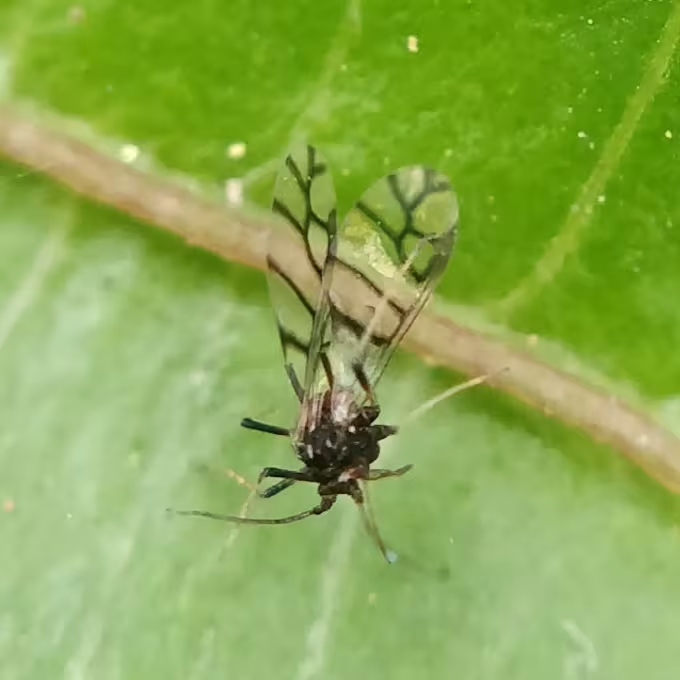
The banana aphid (Pentalonia nigronervosa) is a member of the order Hemiptera, family Aphididae. These are tiny insects, typically measuring 1 to 1.5 mm, characterized by a dark brown to black body coloration.
The most distinctive feature of this species is the presence of dark, thick veins on their transparent wings, a trait captured by its scientific name. Both winged and wingless forms exist, which aids in their rapid dispersal across crops.
The lifecycle is primarily parthenogenetic and viviparous, meaning females give birth to live young without mating. This reproductive strategy allows colonies to build up to massive numbers extremely quickly under favorable warm and humid conditions.
These aphids are elusive, preferring to congregate in hidden locations such as leaf sheaths, undersides of leaves, and curled young shoots. They are frequently found in mutualistic associations with ants, which protect them from natural predators.
Widely distributed throughout tropical and subtropical regions, this pest is a significant concern for banana production globally. In temperate climates, it primarily affects banana plants kept in greenhouses and conservatory environments.
What it damages
While the banana is the primary host, the pest also attacks various other plants including Heliconia, ginger, Strelitzia, and various ornamental tropical flora. The range of host plants expands in highly humid environments.
The aphid feeds by sucking phloem sap from the tender tissues of leaves and inflorescences. These feeding punctures cause direct mechanical damage and facilitate the entry of pathogens into the plant tissues.
The most devastating aspect of their presence is that they serve as the primary vector for the Banana bunchy top virus (BBTV). This viral disease is catastrophic for commercial plantations and currently has no known cure.
Infestation leads to reduced plant vigor, stunted growth, and significantly lowered yields. The cosmetic appearance of the plant suffers as leaves become distorted and chlorotic due to the continuous loss of nutrients to the feeding aphids.
The spread of this pest is primarily facilitated by the movement of infested planting materials. Lack of stringent phytosanitary protocols during the trade and transport of tropical nursery stock is the leading cause of new infestations.
Signs of infestation
An early sign of infestation is the discovery of dark aphid colonies clustered at the base of leaves or within the heart of the plant. A close inspection often reveals sticky honeydew, a sugary excretion left behind by the aphids.
This honeydew serves as a growth medium for sooty mold, which manifests as a black, velvety film covering the leaves. This coating hinders photosynthesis and significantly weakens the overall health of the plant.
Symptoms of BBTV infection include narrow, upright leaves with yellow, wavy margins. The plant eventually takes on a stunted "rosette" or "bunchy" appearance, which is the classic diagnostic indicator of this virus.
Severe deformation of young shoots and stems is common. Infected plants essentially stop growing as the virus systemically disrupts the plant's vascular transport, eventually leading to the death of the specimen.
Heavy ant activity on or around the banana plant is a strong indicator of an aphid colony. The ants "farm" the aphids for their honeydew, creating a protective barrier that interferes with biological control agents.
Control measures
The most critical management step is sourcing clean, virus-free planting material. Quarantine and inspection of all new arrivals are essential to prevent the accidental introduction of the aphid or the virus into a new area.
Mechanical control, such as pruning and destroying heavily infested leaves, can help reduce population density. In home garden settings, consistent application of insecticidal soaps or neem oil can effectively manage smaller populations.
For large-scale infestations, systemic insecticides are often required. Products containing neonicotinoids are particularly effective as they are absorbed into the plant sap, targeting the aphids hidden within the leaf sheaths.
Managing local ant populations is crucial, as their presence prevents the action of natural predators like ladybirds and lacewings. By disrupting the ant-aphid relationship, natural control can be restored to some degree.
Plants confirmed to be infected with the banana bunchy top virus must be eradicated immediately to stop the spread. Strict hygiene and integrated pest management (IPM) practices are required to maintain healthy plantations.
Taxonomy
- Latin name
- Pentalonia
- Order
- Hemiptera (bugs, aphids, leafhoppers)
- Family
- Aphididae
- EPPO code
- PENLSP
Discussion
No discussions yet — be the first.