
Poplar gall aphid
Pemphigus vulgaris
Description
How to identify
Pemphigus vulgaris is a member of the Aphididae family, belonging to the order Hemiptera. This species is widely recognized for its unique ability to induce the formation of galls on poplar leaves, serving as a protective habitat for its colonies.
The insects are small and soft-bodied, specialized for existence within the internal structures of host plants. Their lifecycle is complex, involving migration between primary hosts like poplars and secondary herbaceous plants throughout the growing season.
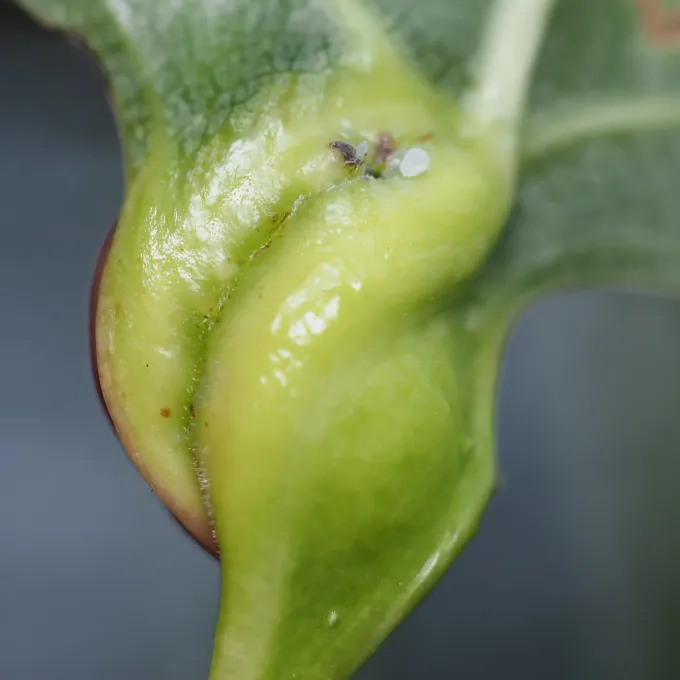
The most distinctive identification feature is the presence of ball-shaped or pear-shaped galls on the leaf petioles of poplar trees. These galls are created in response to secretions from the aphids, which alter the plant's growth pattern.
Inside these galls, aphids live in protected colonies, shielded from environmental stressors and most predators. This specialized behavior allows them to sustain large populations even in exposed outdoor environments.
These aphids go through several developmental stages within the gall. The final stages typically involve the production of winged individuals that emerge from the gall to migrate to secondary host plants for further reproduction.
What it damages
The primary hosts for Pemphigus vulgaris are various species of the genus Populus, especially the black poplar. Younger trees and saplings are particularly susceptible, as their rapid growth makes tissues more responsive to gall induction.
The formation of galls on leaf petioles interferes with the flow of nutrients and water to the leaves, which can cause leaf deformation and reduced photosynthetic efficiency. This negatively impacts the tree's overall vigor and growth rates.
Heavy infestations often lead to premature leaf drop, which significantly weakens the trees before winter. This state of stress makes the affected trees much more prone to secondary infections, bark diseases, and attacks by wood-boring insects.
In landscaping and forestry, the aesthetic and commercial value of poplar trees is degraded by the presence of these galls. Dense populations can cause significant canopy thinning and persistent structural damage to the foliage.
Furthermore, the sugary honeydew secreted by the aphids can lead to the growth of sooty mold, which covers the leaf surface, further obstructing gas exchange and photosynthesis, leading to an overall decline in plant health.
When it appears
The activity of the poplar gall aphid commences in early spring when overwintering eggs hatch. The foundress aphids immediately seek out young, developing leaf petioles to initiate gall formation.
Late May through June represents the peak period for gall development. During these months, the galls grow significantly in size, and the internal populations of the aphid colonies reach their maximum density.
By mid-summer, typically in July or August, winged migratory forms emerge and leave the poplar trees. The galls then become vacant, eventually drying out and leaving the petioles scarred and vulnerable to rot.
Autumn brings the return of the population to the primary host trees, where they lay their overwintering eggs within the bark crevices. This completes the cycle and ensures the survival of the species through the dormant season.
Timely monitoring during the initial spring growth phase is essential for effective pest management, as intervention is most successful before the galls have fully developed and hardened.
Control measures
Managing Pemphigus vulgaris requires a strategic approach. The use of systemic insecticides is considered the most effective method, as the chemicals are absorbed by the tree and reach the aphids hidden inside the protective galls.
Chemical applications should be timed correctly, targeting the early spring stage when foundresses are first colonizing the newly formed leaves. This prevents the initial establishment of the galls.
Cultural practices are also important in reducing pest pressure. Removing and destroying infested foliage during the period when aphids are still within the galls can help minimize local population levels.
- Systemic insecticides with translaminar activity are recommended.
- Encouraging the presence of natural predators like lacewings and ladybirds.
- Pruning and destroying severely infested shoots in private gardens and nurseries.
Regular inspection of poplar stands during the spring is crucial. Early detection allows for localized treatments, which significantly reduces the need for widespread chemical spraying later in the season.
Taxonomy
- Latin name
- Pemphigus vulgaris
- Order
- Hemiptera (bugs, aphids, leafhoppers)
- Family
- Aphididae
- EPPO code
- PEMPVU
Discussion
No discussions yet — be the first.