
Poplar bladder gall aphid
Pemphigus vesicarius
Description
How to identify
The Poplar bladder gall aphid, scientifically known as Pemphigus vesicarius, belongs to the family Pemphigidae. It is a specialized insect known for forming peculiar gall structures on poplar trees.
These aphids are characterized by their complex life cycle, involving host alternation between poplar trees and herbaceous plants, typical of many species within this genus.
The insects produce protective waxy secretions that cover their bodies, providing a stable microclimate while they reside inside the galls on the leaves of their primary host.
The taxonomy of this species is based on the specific morphological traits of the galls they form, which are unique to the host plant species they parasitize.
Understanding their systematic position helps arborists apply correct control measures, as these aphids differ significantly in behavior from common leaf-feeding aphids.
What it damages
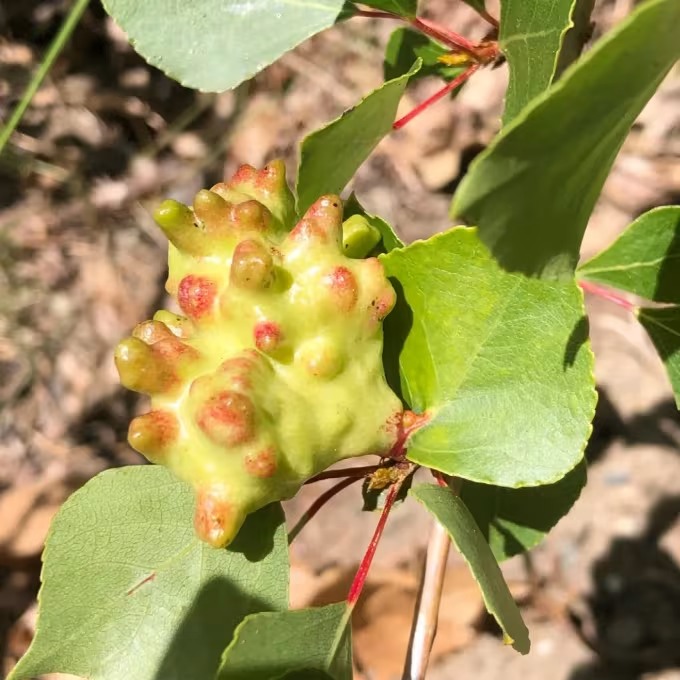
The primary host for this pest is the poplar tree, where the insects induce the formation of bladder-like galls on the petioles or the leaf blades themselves.
These galls disrupt the natural physiological functions of the leaves, primarily photosynthesis, which can lead to reduced tree vigor and stunted growth over several seasons.
During the summer months, the aphids migrate to secondary host plants, typically members of the Asteraceae family, where they continue to develop on the root systems.
In ornamental landscaping and urban forestry, the presence of these galls diminishes the aesthetic value of the trees and can lead to premature leaf drop during the summer.
Young trees in nurseries are particularly susceptible to damage, which can jeopardize the health and marketability of saplings if infestation rates are high.
When it appears
The biological cycle commences in early spring when overwintering eggs hatch, and the stem mothers begin feeding on the developing buds of the poplar trees.
Gall formation occurs rapidly as the leaves expand, usually between May and June, coinciding with the most active period of the aphid's spring development.
The migration of winged adults to secondary host plants takes place in mid-to-late summer, after which the primary host tree is freed from the direct presence of the aphid colonies.
As autumn approaches, winged forms return to the poplar trees to mate and lay overwintering eggs in the crevices of the bark, ensuring the survival of the next generation.
Monitoring for signs of gall development is most effective during the late spring, which is the key window for identifying the onset of an infestation.
Signs of infestation
The most distinctive sign is the appearance of bladder-like galls on the poplar leaves, which look like small, swollen, spherical or oval structures.
The coloration of these galls often shifts from a light, vibrant green to reddish or brownish shades as they mature during the warmer summer months.
Leaf curling and localized tissue distortion are often observed in the vicinity of the galls, providing visual evidence of the aphid's feeding activity.
Sticky honeydew secretions may occasionally be found on the foliage beneath the galls, indicating an active colony thriving within the protected growth.
Early leaf senescence or shedding observed in mid-summer is a clear indicator that the tree has been under significant stress from aphid colonization.
Control measures
Effective control requires timely intervention, ideally with systemic insecticides applied early in the season before the galls have completely enclosed the aphid colonies.
Cultural practices, such as maintaining healthy soil conditions and ensuring adequate hydration, help trees resist the negative effects of the aphid infestation.
In smaller settings or nurseries, the manual removal and destruction of heavily infested leaves can help reduce the local population of the pest.
Biological control methods involve encouraging the presence of natural predators, such as lady beetles and lacewing larvae, which prey on aphids during various stages.
- Systemic insecticide treatments applied during budding.
- Sanitation by pruning and destroying heavily infested twigs.
- Monitoring programs to track aphid migration cycles.
Taxonomy
- Latin name
- Pemphigus vesicarius
- Order
- Hemiptera (bugs, aphids, leafhoppers)
- Family
- Aphididae
- EPPO code
- PEMPVE
Discussion
No discussions yet — be the first.