
Poplar gall aphid
Pemphigus transversus
Description
How to identify
The poplar gall aphid (Pemphigus transversus) belongs to the order Hemiptera and the Aphididae family. This pest is characterized by a complex life cycle that involves alternating between a primary woody host and secondary herbaceous hosts.
Adults and nymphs possess specialized mouthparts for sap-feeding. The most striking biological feature is the formation of galls — abnormal outgrowths on leaf petioles that provide a protective microenvironment for the developing aphid colony.
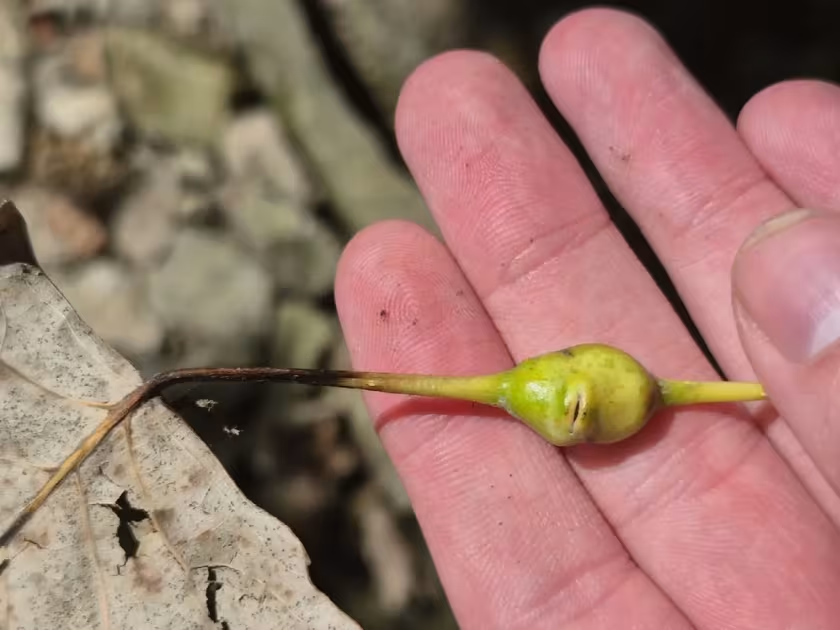
Identification is primarily based on the presence of distinct transverse galls on the petioles of poplar leaves. These galls are distinct structural modifications of the plant tissue induced by the aphid's saliva during feeding.
Detailed identification of the species usually requires professional entomological assessment due to the similarity of species within the Pemphigus genus. However, for agricultural management, the presence of these specific galls is sufficient for identifying a current infestation.
The aphid's biology relies on this unique ability to manipulate host plant growth, ensuring a stable environment for reproduction before migrating to secondary hosts during the summer season.
What it damages
Primary damage occurs on poplar trees, particularly the black poplar, where the formation of galls on petioles interrupts the normal nutrient transport of the leaf. This often leads to premature leaf senescence and defoliation.
In the secondary stage of the life cycle, the aphids infest the roots of various herbaceous plants. This can result in significant stunting and loss of plant vigor, making it a latent threat to field crops and garden vegetables.
In urban forestry, the aesthetic impact of deformed, gall-covered leaves can be substantial, leading to decreased tree health and increased susceptibility to secondary stressors like pathogens and drought.
For vegetable crops, root infestations interfere with nutrient uptake. Affected plants may show signs of yellowing and wilting, which can be easily confused with soil-borne fungal diseases, often leading to misdiagnosis.
The cumulative damage includes both the loss of tree biomass and reduced yields in secondary host crops, necessitating a dual approach to pest monitoring in areas where poplars are prevalent near agricultural fields.
When it appears
The seasonal cycle begins in spring when overwintering eggs on poplar bark hatch into fundatrices. These initial nymphs immediately seek out developing buds to establish colonies.
Gall formation occurs during late spring and early summer, coinciding with the rapid growth of leaves. The colony thrives within the protective gall structure, shielded from environmental elements and predators.
Mid-summer marks the dispersal phase, where winged aphids emerge from the galls and migrate to the roots of secondary host plants. This transition is highly dependent on humidity and soil temperature levels.
As autumn approaches, the cycle reverses. Winged adults return to the poplar host, where they produce sexual offspring that mate and lay overwintering eggs, ensuring the species survives the winter.
Weather patterns in early spring are critical for population success, as cold snaps or dry periods can limit the establishment of the first generation on the primary host.
Signs of infestation
The primary symptom of an infestation is the appearance of conspicuous, swollen galls on the petioles of poplar leaves. These galls are often transverse, giving them a segmented appearance.
Opening the gall reveals a dense cluster of aphids, often covered in a white, waxy secretion that protects them from desiccation and dampness within the gall cavity.
On secondary hosts, the signs are more covert. Plants may exhibit unexpected wilting during the heat of the day, as the root damage compromises the plant's hydraulic system.
Upon inspecting the root zone, one may notice a white, powdery, or waxy substance clinging to the roots, which is a sign of an active colony feeding below the soil surface.
As the infestation progresses, secondary hosts show severe chlorosis and stunted growth, often followed by plant collapse if the aphid population is dense enough to critically damage the root structure.
Control measures
Sanitation is a key control measure for poplar trees. Removing and destroying infested twigs before the winged migrants emerge in mid-summer helps break the dispersal cycle.
Systemic insecticides applied during the early spring 'green tip' stage can prevent the formation of galls by targeting the initial colonizing nymphs before they establish secure sites.
For vegetable crops, keeping areas free of weeds that serve as alternative hosts for the aphid's root-feeding stage is essential for reducing population pressure.
Where root infestations are confirmed in crops, soil drenching with authorized systemic insecticides can be used to control the colony within the rhizosphere without affecting the harvestable foliage.
- Applying dormant oil or early spring insecticide sprays on poplars.
- Pruning infested branches during June to remove gall populations.
- Maintaining field hygiene to eliminate weed reservoirs.
- Using sticky traps to monitor the migration of winged aphids during summer.
Taxonomy
- Latin name
- Pemphigus transversus
- Order
- Hemiptera (bugs, aphids, leafhoppers)
- Family
- Aphididae
- EPPO code
- PEMPTR
Discussion
No discussions yet — be the first.