
Poplar-crucifer aphid
Pemphigus populitransversus
Description
How to identify
The poplar-crucifer aphid (Pemphigus populitransversus) is a specialized insect species belonging to the family Aphididae. It is known for a complex life cycle that alternates between two distinct host plant types.
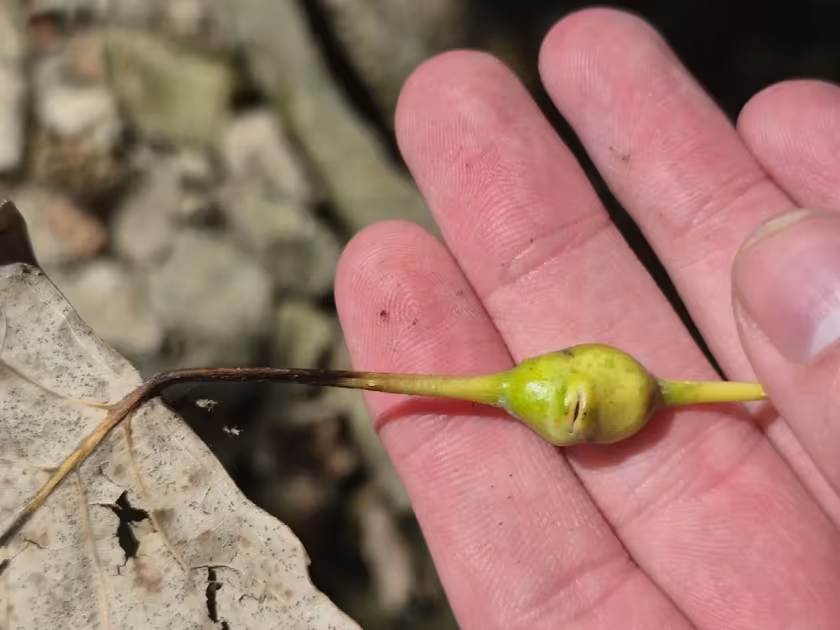
Primary hosts for this aphid are various poplar species, where they induce the formation of characteristic galls on leaf petioles. These galls serve as protected breeding grounds during the spring.
Secondary hosts consist of diverse plants from the Brassicaceae family, including cabbage, radish, and mustard. The transition to these crops occurs via winged migrants in early summer.
On secondary hosts, these aphids are typically found on the root system, often concealed by a white, wax-like secretion that acts as a protective barrier against environmental factors.
Due to their subterranean lifestyle on vegetable crops, identifying an infestation early is a significant challenge for growers and agronomists.
What it damages
The main agricultural impact involves the infestation of cruciferous crop roots, where aphids extract sap, leading to stunted plant growth and reduced overall vigor.
Feeding activities can cause severe deformation of root crops, significantly lowering their market value and sometimes rendering them completely unsellable.
Plants infested with these aphids show signs of severe water stress, such as midday wilting, even when soil moisture levels are adequate for normal crop development.
On poplar trees, the aphid-induced galls can cause premature leaf drop and weaken the tree’s physiological health, although the economic impact on trees is usually secondary to crop damage.
Overall, the damage results in lower yields and increased susceptibility of crops to secondary fungal and bacterial pathogens that enter through feeding wounds.
When it appears
The life cycle commences in spring on poplar trees, where eggs overwintering in bark crevices hatch and form galls on emerging leaf petioles.
In late spring or early summer, winged migrants emerge from the galls and disperse to secondary host plants, specifically cruciferous crops.
Throughout the summer, the aphid population increases rapidly on the roots of secondary hosts through multiple generations of reproduction.
As autumn approaches, winged sexuparae are produced, which migrate back to poplar trees to lay eggs that will overwinter and restart the cycle the following year.
The peak period of damage to vegetable crops coincides with the warm summer months when aphid reproductive rates are at their highest.
Signs of infestation
The primary visual sign on crops is temporary daytime wilting, which recovers at night, indicating compromised root health due to aphid feeding.
Exposing the root system will reveal colonies of small, pale aphids covered in white, mealy wax, often attended by ants.
Characteristic transverse, purse-like galls on poplar leaf petioles serve as a diagnostic indicator of the aphid's presence in the landscape.
Yellowing or reddening of the lower foliage on cruciferous vegetables is another common symptom, reflecting a breakdown in nutrient and water transport.
Ant activity around the base of vegetable plants is a strong indirect sign that root aphids are present and being protected by the ants.
Control measures
Effective management begins with strict cultural practices, including deep plowing and the removal of cruciferous weeds that may harbor the aphids.
Systemic insecticides applied as soil drenches can be highly effective in reaching the aphid colonies on the roots of infested vegetable crops.
Establishing spatial separation between new poplar plantings and cruciferous vegetable fields is a crucial preventative measure to interrupt the migration cycle.
Regular monitoring of root systems and foliage is essential for the early detection of colonization and the implementation of timely control strategies.
- Application of biological control agents, such as entomopathogenic fungi.
- Crop rotation to minimize the build-up of aphid populations in the soil.
- Use of resistant vegetable varieties when available in local markets.
Taxonomy
- Latin name
- Pemphigus populitransversus
- Order
- Hemiptera (bugs, aphids, leafhoppers)
- Family
- Aphididae
- EPPO code
- PEMPPO
Discussion
No discussions yet — be the first.