
Poplar-cudweed aphid
Pemphigus populinigrae
Description
How to identify
The poplar-cudweed aphid (Pemphigus populinigrae) is a small insect belonging to the family Aphididae, order Hemiptera. It is primarily known for creating distinct galls on the leaves of poplar trees.
This species exhibits a complex heteroecious life cycle, alternating between two completely unrelated host plants to complete its developmental stages throughout the year.
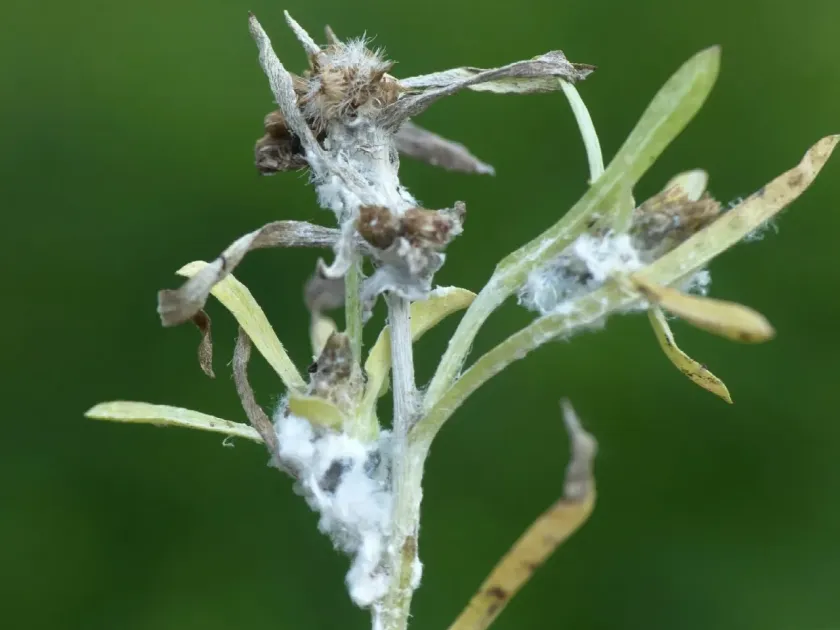
Wingless individuals found within the galls are typically spherical with a pale green or brownish body, often covered in a protective white waxy secretion to manage moisture.
Winged forms appear during mid-summer to facilitate migration from the primary poplar host to the secondary herbaceous host, which is typically a plant from the Asteraceae family.
Identification is largely based on the morphology and specific location of the galls, which typically develop on the petioles or midribs of the poplar leaves.
What it damages
The primary damage occurs on poplar trees, where the feeding activity of the aphids causes the leaf tissue to undergo pathological growth, forming protective galls.
On secondary hosts, such as species of the Gnaphalium genus (cudweed), the aphids infest the root systems, leading to nutrient depletion and overall stunting of the plant.
High levels of infestation on poplar trees can reduce the total photosynthetic capacity of the canopy, leading to slower growth and premature senescence of the foliage.
In nursery settings, systemic damage to young trees can reduce their market value and vitality, making them more susceptible to drought and secondary pathogenic infections.
The cumulative effect of root infestations on secondary hosts causes visible wilting, reduced biomass production, and in severe cases, the death of the colonized plants.
When it appears
Development begins in early spring when larvae hatch from overwintered eggs on the bark of poplar trees and quickly move to newly emerging foliage.
The aphids spend the spring and early summer within the safety of the galls, feeding and multiplying to produce several successive generations sheltered from the environment.
In mid-summer, a winged generation is produced that leaves the poplar trees to seek out secondary herbaceous hosts, specifically looking for suitable root systems.
As autumn approaches, a return migration occurs, where winged individuals fly back to the poplar trees to mate and deposit eggs in bark crevices for the winter.
Environmental factors, particularly spring temperatures and humidity, determine the synchronization between egg hatching and the availability of fresh poplar leaves.
Signs of infestation
The most prominent sign is the presence of distorted, thickened, or enlarged galls on the leaf petioles of poplar trees, which are often easily spotted during summer.
Yellowing, curling, and premature shedding of poplar leaves are common symptoms indicating a high density of aphid colonies inside the gall structures.
On the roots of secondary host plants, white waxy fluff or secretion is a key diagnostic feature indicating the presence of underground aphid colonies.
The appearance of winged aphids swarming around poplar trunks in late summer signals the end of the summer season and the beginning of the autumn return migration.
Close inspection of the galls reveals the presence of live insects, and the specific shape of the gall is a reliable indicator of this particular aphid species.
Control measures
Effective management includes pruning and burning infested leaves or twigs during late spring or early summer before the aphids emerge to migrate.
Applying systemic insecticides to poplar trees during the bud burst stage can effectively neutralize the initial generation before the galls become fully established.
Cultural control involves maintaining spatial distance between poplar plantations and susceptible herbaceous hosts to disrupt the aphid's complex life cycle.
- Encouraging natural predators such as ladybirds and lacewings in the garden.
- Using biological control agents like entomopathogenic fungi.
- Regular monitoring of poplar leaves for signs of early gall formation.
Because secondary root-feeding colonies are difficult to reach with treatments, the primary strategy focuses on protecting the poplar host during the critical spring period.
Taxonomy
- Latin name
- Pemphigus populinigrae
- Order
- Hemiptera (bugs, aphids, leafhoppers)
- Family
- Aphididae
- EPPO code
- PEMPFI
Discussion
No discussions yet — be the first.