
Poplar gall aphid
Pemphigus phenax
Description
How to identify
The poplar gall aphid Pemphigus phenax belongs to the order Hemiptera and the family Aphididae. This pest is characterized by a complex life cycle involving a primary host, usually poplar trees, and a secondary host for summer generations.
Adult aphids are small and soft-bodied. Identification is primarily based on the distinctive leaf deformities, known as galls, which the aphids induce on the foliage to provide shelter and nutrition for their developing colonies.
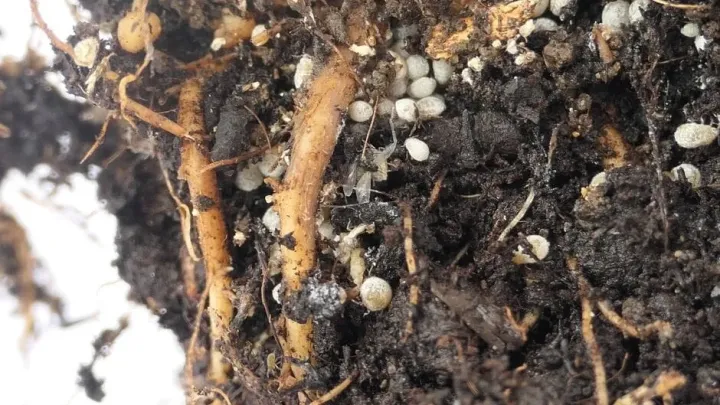
The life cycle is highly specialized. Spring generations develop on poplar, inducing gall formation, while later generations migrate to the roots of herbaceous plants. This alternation of hosts is a key survival strategy for the species.
The galls provide an optimal microclimate and protection from predators and environmental stressors, making the aphids difficult to reach with conventional surface-contact insecticides once the galls have fully formed.
Monitoring the canopy during early spring is essential for pest management. Detecting the initial stages of gall formation allows for timely intervention before the population expands significantly within the protected environments of the galls.
What it damages
The primary hosts for Pemphigus phenax are various poplar species (Populus). The aphids feed on the tissues of young leaves and petioles, triggering pathological growth that results in the formation of woody or fleshy swellings called galls.
These galls interfere with the normal photosynthetic activity of the leaves. Severe infestations often lead to premature leaf drop and a noticeable decline in the overall vigor and health of the tree during the growing season.
Chronic infestation causes reduced shoot growth and weakens the tree's resilience. Compromised trees become more susceptible to secondary infections, environmental stress, and other pests, negatively impacting their longevity and structural integrity.
While an individual gall may not kill a branch, a heavy infestation across the canopy can significantly drain the tree’s energy reserves. This is particularly problematic for young saplings that require vigorous growth to establish themselves.
In nurseries and urban landscapes, the damage is primarily aesthetic and physiological. The presence of numerous galls devalues the ornamental quality of the trees, making them less suitable for parks and residential street planting.
When it appears
The seasonal activity begins in early spring, synchronized with the bud break of the host poplar trees. Overwintering eggs hatch, and the stem mothers initiate the formation of galls on the newly emerging leaves or petioles.
The peak period for gall development occurs throughout May and June. During this time, the aphids reproduce rapidly within the galls, creating dense colonies that occupy the internal cavity of the growth.
By mid-to-late summer, winged individuals emerge and migrate away from the poplar trees to find secondary herbaceous hosts. Consequently, the galls on the poplar trees stop growing, although they often remain visible on the twigs until autumn.
In autumn, a reverse migration occurs, where fertilized females return to the bark of poplar trees to deposit overwintering eggs. This stage is crucial, as the population relies on these eggs to persist through the winter months.
Understanding these phenological shifts is vital for pest control. Chemical applications are only effective during the short windows when the aphids are exposed on the surface of the tree, before they are enclosed within the protective galls.
Signs of infestation
The most prominent sign of infestation is the appearance of spherical, oval, or spindle-shaped galls on the leaf petioles or leaf blades. These growths can be green, yellowish, or sometimes reddish in color.
Upon inspecting a gall, one can typically find a colony of small, pale, or whitish aphids covered in a waxy, powdery substance. The presence of this substance inside the gall is a diagnostic feature of Pemphigus species.
Affected leaves often show signs of chlorosis or may become twisted and malformed around the gall. This visual distortion is a clear indicator that the tree is currently harboring an aphid colony.
Premature leaf yellowing and dropping in mid-summer are major indicators of a heavy infestation. Such foliage loss can result in a thin, sparse canopy that detracts from the tree's natural shape and shade-providing capabilities.
Sooty mold may also appear on the leaves and branches below the galls. This black, powdery fungus grows on the sugary honeydew excreted by the aphids, further signaling the presence of an active pest population.
Control measures
Controlling the poplar gall aphid is challenging due to the protective environment provided by the galls. Strategies must focus on preventative measures or timing applications to catch the aphids before they become enclosed.
- Applying systemic insecticides in early spring before the galls have fully developed and closed.
- Pruning and destroying heavily infested branches during the early development stages to reduce the local population.
- Promoting tree vigor through proper irrigation and fertilization, which helps the trees withstand aphid feeding.
- Encouraging natural predators such as lady beetles, lacewings, and parasitic wasps, which can help manage aphid numbers in the canopy.
- Selecting and planting poplar species or clones that exhibit natural resistance to gall-forming insects.
Systemic treatments are the most effective method, as the insecticide is transported through the tree’s vascular system to the feeding sites, reaching the aphids inside the galls more effectively than surface sprays.
In urban settings, the use of pesticides should be carefully managed to prevent environmental contamination and protect non-target species, favoring low-impact solutions where possible.
Taxonomy
- Latin name
- Pemphigus phenax
- Order
- Hemiptera (bugs, aphids, leafhoppers)
- Family
- Aphididae
- EPPO code
- PEMPDA
Discussion
No discussions yet — be the first.