
Lettuce root aphid
Pemphigus bursarius
Description
How to identify
The lettuce root aphid, scientifically known as Pemphigus bursarius, is a member of the Aphididae family. It is a highly specialized pest that alternates its host between the poplar tree and various herbaceous plants.
The insect possesses a complex life cycle involving winged forms for migration and wingless forms that live on roots. Adults are small, often pale or yellowish, and are covered in a white, powdery wax secretion.
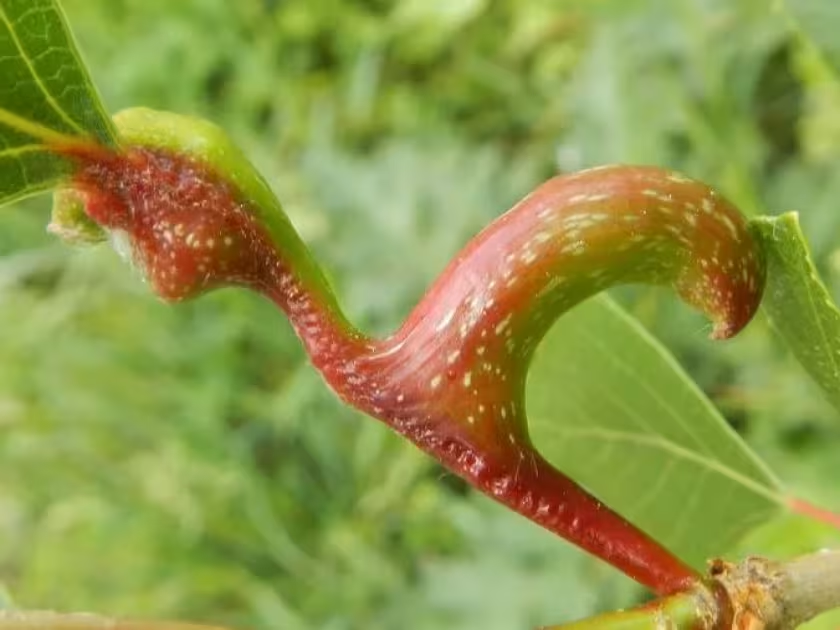
The primary host, the poplar tree, is colonized during spring. The aphids induce the formation of characteristic galls on the leaf petioles, providing a safe habitat for the initial generations.
Migratory winged forms appear in summer to disperse towards secondary hosts. Their anatomy is adapted for both aerial travel and the subsequent colonization of root systems in the soil.
Identification often requires careful inspection of the rhizosphere, as the aphid remains hidden beneath the soil surface for the majority of its active season.
What it damages
This pest primarily attacks lettuce (Lactuca sativa), causing significant damage by feeding on the root system. This interrupts the plant's ability to absorb water and essential nutrients.
Symptoms of infestation include wilting and yellowing of outer leaves, often occurring during periods of heat stress. Even with regular irrigation, affected plants fail to recover and show stunted growth.
Feeding damage can lead to a secondary infestation of soil-borne pathogens, as the aphid's saliva may facilitate the entry of fungal or bacterial rots into the damaged root tissues.
On poplar trees, the infestation results in numerous leaf galls. While this is generally non-lethal to the tree, it significantly increases the pest pressure in the surrounding agricultural landscape.
In commercial lettuce production, this aphid can cause total yield loss or downgrade the product quality to the point of being unmarketable.
When it appears
The cycle begins in spring when overwintered eggs on poplar bark hatch into nymphs. These nymphs feed on the leaves, triggering gall development which protects the colony through early summer.
In mid-summer, winged aphids emerge from the galls and migrate to secondary hosts, including lettuce and related weed species. This migration is crucial for the dispersal of the population across fields.
The summer generations reproduce parthenogenetically on the roots of secondary hosts, building up large populations in the soil when environmental temperatures are conducive.
As autumn approaches, a portion of the population undergoes a transformation and returns to the primary host, the poplar tree, to mate and deposit eggs in bark crevices for winter survival.
The peak activity on lettuce crops is typically observed during the warmer months, making late-spring and summer plantings the most vulnerable to infestation.
Signs of infestation
The most distinctive sign on poplar trees is the presence of pear-shaped, greenish-red galls located on the petioles of the leaves.
In the field, infested lettuce plants often show patches of wilting. A key diagnostic feature is the presence of white, cottony, waxy material on the roots when the plant is pulled from the soil.
Ant activity is frequently observed around the base of the lettuce plants, as ants tend the aphids to collect the sugary honeydew they produce, which indirectly confirms the presence of an infestation.
Stunted, chlorotic plants that do not respond to water or fertilization should be inspected immediately by digging around the root zone to confirm the presence of the root aphid colonies.
In cases of heavy infestation, the root system may appear greyish or dusty due to the accumulation of the aphid’s white, waxy secretions.
Control measures
The most effective cultural strategy is to avoid planting lettuce near established poplar trees, which serve as the essential primary host for the aphid's overwintering.
Implementing a strict crop rotation schedule helps prevent the build-up of aphid populations in the soil, ensuring that sensitive crops are not grown in infested sites consecutive years.
Mechanical cultivation of the soil between rows can disrupt aphid migration and destroy the soil galleries maintained by ants that protect the aphid colonies.
Chemical control involving systemic insecticides may be necessary in high-pressure scenarios, but must be managed strictly to comply with residue limits and environmental safety regulations.
- Removal of wild host plants (e.g., wild lettuce, chicory) from field margins.
- Using tolerant or resistant lettuce varieties where available.
- Monitoring poplar trees for early-season gall development to forecast potential field outbreaks.
Taxonomy
- Latin name
- Pemphigus bursarius
- Order
- Hemiptera (bugs, aphids, leafhoppers)
- Family
- Aphididae
- EPPO code
- PEMPBU
Discussion
No discussions yet — be the first.