
Pedinus femoralis
Pedinus femoralis
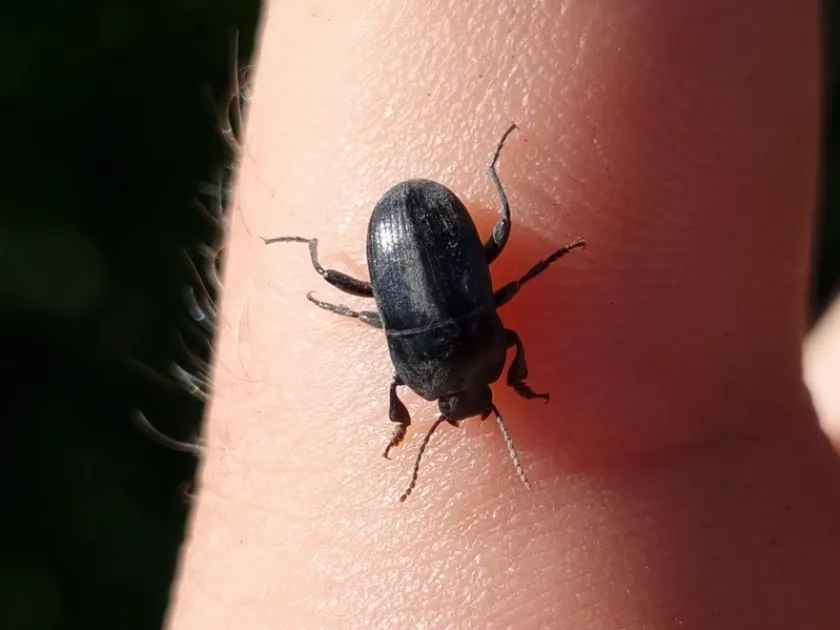
Description
How to identify
Pedinus femoralis is a species of darkling beetle belonging to the Tenebrionidae family (order Coleoptera). The adult beetle is 8–10 mm long, featuring an oval body shape and a matte black or brownish-black coloration.
The larvae of Pedinus femoralis resemble wireworms (larvae of click beetles). They reach 15–20 mm in length, have a yellowish-brown color, hardened body segments, and three pairs of well-developed thoracic legs, which allow them to move actively through the soil.
These beetles are primarily nocturnal. During the day, they prefer to hide under plant debris, soil clods, or deep in soil crevices to avoid heat and direct sunlight.
The life cycle is typically univoltine (one generation per year). In temperate climates, adults overwinter in the soil or protected debris, emerging in early spring as soon as temperatures become favorable.
Pupation occurs in late spring or early summer, 10–15 cm deep in the soil. The new generation of beetles emerges by mid-summer, feeding actively until the onset of cold weather.
What it damages
This pest is highly polyphagous, attacking a wide range of agricultural crops. It is particularly damaging to cereals, including winter and spring wheat, barley, rye, and corn.
Additionally, it poses a threat to emerging seedlings of sugar beet, sunflower, tobacco, and various vegetable crops. Both adult beetles and their larvae cause economic damage.
Adults feed on germinating seeds, often destroying the embryo, which leads to sparse crop stands. They also feed on the young seedlings, damaging the primary shoot and growing point.
Larvae reside in the upper soil layers, feeding on seeds and gnawing at the roots of young plants. This feeding pattern causes plant weakening, yellowing, and frequently leads to total stand loss.
Crops are most susceptible between germination and the tillering stage. Cold and wet spring conditions often exacerbate the damage by slowing plant growth, leaving them exposed to beetle feeding for longer periods.
When it appears
Mass emergence of adults typically occurs in spring, from late April through June, coinciding with the germination period of major agricultural crops.
A second wave of activity occurs in late summer and autumn (August–September), as the new generation of adults feeds to accumulate energy reserves before wintering.
Weather conditions significantly impact population dynamics. Prolonged, cool springs often lead to increased damage because the crop development is delayed, keeping it in the susceptible phase for an extended time.
During the peak of summer heat, adult activity may decrease, though they continue to feed on weeds and harvest residues, maintaining their population levels.
Overwintering occurs deep in the soil profile, where the insects remain inactive until the return of warmer spring temperatures.
Signs of infestation
The primary symptom of infestation is the emergence of patchy, thin fields where seeds failed to germinate or seedlings were destroyed shortly after sprouting.
Upon closer inspection, young plants show clear signs of chewing damage at the hypocotyl or root zone. Often, damaged plants are easily pulled from the soil due to severed roots.
Adults can be spotted during evening inspections or by lifting soil clods and crop residues in the field, especially in fields with heavy organic matter cover.
Excavation of crop rows often reveals seeds with hollowed-out cavities. The embryo is frequently missing, rendering the seed inviable for further growth.
For professional monitoring, soil sampling and the use of pitfall traps are recommended to evaluate the density of the pest population before and during sowing.
Control measures
Proper soil tillage is a key agronomic measure. Deep autumn plowing disrupts the overwintering sites of the beetles, significantly reducing the population density in the soil.
Effective weed management is essential, as weeds provide alternative food sources for both larvae and adults when primary crops are not available.
Optimizing sowing dates can help ensure that crops pass through their most vulnerable germination stage quickly, minimizing the exposure to Pedinus femoralis damage.
Chemical seed treatment is the most effective proactive measure. The use of insecticides (such as neonicotinoids) on seeds provides reliable protection for seedlings during the critical early development stages.
- Implementation of crop rotation to break the beetle's life cycle.
- Use of insecticide-treated baits in high-infestation hotspots.
- Monitoring with pheromone or bait traps to determine economic thresholds.
Taxonomy
- Latin name
- Pedinus femoralis
- Order
- Coleoptera (beetles)
- Family
- Tenebrionidae
- EPPO code
- PEDNFE
Discussion
No discussions yet — be the first.