
Azalea whitefly
Pealius azaleae
Description
How to identify
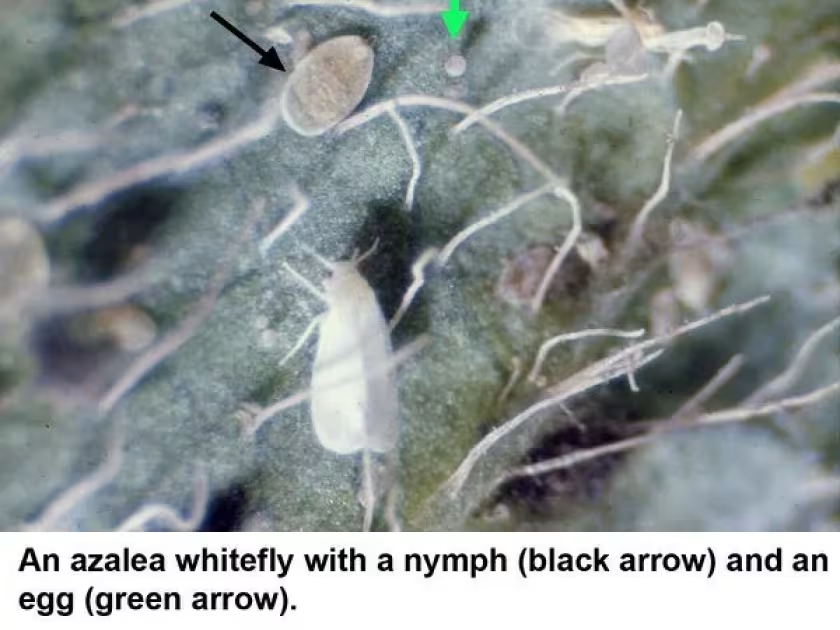
The azalea whitefly, Pealius azaleae, belongs to the family Aleyrodidae. Adult insects are tiny, moth-like creatures covered in a fine, white, waxy powder, which is a characteristic feature of their appearance.
The nymphal stage is flattened and scale-like, often appearing translucent or yellowish-green. These nymphs are sessile, attaching themselves firmly to the undersides of leaves, making them quite difficult to detect during early infestations.
Their biological cycle consists of eggs, four larval instars, and the adult stage. Development is highly sensitive to environmental conditions, with warm temperatures and high humidity significantly accelerating the reproduction process.
The species reproduces rapidly, often leading to overlapping generations on the same plant. This continuous cycle makes control difficult as the population can thrive in greenhouse environments year-round.
Overwintering typically occurs in the late nymphal stage directly on the host plant leaves. This adaptation allows the pest to survive cold periods and resume activity as soon as conditions improve.
What it damages
The primary hosts of Pealius azaleae are plants in the Rhododendron genus, including azaleas. They feed by inserting their piercing-sucking mouthparts into the phloem of succulent leaves.
During feeding, the nymphs excrete large amounts of honeydew, a sticky, sugary substance that coats the leaves. This honeydew serves as a nutrient source for sooty mold fungi, which create a dark, unsightly film on the foliage.
This fungal growth interferes with photosynthesis, reducing the plant's ability to produce energy. Severe infestations lead to stunted growth, leaf chlorosis, and general loss of vigor.
In addition to direct physiological damage, these insects are known vectors for various plant viruses. Viral transmission can result in mosaic symptoms, leaf distortion, and significant reductions in flower production.
If left untreated, heavy infestations can lead to premature leaf drop and the long-term decline of the plant. Weakened plants are also more susceptible to secondary infections and environmental stress.
Signs of infestation
Early warning signs include the presence of sticky honeydew on the leaves and nearby surfaces. Any shiny, tacky residue on the foliage is a strong indicator that sap-sucking insects are present.
Adult whiteflies are easily disturbed; shaking the plant or tapping the branches will cause a cloud of small, white insects to fly up before they quickly resettle on the underside of the leaves.
Look for signs of leaf chlorosis, where the foliage turns yellow or develops mottled spots. This damage is caused by the insects extracting nutrients and injecting toxic saliva during the feeding process.
A black, sooty coating on the leaves is a definitive sign of an advanced infestation. This layer of mold blocks sunlight and prevents the plant from breathing properly, leading to noticeable stress.
Wilting and premature yellowing of the foliage are common symptoms. In severe cases, the entire plant may show signs of stress, including a lack of new growth and smaller-than-average leaves.
Control measures
Integrated pest management starts with cultural practices. Improving air circulation around the plants and reducing excess humidity can make the environment less favorable for the whitefly.
Manual removal of heavily infested leaves and washing the foliage with a forceful stream of water can significantly reduce the initial population density of nymphs and honeydew accumulation.
Yellow sticky cards are highly effective for both monitoring populations and trapping adult whiteflies, which helps in determining the timing for further chemical interventions.
Systemic insecticides are generally the most effective control method because they move through the plant's vascular system, providing protection that contact sprays often miss due to the pest's waxy covering.
- Use systemic insecticides containing neonicotinoids.
- Introduce biological control agents like parasitic wasps (e.g., Encarsia formosa).
- Maintain regular monitoring programs, especially in greenhouse conditions.
- Ensure repeat applications to break the life cycle of emerging generations.
Taxonomy
- Latin name
- Pealius azaleae
- Order
- Hemiptera (bugs, aphids, leafhoppers)
- Family
- Aleyrodidae
- EPPO code
- PEALAZ
Discussion
No discussions yet — be the first.