
Pealius
Pealius
Description
How to identify
Pealius is a genus of small insects belonging to the Aleyrodidae family, commonly known as whiteflies. These insects are characterized by their small size and wings covered in a white, powdery wax.
Adult specimens typically appear pale yellow or whitish, often blending in with the undersides of leaves where they reside. Due to their tiny size, visual identification usually requires a magnifying glass or microscope.
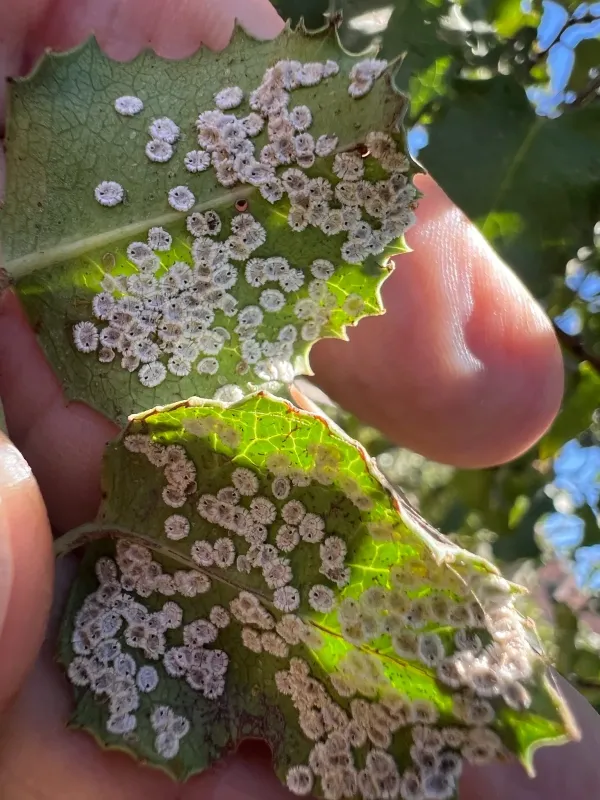
Larval stages of Pealius are sessile, meaning they attach themselves firmly to the leaf surface. They often have a flattened, oval shape that makes them appear as small, wax-like scales on the plant tissue.
To identify an infestation, inspect the underside of leaves for groups of small whiteflies. A common behavioral trait is that adults will take flight in a small cloud when the plant is disturbed.
Detailed genus identification is performed by entomologists by examining wing venation patterns under a microscope to distinguish them from other closely related whitefly species.
What it damages
Pealius species are significant agricultural pests that feed by sucking sap from plant tissues. This can affect a wide range of hosts, including greenhouse vegetables, flowers, and ornamental shrubs.
In greenhouses, these pests can thrive in warm, humid conditions, leading to rapid population explosions that damage tomatoes, cucumbers, and other greenhouse crops.
As they feed, they excrete honeydew, a sticky, sugar-rich substance. This residue acts as a substrate for sooty mold growth, which inhibits photosynthesis and reduces the plant's overall vigor.
Severe infestations lead to yellowing (chlorosis), leaf distortion, and premature leaf drop. The aesthetic value of ornamental plants is destroyed, while vegetable yields are drastically reduced.
Furthermore, whiteflies are known vectors for several viral diseases, which can cause systemic infection and death of the host plants.
When it appears
The lifecycle of Pealius is highly temperature-dependent. In controlled environments like greenhouses, they can continue breeding throughout the year if the temperature is sufficient.
In outdoor environments, their activity begins as temperatures rise in late spring and peaks during the hot summer months. Populations are usually most dense in the second half of the summer season.
A single generation typically completes its cycle in two to four weeks depending on the temperature. Warmer conditions accelerate the development from egg to adult.
Females lay eggs primarily on the underside of young leaves, often in semi-circular patterns. After hatching, the mobile crawler stage moves to find a suitable feeding spot to begin its development.
The insects undergo several larval stages before transforming into a pupal stage, from which the adult winged insect emerges to continue the cycle.
Signs of infestation
The first sign of Pealius infestation is often the appearance of yellowish or chlorotic spots on leaves. Over time, the entire leaf may yellow and dry out due to sap loss.
The presence of honeydew and subsequent development of black sooty mold on the foliage are major indicators of whitefly activity. The leaves will feel sticky to the touch.
Inspecting the lower leaf surface will reveal the presence of puparia—small, stationary scale-like structures. Adults will be visible flying around the foliage when shaken.
Infested plants exhibit stunted growth, wilting, and overall decline. If left untreated, the plant may eventually succumb to the stress caused by the feeding and viral infections.
- Yellowing of leaves (chlorosis).
- Sticky honeydew deposits on foliage.
- Presence of black sooty mold.
- Scale-like puparia on the underside of leaves.
Control measures
Management of Pealius requires an Integrated Pest Management (IPM) approach that combines cultural, biological, and chemical methods to minimize damage.
Cultural practices include ensuring proper greenhouse ventilation, removing weed hosts, and promptly destroying plant residues after harvest to break the lifecycle.
Biological control is highly effective, utilizing natural predators and parasitoids such as Encarsia formosa wasps or predatory bugs that consume the larvae.
Chemical control involves the use of systemic insecticides during severe outbreaks. It is critical to rotate insecticides with different modes of action to prevent the development of pesticide resistance.
Yellow sticky traps are recommended for monitoring populations and capturing adults, providing early warning signals and helping to reduce the overall population in protected cultivation.
Taxonomy
- Latin name
- Pealius
- Order
- Hemiptera (bugs, aphids, leafhoppers)
- Family
- Aleyrodidae
- EPPO code
- PEALSP
Discussion
No discussions yet — be the first.