
Patchiella reaumuri
Patchiella reaumuri
Description
How to identify
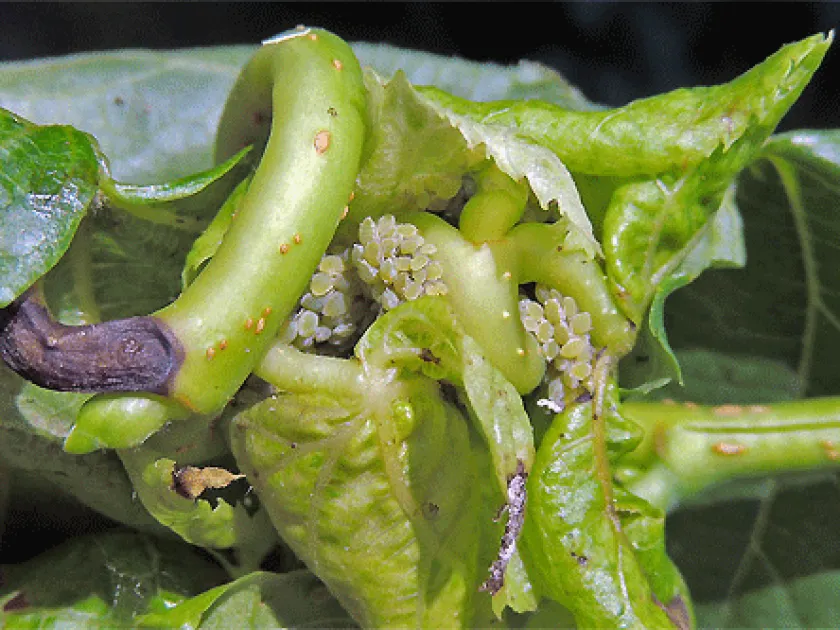
Patchiella reaumuri is a species of aphid within the family Aphididae, known for its host specificity to linden trees (Tilia). It is a specialized pest that creates characteristic galls on the leaves of its host.
The insect possesses a piercing-sucking mouthpart designed to feed on plant sap. Its life cycle is intricately synchronized with the phenology of the linden tree, ensuring it has access to fresh tissue during the early growth stages.
As a member of the order Hemiptera, it undergoes incomplete metamorphosis. The gall-forming behavior is a unique adaptation that provides both shelter and a concentrated food source for the colony.
Identification of the species often involves examining the shape and placement of the galls on the leaves. These structures are distinct from those caused by other gall-making insects.
Biological studies suggest that the population size is heavily influenced by local environmental conditions and the overall health of the linden trees in the vicinity.
What it damages
The primary damage is caused by the aphid's feeding, which triggers the linden tree to produce abnormal tissue growths known as galls. This process consumes the plant's resources and disrupts normal leaf function.
The deformation of the leaf blades reduces the efficiency of photosynthesis. Consequently, affected trees may show signs of stunted growth, especially in young saplings.
Heavy infestations can lead to premature leaf drop, weakening the tree's health and making it more susceptible to environmental stress during the winter months.
The aphids secrete honeydew, which leads to the growth of sooty mold on the leaves and branches. This not only looks unsightly but also blocks further light from reaching the leaf surface.
In nurseries, the presence of Patchiella reaumuri can degrade the market value of linden stock due to the obvious aesthetic damage caused to the canopy.
When it appears
The life cycle begins in early spring when the overwintering eggs hatch. This timing is perfectly adapted to the opening of the linden tree buds.
Throughout the growing season, the aphids produce several generations. The peak of gall formation and aphid activity is typically observed during the late spring and early summer.
As autumn approaches, the aphids produce sexual generations. These individuals lay eggs on the bark of young shoots, which serve as the overwintering stage for the population.
Weather patterns, particularly temperature, play a crucial role in determining the speed of development. Unseasonably warm springs can lead to a more rapid increase in the aphid population.
Effective monitoring should start as soon as the first leaves appear. Detecting the early stages of gall formation is essential for managing the infestation effectively.
Signs of infestation
The most visible sign of an infestation is the appearance of small, distinct swellings on the leaves that eventually develop into mature galls.
- Twisted, curled, or distorted leaves where the colony is feeding.
- The presence of sticky honeydew on the leaves, branches, and even the ground beneath the tree.
- Visible signs of sooty mold (black, dusty fungus) growing on the honeydew deposits.
- Ant activity on the tree, as ants are attracted to the sugary honeydew excreted by the aphids.
- Early leaf yellowing or necrosis in the areas heavily populated by the aphids.
Control measures
Control strategies should begin with good cultural practices, such as pruning and destroying heavily infested branches early in the season before the insects disperse.
Systemic insecticides are generally the most effective chemical control method. They must be applied before the galls fully enclose the insects, as the galls act as a protective barrier.
Maintaining tree vigor through proper irrigation and fertilization is a vital preventive measure, as healthy trees are better equipped to tolerate and resist pest attacks.
Encouraging natural predators, such as ladybugs, lacewings, and hoverflies, can significantly reduce aphid populations in natural environments without the need for chemical intervention.
Regular inspections and integrated pest management (IPM) are the best approaches for keeping linden trees healthy and free from severe damage by Patchiella reaumuri.
Taxonomy
- Latin name
- Patchiella reaumuri
- Order
- Hemiptera (bugs, aphids, leafhoppers)
- Family
- Aphididae
- EPPO code
- PATCRE
Discussion
No discussions yet — be the first.