
Parornix petiolella
Parornix petiolella
Description
How to identify
Parornix petiolella belongs to the family Gracillariidae (leaf blotch miner moths) within the order Lepidoptera. These are small moths with a wingspan typically under 10 mm.
The adult moth features brownish-grey wings with intricate markings that provide camouflage against tree bark. Larvae undergo several developmental stages, feeding within leaf tissues.
Taxonomically, this species is closely related to other leaf-mining moths found in temperate orchards, often requiring expert inspection for species-specific identification.
The life cycle includes a pupal stage that overwinter in cocoons, often attached to fallen leaves or hidden in crevices of tree bark, ensuring survival through cold periods.
Developmental rates are heavily influenced by local temperature patterns, which dictate the timing of adult emergence in the spring.
What it damages
The primary hosts for Parornix petiolella are apple trees, though they occasionally affect other members of the Rosaceae family in commercial orchards.
Larval feeding creates mines within the leaf parenchyma. These tunnels interrupt the leaf structure, directly impacting the plant's photosynthetic efficiency.
Heavy infestations lead to leaf yellowing and premature leaf drop, which significantly weakens the tree during the critical period of fruit development.
Chronic damage reduces the tree's ability to accumulate reserves, resulting in poor flower bud initiation and reduced yield in the subsequent season.
Without intervention, the cumulative effect of annual infestations can lead to long-term decline in tree health and overall orchard productivity.
Signs of infestation
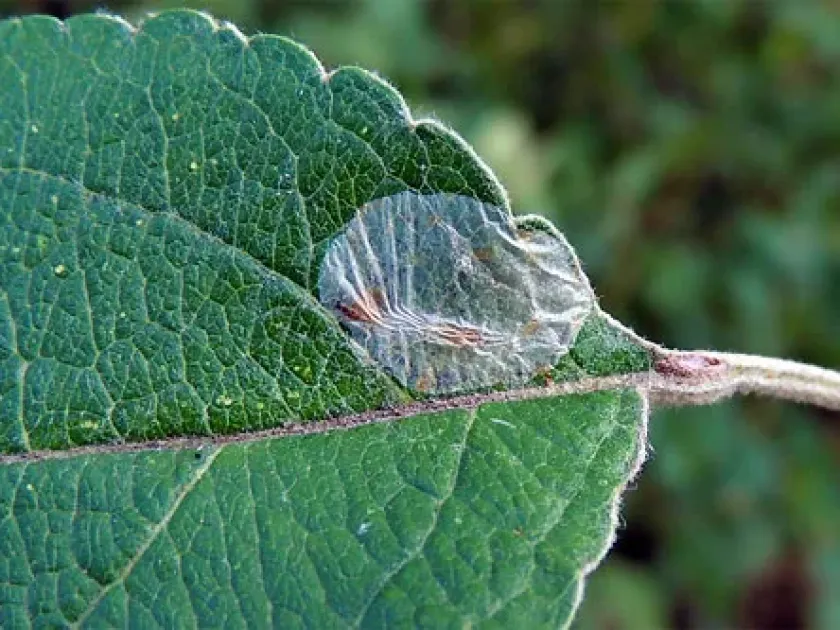
Early signs include the appearance of pale blotch mines on the leaves, which expand as the larvae continue to feed. These mines become visible on the leaf surface.
A distinctive feature of this species is the tendency of larvae to roll the leaf margins into a tube, creating a protective shelter for later developmental stages.
Close inspection of the mines reveals the presence of dark frass (excrement) within the tunnels, a key indicator that distinguishes them from other leaf-mining species.
Heavily infested trees show widespread discolouration and may appear sparse due to the loss of damaged foliage.
- Pale blotch-like mines on foliage.
- Leaf margins rolled into tubes.
- Premature yellowing and leaf shedding.
- Presence of dark frass inside the mines.
Control measures
Cultural control is essential; removing and disposing of fallen leaves prevents the next generation from emerging in the spring.
Regular maintenance, such as scraping loose bark from tree trunks, reduces the availability of overwintering sites for pupae.
Pheromone traps are highly effective for monitoring adult flight, allowing growers to time insecticide applications accurately before larvae create deep mines.
Chemical control should be targeted during the egg-hatch phase, as once larvae are encased in leaf tissue, they are significantly more resistant to spray treatments.
Biological control, including the encouragement of natural parasitoids, can help suppress populations when integrated into a broader pest management strategy.
Taxonomy
- Latin name
- Parornix petiolella
- Order
- Lepidoptera (butterflies)
- Family
- Gracillariidae
- EPPO code
- ORNXPE
Discussion
No discussions yet — be the first.