
Bondar's whitefly
Paraleyrodes bondari
Description
How to identify
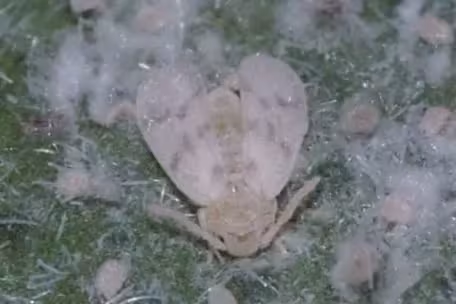
Bondar's whitefly (Paraleyrodes bondari) is a member of the Aleyrodidae family within the order Hemiptera. These tiny insects are easily recognized by their white, waxy-coated wings, which give them a snow-white appearance when observed on foliage.
A key diagnostic feature of this species is the presence of distinctive dark spots on the forewings of the adults, a trait that differentiates it from other common whitefly species. The nymphs, often referred to as puparia, are sedentary and attach firmly to the underside of leaves.
This pest flourishes in warm, humid environments, making it a common threat in tropical and subtropical regions, as well as in greenhouse cultivation. Adults are highly active and capable of rapid dispersal between plants when disturbed.
The life cycle consists of egg, several nymphal instars, and the adult stage. The speed of development is highly temperature-dependent, allowing for multiple generations to occur during a single season under optimal conditions.
These insects possess high reproductive potential, allowing populations to escalate quickly. Because they congregate along leaf veins and reside on the underside of leaves, they often remain undetected until the population has reached significant levels.
What it damages
The primary hosts of Paraleyrodes bondari include various citrus species such as oranges, lemons, and mandarins. They also infest a broad range of other ornamental and tropical plants commonly found in botanical gardens and greenhouses.
The insects feed by piercing the plant tissue and sucking out cell sap. This feeding process causes generalized plant stress, leading to stunted growth, reduced vigor, and a decline in the overall quality and yield of the harvest.
Feeding results in the excretion of honeydew, a sticky substance that coats the leaves. This honeydew serves as an ideal substrate for the growth of sooty mold, which creates a black film that blocks sunlight and severely impairs photosynthesis.
Heavy infestations lead to premature leaf drop and the shedding of young fruit. In severe cases, the physiological exhaustion of the plant can cause dieback of branches and, if left unmanaged, the ultimate death of the plant.
Furthermore, Bondar's whitefly acts as a vector for certain viral diseases. The transmission of these pathogens during feeding makes the pest a serious concern for commercial citrus producers and nursery owners worldwide.
Signs of infestation
The first sign of infestation is the presence of tiny white insects on the undersides of leaves that fly off in swarms when the plant is disturbed. Small white, waxy deposits left by the nymphs are also typical indicators.
A sticky residue on the upper surface of the foliage is a classic symptom of feeding activity. This residue quickly becomes colonized by black sooty mold, which is easily visible and confirms the presence of a honeydew-producing insect.
Distorted, curling, or chlorotic leaves are common, indicating that the plant is under stress from nutrient loss. Affected plants often appear visibly weaker and lose their typical luster compared to healthy specimens.
Yellow sticky traps are highly effective for monitoring whitefly populations in greenhouses. The insects are naturally attracted to the bright yellow color, making these traps essential tools for early detection and population assessment.
Yellowing and shedding of lower leaves represent advanced stages of infestation. Once these signs are visible, the population density is likely already high, necessitating immediate and intensive corrective measures.
Control measures
Biological control methods are increasingly preferred, involving the release of natural enemies such as parasitic wasps (e.g., Encarsia spp.) that target the nymphal stages, keeping the pest population below damaging thresholds.
Chemical control typically involves the application of systemic insecticides that are absorbed by the plant and ingested by the insects. Rotational use of different chemical classes is vital to prevent the development of resistance within the population.
Mechanical management, including washing foliage with high-pressure water or insecticidal soaps, can physically remove nymphs and rinse away honeydew. This is most effective when used as a supplemental measure during early stages of infestation.
Improved cultural practices, such as proper pruning for better airflow and maintaining clean greenhouse conditions, create an environment that is less favorable for whitefly colonization and reproduction.
Strict quarantine protocols for incoming plant material are essential. Inspecting and isolating new plants before introducing them to an established crop is the most reliable way to prevent the accidental entry of Bondar's whitefly.
Taxonomy
- Latin name
- Paraleyrodes bondari
- Order
- Hemiptera (bugs, aphids, leafhoppers)
- Family
- Aleyrodidae
- EPPO code
- PARYBO
Discussion
No discussions yet — be the first.