
Parabemisia
Parabemisia
Description
How to identify
Parabemisia is a genus of insects belonging to the Aleyrodidae family, commonly known as whiteflies, which are significant agricultural pests worldwide.
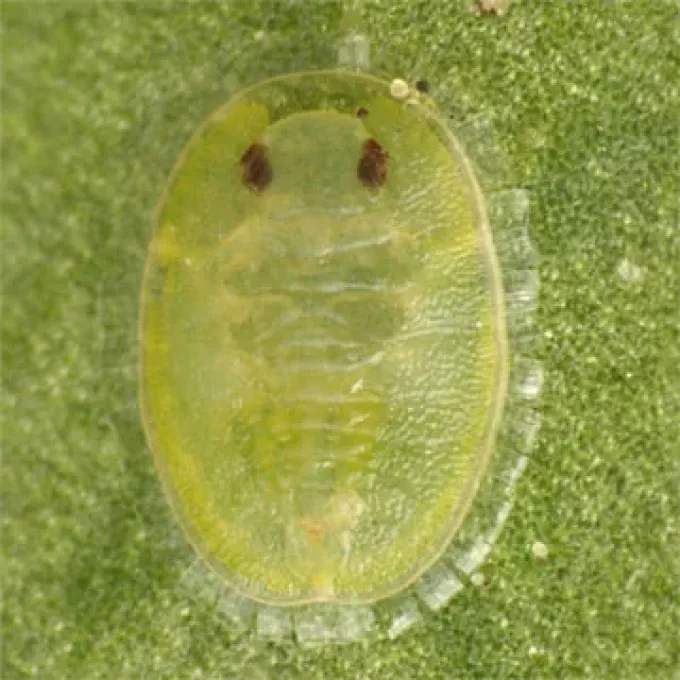
These insects are very small, with adults typically measuring about 1 mm in length and possessing wings covered in a characteristic white, waxy secretion.
The nymphal stages are sessile and flat, often blending perfectly with the leaf surface, which makes them difficult to spot during routine inspections.
Proper identification usually requires a magnifying lens or microscope to distinguish Parabemisia from other morphologically similar whitefly species.
The life cycle encompasses eggs, three larval instars, a puparium stage, and the winged adult stage, facilitating rapid population growth in warm climates.
What it damages
Parabemisia primarily affects citrus trees, causing substantial damage to leaves and reducing the overall vigor of the host plant.
Apart from citrus, this pest can occasionally be found on various ornamental plants and certain broad-leaved crops in close proximity to infested orchards.
By piercing and sucking plant sap, the larvae and adults cause dehydration and nutrient loss, leading to severe leaf curling and stunted shoot growth.
The pest contributes to significant economic losses by diminishing fruit quality, yields, and, in severe cases, causing the death of young seedlings.
They are also recognized as potential vectors for specific plant viruses, posing an additional layer of threat to nursery and greenhouse operations.
Signs of infestation
Leaf deformation, such as rolling or curling of the younger foliage, is often the first visible symptom of a Parabemisia infestation.
Infested trees often show heavy accumulation of honeydew on the leaves, which quickly becomes covered with a thick layer of black sooty mold.
The sooty mold fungus hinders photosynthesis, causing the plant to suffer from lack of energy and reduced gas exchange through the stomata.
White clouds of adult insects erupting from the canopy upon shaking the branches are a definitive indicator of a high-density infestation.
Severe infestations often result in premature leaf drop, dieback of twigs, and an overall unhealthy appearance of the affected tree.
Control measures
Integrated Pest Management (IPM) is essential for controlling Parabemisia, starting with the installation of yellow sticky traps to monitor population spikes.
Biological control agents, including parasitic wasps such as Eretmocerus, have shown great success in regulating populations in many citrus-growing regions.
Chemical control involving systemic insecticides is often necessary during peak outbreaks, but application must be rotated to prevent the development of resistance.
Pruning and removal of the most heavily infested shoots can significantly reduce the pest load in localized orchards or home gardens.
- Regular monitoring and field scouting throughout the growing season.
- Using horticultural oils to smother nymphs and eggs on foliage.
- Maintaining healthy plant nutrition to improve natural tree resilience.
- Ensuring quarantine protocols to prevent spread through infested nursery stock.
Taxonomy
- Latin name
- Parabemisia
- Order
- Hemiptera (bugs, aphids, leafhoppers)
- Family
- Aleyrodidae
- EPPO code
- PRABSP
Discussion
No discussions yet — be the first.