
Depressed flour beetle
Palorus ratzeburgi
Description
How to identify
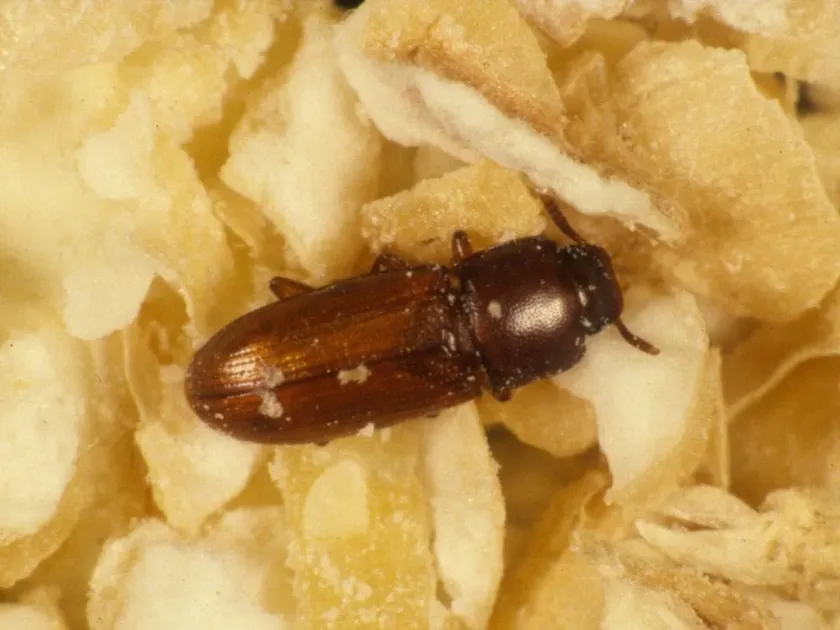
The depressed flour beetle, known scientifically as Palorus ratzeburgi, is a small insect belonging to the Tenebrionidae family. Adult beetles are typically 2.5 to 3 mm long, with a flattened, elongated body shape and a reddish-brown color.
The most distinctive morphological feature of this species is its antennae, which gradually thicken toward the apex, forming a club. The body surface is covered with fine punctures, and the elytra display faint longitudinal rows of dots.
The larvae are approximately 4 mm long, cylindrical in shape, and yellowish-white. Their heads are darker than the rest of the body, and the last abdominal segment ends with two distinct chitinous appendages, which serves as a key identification mark.
These beetles are capable of flight, allowing them to disperse quickly within storage facilities and infest new batches of commodities. They prefer secluded environments, often hiding in cracks in walls, under floorboards, or deep within milling equipment.
The life cycle duration depends significantly on ambient temperature and substrate moisture. In favorable conditions, such as 25-27°C, the development from egg to adult takes about 40 to 50 days, with females producing up to 200 eggs.
What it damages
This species is a significant pest of stored grain products, specifically processed items like flour, semolina, and bran. It thrives in fine-particulate matter, making it a persistent threat to mills and grain storage warehouses.
The depressed flour beetle feeds primarily on the starch and protein content of milled products. Both adults and larvae contribute to the destruction of the grain, significantly reducing its quality and making it unfit for commercial use.
Beyond the actual consumption of the grain, the pest causes widespread contamination. Feces, cast skins, and dead insects accumulate in the product, leading to the development of off-odors and undesirable chemical changes in the flour.
When infestation levels are high, the concentrated activity of the beetles can cause heating within the grain mass. This increase in temperature creates an ideal microenvironment for mold and fungal growth, further damaging the stored inventory.
In processing facilities, the beetle is notorious for inhabiting dead zones in machinery. These areas are difficult to clean, leading to constant cross-contamination of finished products exiting the production lines.
When it appears
In heated storage environments, development continues year-round without interruption. Higher temperatures and humidity levels significantly accelerate the population growth, allowing for multiple generations per year.
In unheated areas, beetle activity decreases during colder seasons. However, the species is resilient and can survive winter temperatures by seeking shelter in structural gaps, quickly resuming reproduction as soon as the weather warms up.
Signs of infestation
The primary indication of an infestation is the visual presence of adult beetles or larvae within the flour or grain supplies. The infested product may appear clumped, off-color, or exhibit a musty, pungent smell typical of insect-damaged grain.
- A noticeable musty or fermented odor in the storage facility.
- Silk-like webbing left by larvae in infested pockets of flour.
- Temperature spikes within the grain pile detected during routine monitoring.
- Dead beetles visible on surfaces, near windows, or near light sources.
- Fine dust-like debris found around packaging or underneath storage equipment.
Control measures
Rigorous warehouse sanitation is the primary defense against this pest. Regular removal of spilled flour and debris from floors, machinery, and wall cracks is essential to eliminate the habitats where the population can establish itself.
Before introducing new grain stocks, professional disinfestation of empty warehouses is necessary. Using aerosol-based insecticides helps target the beetles in tight spaces where they are likely to hide between storage cycles.
For already infested products, fumigation is the most effective solution. Using aluminum phosphide-based fumigants in sealed environments ensures the complete elimination of all life stages of the beetle within the grain mass.
Ongoing monitoring using pheromone or sticky traps is highly recommended. Early detection of adult beetles allows for localized management, preventing the need for large-scale chemical treatments of the entire inventory.
Maintaining low moisture content in stored grains (below 13%) is crucial. Dry conditions are naturally suppressive to the depressed flour beetle, slowing its reproductive rate and helping to preserve the quality of the stored goods.
Taxonomy
- Latin name
- Palorus ratzeburgi
- Order
- Coleoptera (beetles)
- Family
- Tenebrionidae
- EPPO code
- PALSRA
Discussion
No discussions yet — be the first.