
Long-wristed hermit crab
Pagurus longicarpus
Description
How to identify
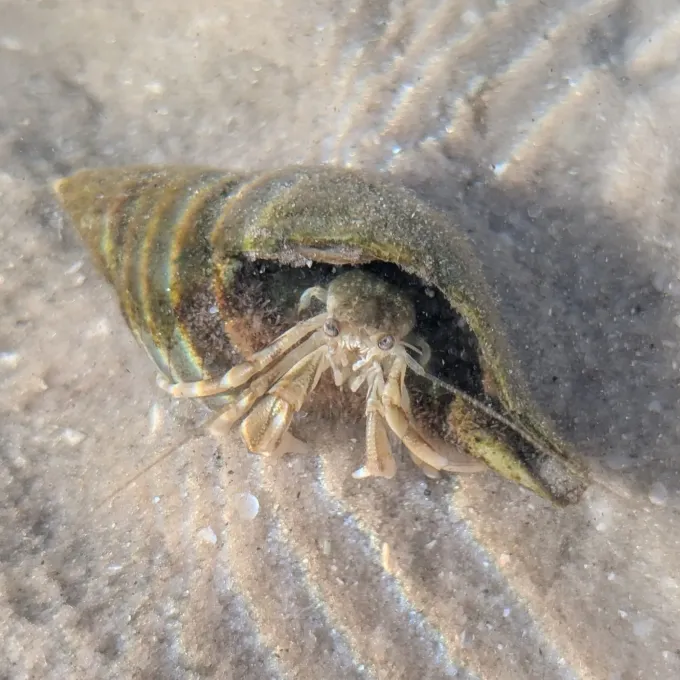
The long-wristed hermit crab (Pagurus longicarpus) is a small decapod crustacean widely known for using abandoned gastropod shells for physical protection.
It is morphologically characterized by a distinct asymmetry in its claws, with the right chela being significantly larger than the left one.
The body coloration ranges from gray to brownish, often featuring dark bands on the ambulatory legs, providing excellent camouflage on sandy bottoms.
The carapace of adults is typically small, often not exceeding 3 centimeters in length, allowing them to inhabit narrow shells and crevices.
This species belongs to the family Paguridae and is recognized as the most common hermit crab species along the Atlantic coast of North America.
What it damages
While not a traditional agricultural pest, Pagurus longicarpus causes economic damage to the aquaculture sector, specifically shellfish farming.
These crabs damage nets, cages, and feeding lines, leading to infrastructure maintenance costs and potential escapes of cultured products.
They act as intense resource competitors, consuming food supplies intended for commercial mollusk species like oysters or clams.
By damaging substrate surfaces, hermit crabs expose shellfish to secondary infections and environmental stress.
Large aggregations of these crabs can destabilize the bottom sediment, which negatively affects the environmental conditions required for successful shellfish growth.
When it appears
The activity of the long-wristed hermit crab peaks during the warmer spring and summer months when metabolic rates are highest.
During the colder months, populations migrate to deeper, warmer offshore waters to survive the winter season.
The breeding cycle of this species is highly dependent on water temperature, leading to peak abundance in late spring and early summer.
Molting occurs frequently throughout the warmer months, forcing the crabs to be active in seeking larger shells, increasing their interaction with human infrastructure.
The overlap of the peak growing season for mollusks and the peak activity season of the crabs makes this a critical period for aquaculture management.
Signs of infestation
The primary sign of infestation is mechanical damage to netting and protective mesh surrounding mollusk culture sites.
An unusual accumulation of empty shells in areas where they were not originally deposited indicates the presence of a hermit crab colony.
A decline in the growth rates of shellfish in specific parts of the farm, despite favorable water conditions, points to heavy resource competition.
Finding crab remains or molted exoskeletons in filtration systems or drainage pipes suggests a high density of the crab population nearby.
High mortality rates among juvenile mollusks, often with their shells occupied by crabs, serve as a clear indicator of a significant hermit crab presence.
Control measures
The most effective strategy involves the use of high-density protective mesh that prevents small crabs from entering the cultured areas.
Regular maintenance and cleaning of aquatic equipment help to remove debris that might attract hermit crabs to the farming site.
Integrated pest management includes the use of baited traps to periodically reduce the density of hermit crabs near sensitive production zones.
Monitoring environmental factors such as water temperature can help predict influxes of crab populations into the aquaculture zone.
Selective habitat modification, such as removing large amounts of empty shells from the immediate farm vicinity, can discourage long-term colonization.
Taxonomy
- Latin name
- Pagurus longicarpus
- Family
- Paguridae
- EPPO code
- PAGALO
Discussion
No discussions yet — be the first.