
Common hermit crab
Eupagurus bernhardus
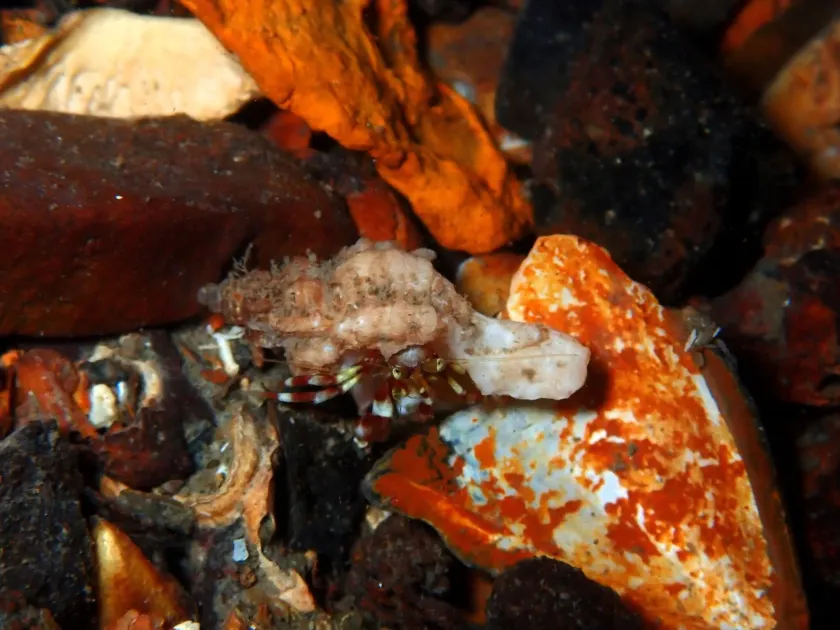
Description
How to identify
The common hermit crab (Pagurus bernhardus, historically Eupagurus bernhardus) is a well-known decapod crustacean.
It is distinguished by its soft, unprotected abdomen, which it shields by occupying empty gastropod shells.
The crab features asymmetrical chelae (claws), with the right one being significantly larger to serve as a defensive plug.
Their exoskeleton color ranges from grayish to brownish, aiding in camouflage among rocks and sandy substrates.
Individuals can reach up to 10 centimeters in length, closely linked to the size of the shells they inhabit throughout their life.
What it damages
As a purely marine organism, this species does not pose a threat to traditional terrestrial agriculture.
In marine aquaculture, hermit crabs can impact the mortality rates of young bivalve mollusks.
They compete for space and nutritional resources, sometimes disrupting the growth cycles of cultivated marine species.
Their scavenging nature can lead them to feed on the organic waste produced by aquaculture facilities, potentially affecting water quality.
They do not cause damage to crops or soil, making them irrelevant to terrestrial farming systems.
When it appears
The breeding season typically peaks during the winter and early spring, when water temperatures support egg development.
Females carry their eggs under the abdomen until they hatch into planktonic larvae that float in the water column.
The larval stage involves several molting phases before the young crabs metamorphose and descend to the seabed.
Once settled, they actively seek their first shell, an essential requirement for survival against predators.
Adult hermit crabs maintain activity throughout the year, with minimal seasonal migration patterns.
Signs of infestation
The most evident sign of presence is the movement of empty shells across the seabed in an erratic manner.
In controlled environments, damaged shells or broken mollusk specimens indicate hermit crab activity.
Visual surveys during low tide or via underwater monitoring equipment often reveal their congregations.
They are frequently found in areas with high abundance of empty gastropod shells, which are essential for their growth.
Tracking their population is possible using bait traps designed for crustacean monitoring.
Control measures
Physical barriers such as fine-mesh netting are effective in excluding hermit crabs from aquaculture pens.
Regular maintenance and cleaning of submerged cages minimize the accumulation of debris that attracts scavengers.
Manual removal of specimens during routine inspections is a standard practice for maintaining balance in aquaculture zones.
Environmental management focuses on controlling the shell availability to limit the local crab population density.
Chemical control is generally avoided due to the adverse effects it could have on the delicate marine ecosystem.
Taxonomy
- Latin name
- Eupagurus bernhardus
- Family
- Paguridae
- EPPO code
- EPGRBE
Discussion
No discussions yet — be the first.