
Hermit crab
Eupagurus
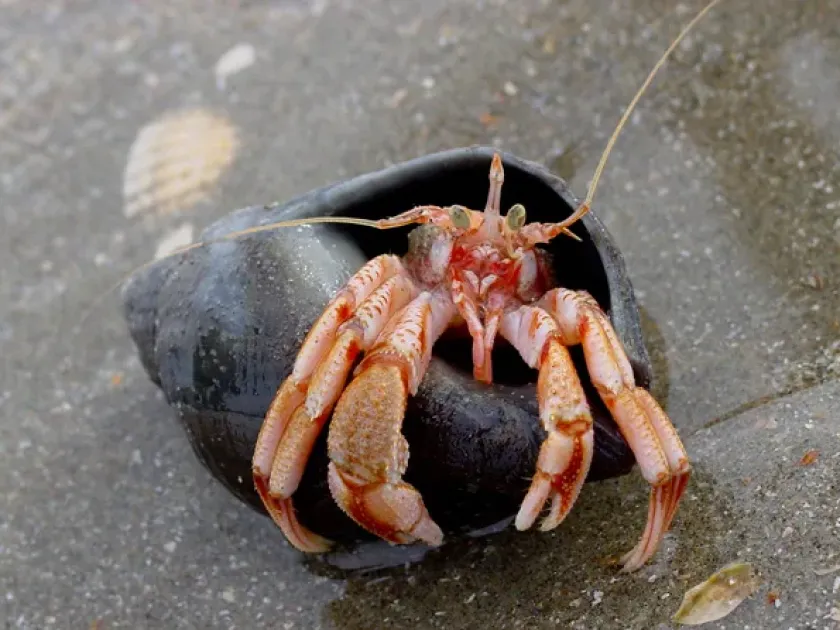
Description
How to identify
The hermit crab (genus Eupagurus, often synonymous with Pagurus) belongs to the order Decapoda. These crustaceans are distinguished by their soft, asymmetrical abdomens which they protect by inhabiting empty snail shells.
As marine organisms, they possess specialized appendages and gills adapted for living in aquatic environments, primarily in saline waters.
Their life cycle involves a complex series of larval stages in the open ocean before they settle on the seafloor and begin their life within a shell.
Hermit crabs are characterized by their social interaction and the need for frequent shell exchanges to accommodate their physical growth.
They are fundamentally different from terrestrial soil organisms, lacking the morphological structures required to exist in agricultural soils.
What it damages
The hermit crab is not a plant pest. It holds no ecological connection to crop plants and cannot damage any vegetation grown in gardens, fields, or greenhouses.
There are no recorded instances of this species interacting with crops, as its biological requirements are strictly confined to underwater ecosystems.
Claims suggesting the hermit crab damages crops are scientifically inaccurate and should be disregarded in any agronomic diagnostic procedure.
Its diet consists of marine detritus, plankton, and small organic particles found on the ocean floor, which poses zero risk to plant tissues.
Therefore, the species holds no economic importance as a plant pest in either industrial or private agricultural sectors.
Control measures
No control measures are necessary for hermit crabs in an agricultural context, as they do not constitute a threat to crops or soil health.
The use of insecticides, pesticides, or other chemical treatments against these crustaceans is unnecessary and environmentally irresponsible.
If marine-based fertilizers containing sea debris are used, simple washing or proper composting effectively ensures no marine life remains in the material.
Farmers should focus their scouting and protection efforts on genuine terrestrial pests that directly impact plant yield and productivity.
Management of field health should be based on established entomological and pathological data rather than misconceptions about marine life.
Taxonomy
- Latin name
- Eupagurus
- Family
- Paguridae
- EPPO code
- EPGRSP
Discussion
No discussions yet — be the first.