
Hermit crab
Pagurus
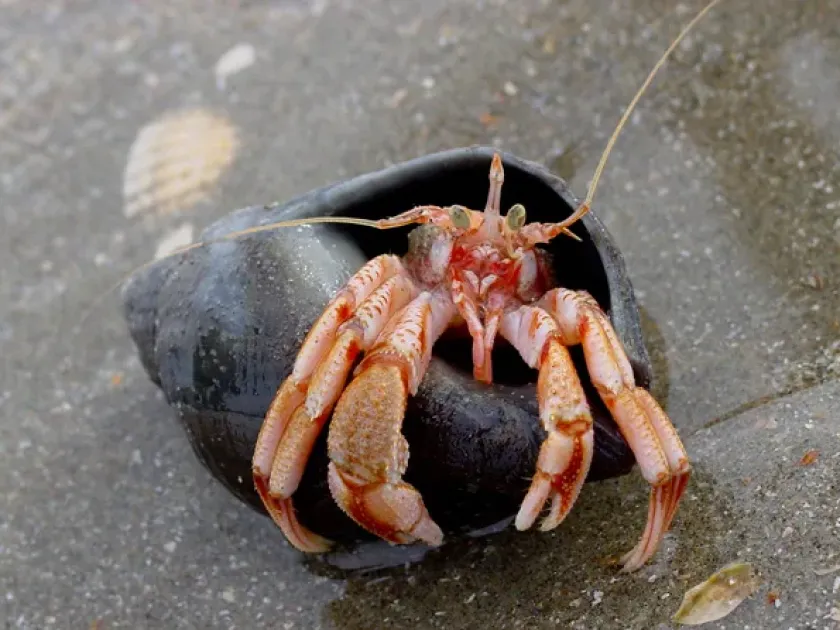
Description
How to identify
The hermit crab (genus Pagurus) belongs to the order Decapoda. They are distinct due to their soft, asymmetrical abdomen, which they protect by inhabiting empty gastropod shells.
These crustaceans undergo a complex life cycle involving planktonic larval stages before settling on the seabed as juveniles. Their biological development is strictly limited to marine environments.
As omnivorous scavengers, they play a vital role in marine ecosystems, though their behavior can become problematic in intensive farming environments.
They are not agricultural pests in the traditional land-based sense, as they cannot survive or interact with soil-bound terrestrial crops.
Morphologically, they possess specialized appendages that allow them to hold shells firmly and move efficiently along the benthic zone.
What it damages
While hermit crabs are essential to the ocean, they can act as pests in marine farming operations, particularly within the aquaculture sector.
In seaweed cultivation, they may damage young crops by clipping stipes or interfering with the attachment mechanisms on cultivation lines.
Within shellfish farming, such as scallops or oyster beds, they can be a nuisance by competing for food resources and occasionally damaging the delicate tissue of young mollusks.
High population densities of Pagurus can lead to physical disturbances of cultivation structures, potentially causing crop loss or harvest delays.
The damage is primarily economic, related to the maintenance of infrastructure and the protection of high-value aquatic species from unwanted interference.
Control measures
Protecting marine crops from hermit crab interference requires specialized infrastructure and management practices.
Installing fine-mesh barriers and protective netting around cultivation zones prevents the crabs from accessing the protected species.
Regular maintenance of the farm environment, including the removal of organic debris, reduces the presence of scavengers in the immediate vicinity of the crop.
Deploying targeted trapping systems can help maintain population numbers below the threshold that would cause significant damage to the farming setup.
Site selection based on baseline ecological surveys helps avoid areas with high historical densities of benthic hermit crab populations.
Taxonomy
- Latin name
- Pagurus
- Family
- Paguridae
- EPPO code
- PAGASP
Discussion
No discussions yet — be the first.