
Pachypappa
Pachypappa
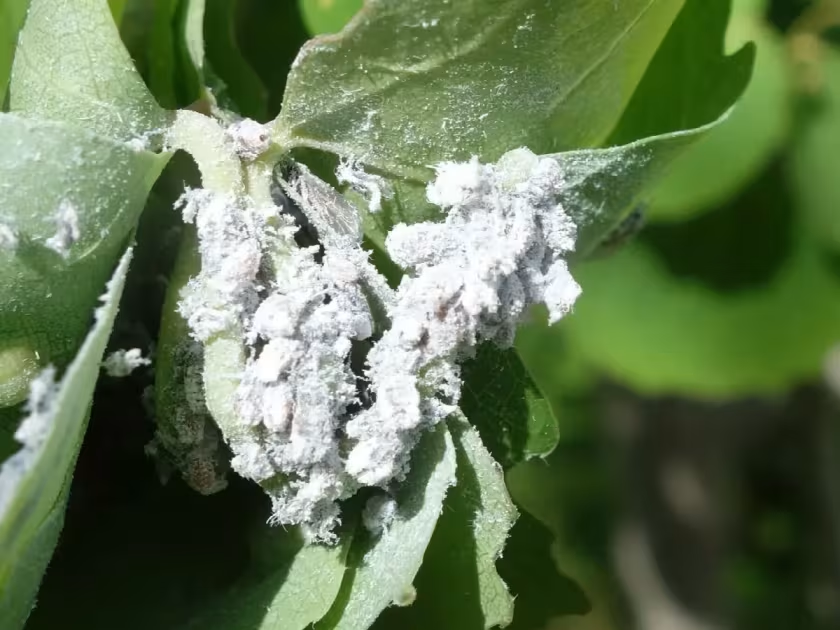
Description
How to identify
Pachypappa is a genus of aphids within the family Aphididae that specializes in parasitizing coniferous trees. Adult individuals are typically small and often covered in waxy secretions, giving them a whitish or greyish appearance.
The biology of this pest is closely intertwined with the life cycle of conifers. The insects undergo several developmental stages, including egg-laying on bark and the production of both winged and wingless generations, which complicates early detection.
Presence of the pest can be identified by the characteristic white, cotton-like secretions found on the branches. These secretions are a reliable indicator of active feeding by the aphid colony.
Identification is often challenging due to the insect's hidden nature, as they may reside within galls or deep within the dense foliage. Gardeners often notice the colony only when the population reaches a significant level visible to the naked eye.
For precise species identification, a professional examination of morphological characteristics under a microscope is required, as many aphid species affecting spruce and fir trees share similar feeding habits.
What it damages
The primary hosts of Pachypappa are members of the Pinaceae family, specifically spruce (Picea) and fir (Abies). The pest extracts cell sap, which leads to the depletion of the tree's metabolic resources.
Feeding causes tissue deformation on the shoots. Damage to buds and young growth is particularly dangerous, as it causes stunted and twisted branches due to the enzymes released by the aphid.
Beyond physical damage, Pachypappa feeding weakens the tree's immune system. A weakened plant becomes susceptible to secondary pests, such as bark beetles, or infections by various fungal pathogens.
In cases of heavy infestation, premature needle drop occurs, which significantly reduces the aesthetic value of ornamental conifers in parks and nurseries.
The economic impact manifests as a loss of marketability for seedlings, reduced annual wood increment, and a risk of total tree decline if the infestation persists over several seasons.
When it appears
The active phase of the Pachypappa life cycle begins in early spring when larvae emerge from overwintered eggs. This timing coincides with the onset of sap flow and bud break in coniferous trees.
Throughout the summer, several generations develop, including winged forms capable of migrating to neighboring trees, thereby expanding the infestation area within a forest or garden.
Peak population density is usually observed in June and July. During this period, moderate warmth and sufficient humidity facilitate rapid reproduction of the colonies.
In autumn, females lay eggs that remain dormant in bark crevices or at the base of buds throughout the winter. This resting stage ensures the species' survival during cold weather.
Monitoring for the pest is recommended twice per season: once during the bud break period and again in mid-summer to curb potential outbreaks before they peak.
Signs of infestation
The first sign of infestation is the appearance of white, fluffy patches resembling small pieces of cotton on the underside of needles or at branch junctions. These are signs of the insect's waxy excretions.
Over time, honeydew — a sticky, sugary substance produced by the aphids — becomes visible on the shoots. This liquid often attracts ants, which frequently serve as an indicator of the aphid presence.
The growth of sooty mold on the surface of needles covered with honeydew is another serious warning sign. Needles turn dark or black, which disrupts the tree's ability to perform photosynthesis efficiently.
- Yellowing and twisting of young shoot tips.
- Premature shedding of young needles.
- Stunted height and lateral growth of the tree.
- Large aggregations of ants on the trunks and branches.
- Presence of empty larval skins on the bark.
If a tree appears distressed and exhibits distorted shoots, it indicates a chronic infestation that requires immediate professional intervention.
Control measures
Control of Pachypappa should be integrated, involving both cultural and chemical methods. It is essential to maintain tree health through proper irrigation and balanced fertilization programs.
Chemical control involves the use of systemic insecticides, which translocate through the plant tissues to reach the aphids. Applications are most effective when timed during the larval emergence period.
For localized infestations, mechanical removal of the affected shoots containing aphid colonies, followed by proper disposal, is recommended.
Biological control, including the use of entomopathogenic fungi or encouraging natural predators like ladybugs and lacewings, helps suppress pest populations in ecologically sensitive areas.
Preventative insecticide sprays in the early spring, before the growing season starts, can destroy eggs or first-generation larvae, significantly reducing the risk of a summer population boom.
Taxonomy
- Latin name
- Pachypappa
- Order
- Hemiptera (bugs, aphids, leafhoppers)
- Family
- Aphididae
- EPPO code
- PAPPSP
Discussion
No discussions yet — be the first.