

Pest · Lepidoptera (butterflies) · affects Fodder beet, Winter wheat, Potato
Especially harmful
Turnip moth
Agrotis segetum
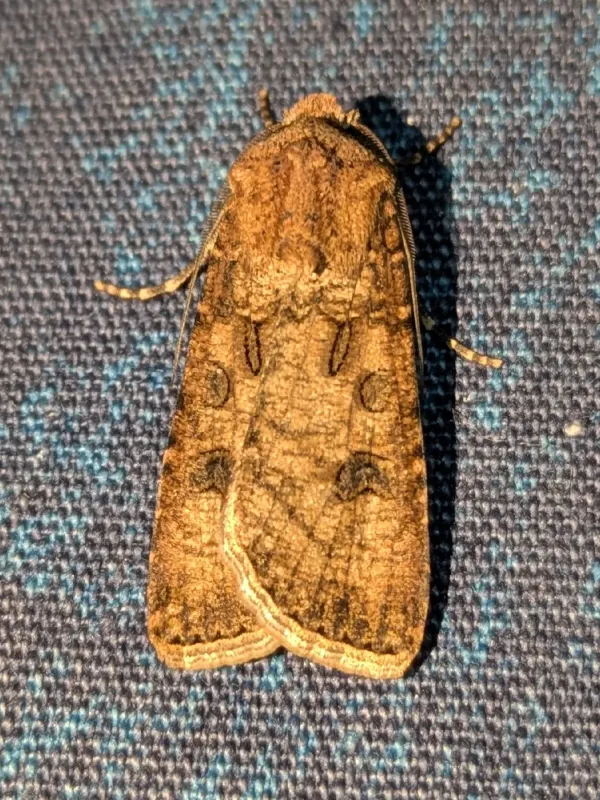
Description
How to identify
The turnip moth (Agrotis segetum) belongs to the Noctuidae family of the order Lepidoptera. It is a highly destructive insect, primarily known for its larvae, which live underground and cause severe damage to various agricultural crops.
The adult moth has a wingspan of up to 45 mm. The forewings are grayish-brown or nearly black with distinct dark markings, while the hindwings are lighter in color, often whitish with a pearly sheen.
The mature larva can grow up to 50 mm in length. It features an earthy-gray color with a matte texture. A characteristic granular appearance of the skin is a key feature used by agronomists to identify the larva during field surveys.
The pupa is yellowish-brown, glossy, and about 16–20 mm long. It is typically found in the soil at depths of up to 10 cm, housed within a specialized earthen cell created by the larva before transformation.
The eggs are hemispherical with a ribbed surface. Initially, they are milky-white, but as the larva develops inside, they darken, providing a visual cue that hatching is imminent for field observers.
What it damages
The turnip moth is a polyphagous pest, meaning it attacks a wide variety of plants. It is particularly dangerous during the early growth stages of crops, as the larvae feed on roots and the underground base of stems.
Crops frequently targeted by this pest include:
- Fodder beet
- Winter oilseed rape
- Winter barley
- Peas
- Cucumber
- Tomato
- Apple
- Peach
The damage is caused primarily by older larvae that feed at night. During the day, they remain hidden in the soil, coming out at night to sever the stems of young plants at the ground level.
This results in significant stand thinning, which often necessitates reseeding of damaged patches. The reduction in plant population directly correlates with lower overall crop yields.
In addition to destroying young seedlings, the larvae may bore into root crops like beets or into fruits like tomatoes, leading to secondary infections and rendering the produce unmarketable.
When it appears
Depending on the climate, the turnip moth typically completes one to three generations per year. They overwinter as mature larvae deep in the soil (down to 25 cm), where they are insulated against freezing temperatures.
In spring, as soil temperatures reach approximately 10°C, the larvae move to the upper soil layers to feed on weeds and young crops before pupating. This marks the start of the primary infestation period.
The emergence of the first generation of moths occurs in late spring or early summer. Adult moths feed on nectar from weeds, which increases their lifespan and overall reproductive success in the field.
The second generation is usually the most damaging in late summer and early autumn. During this time, they pose a severe threat to newly planted winter crops, such as winter barley and rapeseed.
Favorable weather conditions, such as moderate soil moisture and warm temperatures, significantly boost the survival rate of eggs and young larvae, leading to population explosions.
Signs of infestation
The first visual indication of a turnip moth infestation is the sudden wilting of individual plants that appear healthy otherwise. A simple tug will reveal that the roots have been severed.
By carefully loosening the soil around the base of a wilted plant, one can usually find the larva, which tends to curl into a tight circle when disturbed during daylight hours.
On young foliage, one might observe small holes or "windows" left by early-stage larvae. These minor signs are crucial for early detection and indicate that a control strategy should be implemented.
The stem near the soil surface may show signs of girdling or localized necrosis. In some cases, the tissue becomes discolored due to secondary fungal attacks following the initial damage by the larvae.
An abundance of frass (larval excrement) on the soil surface in the early morning is a clear sign of high pest activity, confirming that the population density requires urgent chemical or biological intervention.
Control measures
Integrated pest management (IPM) for the turnip moth involves a combination of cultural practices, pheromone monitoring, and timely insecticide applications to maintain populations below economic thresholds.
Effective weed control is critical, as weeds provide both nectar for adult moths and shelter/food for early-stage larvae. Keeping fields clean reduces the attractiveness for oviposition.
Deep autumn plowing is a proven method to reduce overwintering populations. It exposes the larvae to the surface, where they become vulnerable to natural predators, birds, and harsh weather conditions.
Chemical control should be performed in the evening when larvae emerge from the soil to feed. Contact and systemic insecticides are effective if applied during the period of peak larval activity.
Pheromone traps are essential tools for monitoring the flight of adult moths. By accurately timing the application of insecticides to coincide with the hatch of new larvae, farmers can achieve better results with fewer chemicals.
In brief
13
Damages crops
Content graph
Damages crops · 13
Content graph
Connections · Turnip moth
Most often together:
Marketplace
Products · 6


Biology
Taxonomy
- Latin name
- Agrotis segetum
- Order
- Lepidoptera (butterflies)
- Family
- Noctuidae
- EPPO code
- AGROSE
Community
Discussion
No discussions yet — be the first.