
New Zealand subterranean grass caterpillar
Oxycanus cervinatus
Description
How to identify
The New Zealand subterranean grass caterpillar (Oxycanus cervinatus) is a moth species from the Hepialidae family. Adult moths are characterized by a cryptic coloration that blends well with the surrounding environment, with wingspans reaching up to 80 mm.
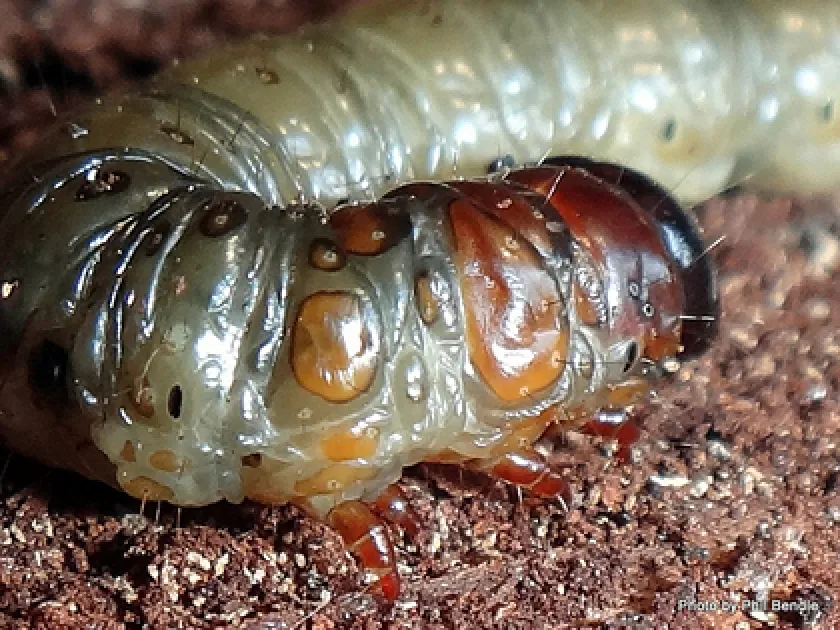
The damaging stage of this insect is the larva. These large, greyish-brown caterpillars inhabit deep vertical tunnels in the soil. They are nocturnal feeders and retreat into their tunnels during the day, which makes them difficult to target with surface applications.
What it damages
This pest is a significant threat to pastoral farming, causing extensive damage to ryegrass, clover, and other pasture species. It also poses a serious threat to cereal crops, damaging them by feeding on the roots and the base of the stems.
Severe infestations can lead to the complete destruction of pasture swards, resulting in significant economic losses for livestock farmers. The loss of grass cover also increases the risk of soil erosion and the encroachment of undesirable weed species.
When it appears
The adult moth flight occurs in autumn, specifically between March and May. During this window, females scatter eggs over the pasture, which hatch shortly after to begin the larval development stage.
The larvae spend the winter and spring months in the soil. Peak feeding activity and crop damage occur in late winter and early spring, just before the larvae reach their final instar and prepare to pupate within their tunnels.
Signs of infestation
Visible signs of infestation include patches of dying or missing grass that become noticeable as the larvae grow larger. The presence of small fecal pellets (frass) around the tunnel entrances is a diagnostic feature of the pest.
Evidence of silken tunnels connecting the burrows to the surface indicates that caterpillars are actively feeding nearby. In severely infested fields, the soil surface may feel loose or show numerous small openings leading into the larval tunnels.
Control measures
Effective management begins with pasture management practices. Hard grazing during the moth flight period helps to expose eggs to harsh environmental conditions and trampling, which reduces the survival rate of the next generation.
Chemical control involving systemic or contact insecticides may be required in high-pressure years. Additionally, biological control options, such as using specific bacterial or fungal pathogens that infect larvae within their tunnels, are being developed as sustainable alternatives.
Taxonomy
- Latin name
- Oxycanus cervinatus
- Order
- Lepidoptera (butterflies)
- Family
- Hepialidae
- EPPO code
- OXYCCE
Discussion
No discussions yet — be the first.