
Honeysuckle aphid
Ovatus lonicericola
Description
How to identify
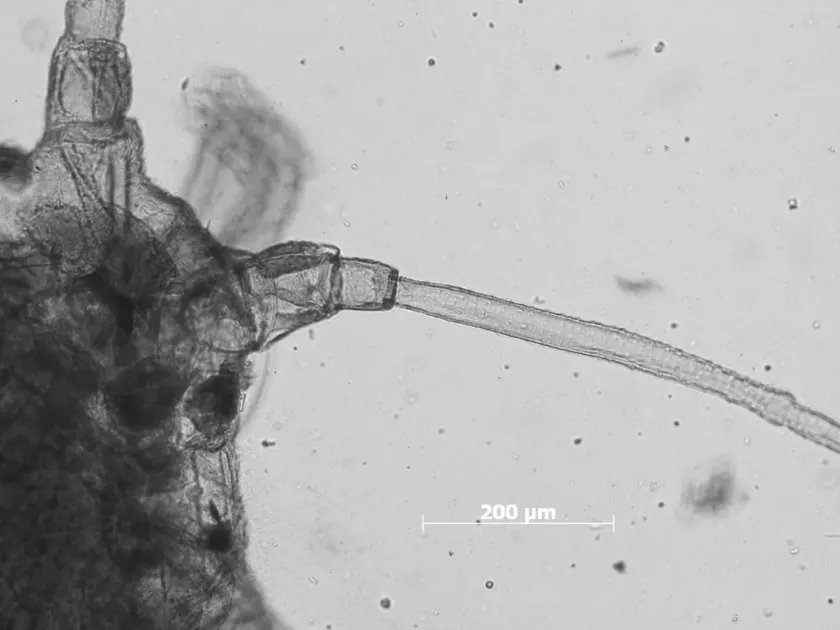
The honeysuckle aphid (Ovatus lonicericola) is a small insect belonging to the family Aphididae. It is a specialized pest that thrives on various species of honeysuckle plants.
Adult aphids are typically pale green or yellowish, allowing them to blend perfectly with the soft tissue of new honeysuckle foliage. They measure about 2-3 mm in length.
The life cycle involves overwintering eggs laid on the bark or near buds. As spring temperatures rise, these eggs hatch into nymphs that quickly form dense colonies.
During the growing season, winged forms appear to disperse the population to other parts of the shrub or neighboring plants, ensuring the survival of the colony.
Their reproduction is remarkably fast, relying on both asexual and sexual stages to maintain high population densities during the peak of the growing season.
What it damages
This pest feeds primarily on the sap of young, tender leaves and shoot tips of honeysuckle. This feeding activity drains vital nutrients from the plant's growing points.
The constant withdrawal of plant fluids leads to stunted growth, leaf curling, and overall stress to the host shrub. This makes the plant less vigorous and reduces the quality of berries.
The excretion of honeydew by the aphids coats the leaves, providing an ideal substrate for the growth of sooty mold, which further interferes with photosynthesis.
Plants infested for long periods exhibit yellowing, premature leaf drop, and weakened structural integrity, leaving them vulnerable to harsh winters.
In ornamental settings, the disfigurement caused by honeysuckle aphid can significantly reduce the aesthetic appeal of the bushes.
When it appears
The infestation cycle begins early in spring when nymphs hatch from overwintering eggs. This is closely synchronized with the emergence of new foliage on honeysuckle.
Peak populations are usually observed in late spring and early summer (May-June). During this time, the aphids are most destructive as they exploit the rapid growth of the plant.
Multiple generations occur throughout the summer months. Warm, dry weather conditions provide the most favorable environment for explosive population growth.
As autumn approaches, the aphids produce eggs that are deposited in protected areas of the plant, ensuring survival until the following spring.
Monitoring should be most intense during the period of leaf unfolding to catch early colonies before they spread extensively.
Signs of infestation
The most distinctive symptom is the twisting and curling of apical leaves, where the aphids hide and congregate for feeding.
Sticky residue, known as honeydew, on the surface of leaves and stems is a clear indication of a heavy aphid infestation.
The presence of ants patrolling the branches is a strong indicator of aphid activity, as ants protect the aphids to feed on their sugary secretions.
The development of black sooty mold on the foliage is a secondary sign that the infestation has persisted for some time, covering leaves in a dark, fungal layer.
- Curled and distorted young leaves.
- Sticky honeydew patches on foliage.
- Increased ant activity on branches.
- Presence of black sooty mold.
- Stunted shoot development.
Control measures
Manual removal of heavily infested shoots is an effective way to reduce the immediate population, provided the damage is localized.
Encouraging natural predators such as lady beetles, hoverflies, and lacewings is a sustainable way to manage aphid populations without chemical interference.
If chemical control is necessary, choose systemic insecticides that are labeled for use on fruit-bearing shrubs to minimize impact on the surrounding environment.
Regular monitoring and early application of insecticidal soaps or neem oil can prevent large-scale outbreaks early in the season.
Maintaining the overall health of the honeysuckle plant through proper pruning and watering helps the shrub recover faster from aphid feeding damage.
Taxonomy
- Latin name
- Ovatus lonicericola
- Order
- Hemiptera (bugs, aphids, leafhoppers)
- Family
- Aphididae
- EPPO code
- OVATLO
Discussion
No discussions yet — be the first.