
Inula aphid
Ovatus inulae
Description
How to identify
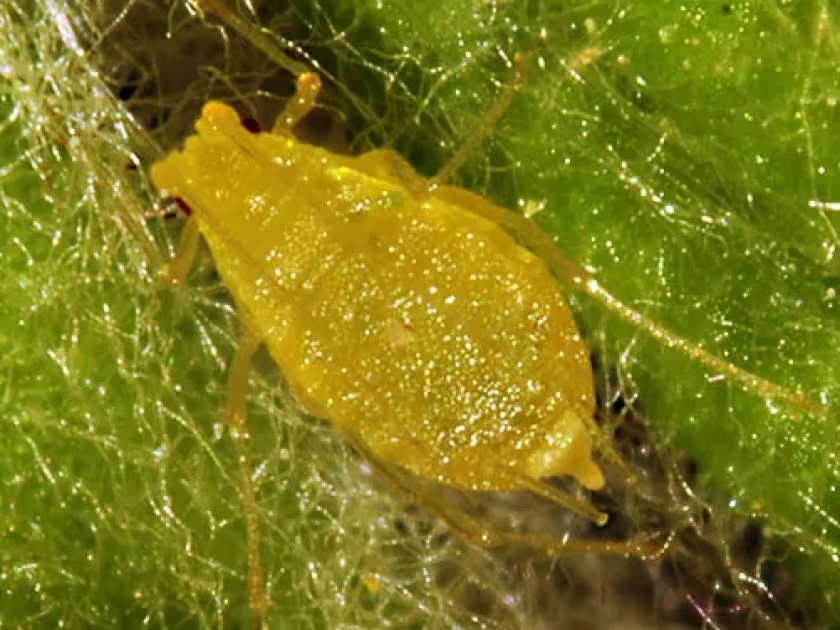
The Inula aphid (Ovatus inulae) is a small insect classified within the order Hemiptera and the family Aphididae. These aphids are typically green or yellowish-green, allowing them to blend seamlessly with the foliage of their host plants.
The species is primarily identified by its host specificity and subtle morphological features, such as the structure of the cornicles and antennae. Like other aphids, they exist in both winged and wingless forms to facilitate movement and colony growth.
What it damages
This pest specifically targets plants within the Asteraceae family, most notably the elecampane (Inula helenium). By piercing plant tissues with their stylets, they extract sap, which deprives the plant of essential nutrients and moisture.
Heavy infestations can lead to significant stunting, reduced flowering, and a decline in overall plant health. Furthermore, their feeding activity creates entry points for various bacterial and fungal pathogens.
When it appears
The life cycle of Ovatus inulae is synchronized with the vegetative season of the host plant. They emerge in early spring when the first buds and leaves provide a nutrient-rich food source for the hatching larvae.
Throughout the summer, the population grows rapidly through asexual reproduction. As the season progresses, the density of colonies often peaks, requiring vigilant monitoring to prevent severe damage to the host crops.
Signs of infestation
Signs of infestation include curled, distorted, or yellowing leaves. Because aphids prefer the underside of leaves, they are often hidden from casual observation until leaf curling becomes severe.
Sticky honeydew secretions deposited on leaves are a classic indicator of an aphid presence. This substance often leads to the development of sooty mold, which creates a blackened appearance on the foliage and inhibits photosynthesis.
Control measures
Effective management includes the use of systemic insecticides that target sucking insects. Regular scouting of the garden is essential to catch early-stage colonies before they spread extensively.
Cultural control methods involve keeping the garden free from host weeds and encouraging natural predators such as ladybugs and hoverfly larvae. Horticultural oils or insecticidal soaps can also be used as localized treatments.
Taxonomy
- Latin name
- Ovatus inulae
- Order
- Hemiptera (bugs, aphids, leafhoppers)
- Family
- Aphididae
- EPPO code
- OVATIU
Discussion
No discussions yet — be the first.