
Apple-plantain aphid
Ovatus insitus
Description
How to identify
The apple-plantain aphid (Ovatus insitus) is a small sap-sucking insect belonging to the Aphididae family. It is a common pest that impacts apple orchards globally.
Adult aphids are typically light green or yellowish, blending into the color of young leaves and shoots, which makes early detection difficult for growers.
This species follows a heteroecious life cycle, alternating between apple trees (primary host) and plantain (secondary host) throughout the growing season.
Winter is spent as eggs deposited in cracks of the bark near the buds. As soon as temperatures rise in spring, these eggs hatch into fundatrices.
During the summer months, winged forms migrate to plantain plants to reproduce, returning to apple trees in autumn to lay overwintering eggs.
What it damages
Apple trees are the primary target of this pest. Aphids feed on the sap of young, tender leaves and shoot tips, causing significant stress to the tree.
By removing essential nutrients and fluids from the plant tissue, the aphid infestations stunt the growth of young shoots and reduce the overall tree vigor.
Direct damage includes the curling and deformation of leaves. In severe cases, the entire canopy of the tree may look withered and diseased due to heavy infestation.
While the fruit itself is less frequently attacked than the foliage, high aphid pressure can still lead to lower fruit quality and reduced yields due to poor carbohydrate supply.
Long-term damage weakens the host plant, making the trees more susceptible to environmental stress, including frost damage during winter months.
Signs of infestation
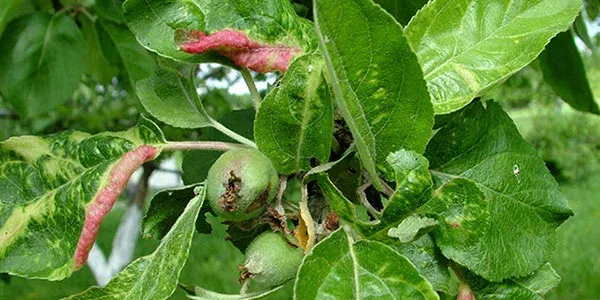
The most prominent sign of infestation is the tight curling of leaves along the midrib. These curled leaves provide shelter for large colonies of aphids.
Leaves often show discoloration, turning yellow or developing reddish spots, which are localized tissue reactions to the aphid's saliva during feeding.
Honeydew, a sticky substance secreted by the aphids, accumulates on the leaves, leading to the growth of sooty mold, which appears as a black, dusty layer.
Ant activity is a common indicator. Ants frequently farm these aphids to feed on the honeydew, actively protecting them from natural predators.
Growth arrest of terminal shoots is another symptom. If you see stunted, twisted tops on apple branches in early spring, an aphid colony is likely present.
Control measures
Integrated pest management starts with sanitation, such as removing broad-leaf plantain plants near the orchard and thinning out water sprouts in the apple canopy.
Conserving natural enemies like lady beetles, hoverflies, and lacewings is essential for long-term suppression of aphid populations in a sustainable orchard environment.
Chemical intervention should be timed based on scouting results. Applications made at the early bud-burst stage are typically the most effective against founding colonies.
Always rotate chemical products with different modes of action to prevent the development of insecticide resistance, which is common in aphid populations.
- Monitor for curled leaves regularly.
- Encourage beneficial insect habitats in orchards.
- Use horticultural oils for early spring suppression.
- Check for ant traffic on tree trunks.
Taxonomy
- Latin name
- Ovatus insitus
- Order
- Hemiptera (bugs, aphids, leafhoppers)
- Family
- Aphididae
- EPPO code
- OVATIS
Discussion
No discussions yet — be the first.