
Ornix
Ornix
Description
How to identify
Ornix (the genus name used for various species within the Gracillariidae family) is a type of small leaf-mining moth belonging to the order Lepidoptera.
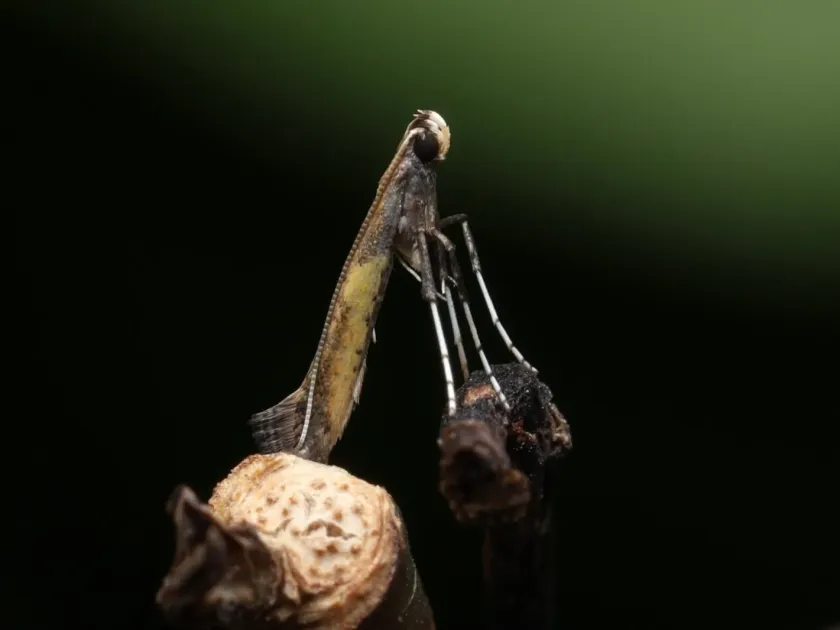
These moths are characterized by their narrow, fringed wings and a distinct resting posture, often found on the bark or undersides of leaves.
The larvae, or caterpillars, exhibit two distinct life stages: initial development inside the leaf tissue and later development in rolled or folded leaves.
Identifying the species can be difficult due to their small size and cryptic habits, often requiring expert morphological or molecular analysis.
The insect thrives in diverse environments, adapting its reproductive cycles to match the phenology of its host plants effectively.
What it damages
Ornix larvae primarily feed on the foliage of fruit trees, with a specific preference for apple and pear species in orchards.
By mining and skeletonizing the leaf tissue, the larvae disrupt the plant's ability to perform photosynthesis, hindering overall development.
High infestation levels result in significant leaf damage, characterized by browning, curling, and early senescence of the foliage.
Continuous feeding pressure weakens the trees, reducing their physiological resistance to environmental stressors and secondary pests.
Economic damage is caused by the reduction in fruit size and quality, as well as the depletion of stored energy reserves in the tree.
When it appears
Adult moths typically emerge in early spring, coinciding with the budding and blossoming phases of host fruit trees.
The first generation of larvae emerges shortly thereafter, beginning their activity on the expanding foliage during late spring.
Multiple generations occur throughout the growing season, often overlapping depending on the regional climate and local temperatures.
By late summer, the final generation of caterpillars prepares for diapause, seeking protected locations for the upcoming winter season.
Pupation primarily occurs in protected sites such as leaf rolls, bark crevices, or within the leaf litter beneath the host tree.
Signs of infestation
The most diagnostic sign of an Ornix infestation is the presence of silk-lined leaf rolls or tubes created by the larvae for protection.
Initial feeding causes blotch-like mines or linear trails on the leaf surface, which eventually lead to the characteristic folding of the leaf edge.
The presence of fine, dark frass pellets within the rolled leaves is a clear indicator of active feeding by the larvae.
Visible curling and browning of leaves throughout the canopy serve as a strong indicator that the population has reached an impactful level.
In cases of heavy infestation, premature leaf drop and the presence of numerous rolled leaves are highly noticeable from a distance.
Control measures
Sanitation is a critical control measure, involving the removal and destruction of fallen leaves and debris where pupae overwinter.
Soil cultivation in the orchard under the canopy can expose and eliminate pupae resting in the topsoil, effectively reducing the next spring's population.
Chemical control should be timed based on moth monitoring, targeting the early larval stages when they are most vulnerable to insecticides.
Biological control methods, such as utilizing predatory insects or microbial pesticides, can suppress moth populations without heavy chemical use.
Pheromone traps are essential for monitoring flight patterns, allowing for precise application of control agents at the peak of egg-laying activity.
Taxonomy
- Latin name
- Ornix
- Order
- Lepidoptera (butterflies)
- Family
- Gracillariidae
- EPPO code
- ORNXSP
Discussion
No discussions yet — be the first.