
Northern fowl mite
Ornithonyssus sylviarum
Description
How to identify
The Northern fowl mite (Ornithonyssus sylviarum) is a member of the Parasitiformes order and Macronyssidae family. It is a persistent ectoparasite that spends its entire life cycle on the host, primarily infesting domestic poultry and wild birds.
Adult mites are tiny, dark-colored organisms that cling to the feathers or skin of the host. They feed on blood, which gives them a reddish or dark brownish appearance. Due to their small size and rapid movement, they are often detected only when the mite population becomes significantly high.
What it damages
This parasite affects various poultry species, including chickens, turkeys, and ducks. By feeding on the bird's blood, the mite causes significant physiological stress, discomfort, and physical damage to the plumage and skin tissues.
Heavy infestations lead to severe anemia, which is particularly dangerous for chicks and laying hens. Furthermore, the constant irritation and biting cause the birds to become lethargic, which directly correlates to a sharp drop in egg production and overall growth rates.
When it appears
The life cycle of Ornithonyssus sylviarum is highly temperature-dependent and can be completed in as little as 5 to 7 days under optimal conditions (warm and humid environments). This rapid turnover allows populations to reach overwhelming levels very quickly.
While infestation can occur throughout the year, mite activity often peaks during warmer months. However, in enclosed, heated poultry houses, the pest can thrive year-round, making consistent monitoring essential for successful management.
Signs of infestation
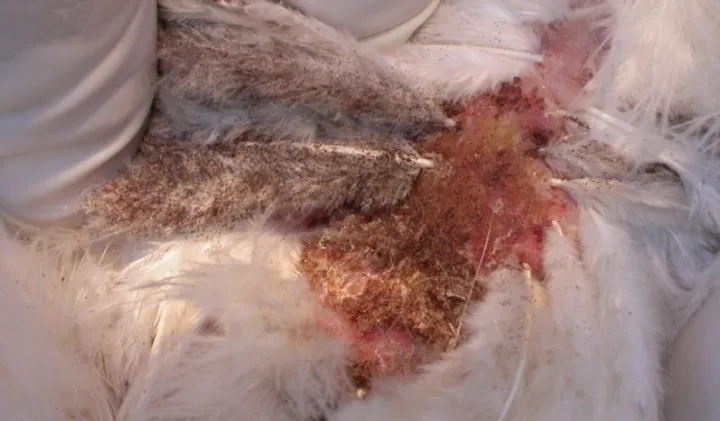
The most reliable sign of an infestation is the presence of dark, crusty material around the vent (cloaca) area, where mites congregate. Infested birds will show ruffled, dirty-looking feathers, and the skin may appear inflamed or scabbed due to constant scratching.
In cases of severe infestation, mites can be clearly seen crawling on the feathers or the skin surface. One may also notice a grayish or blackish 'dust' on the birds or on equipment within the coop, which is actually a large concentration of mites and their waste products.
Control measures
Effective control requires a combination of treating the birds directly and cleaning the housing environment. Approved acaricides in dust, spray, or pour-on formulations are typically used to eliminate mite populations on the poultry.
Sanitation is paramount; thorough cleaning of coops, nesting boxes, and roosting bars is necessary to disrupt the mite cycle. Because mites can survive for short periods off the host, repeating treatment after one week is crucial to target newly hatched mites and prevent re-infestation.
Taxonomy
- Latin name
- Ornithonyssus sylviarum
- Order
- Mites
- Family
- Macronyssidae
- EPPO code
- ORNTSY
Discussion
No discussions yet — be the first.