
Orchamoplatus
Orchamoplatus
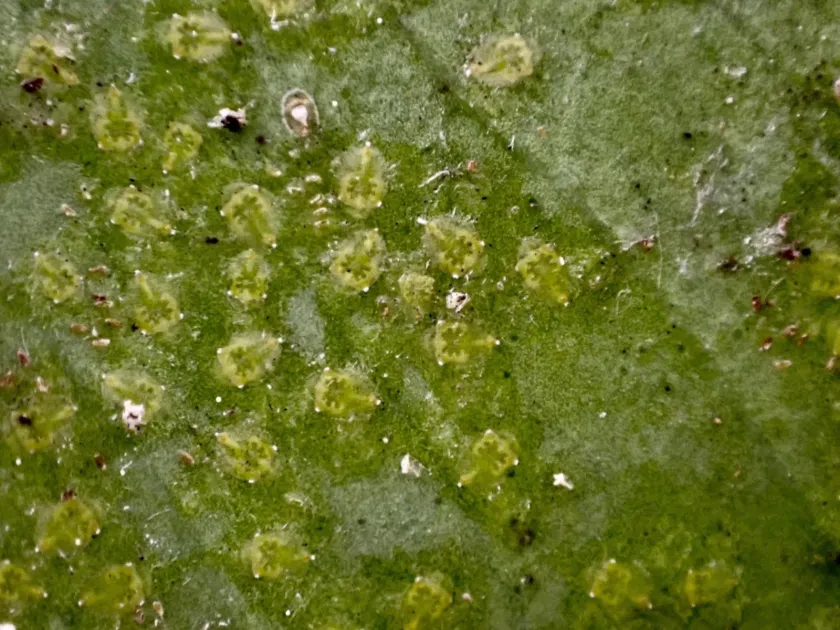
Description
How to identify
Orchamoplatus is a genus of insects belonging to the Aleyrodidae family, commonly referred to as whiteflies, which are serious pests in ornamental horticulture.
Adult insects are tiny and possess two pairs of wings covered in a fine, powdery white wax, which is a hallmark feature of this group of hemipterans.
While adults are capable of flight, the immature stages, known as nymphs or crawlers, settle on the underside of leaves and remain relatively sedentary.
The life cycle encompasses several distinct stages: egg, three nymphal instars, puparium, and adult, with the pupal stage being critical for species identification.
These insects thrive in warm, humid conditions, making greenhouses, conservatories, and indoor plant collections their primary habitats throughout the year.
What it damages
Orchamoplatus primarily infests various tropical and subtropical plants, including members of the Myrtaceae, Araceae, and other decorative indoor species.
The insects damage plants by piercing the leaf tissues and feeding on phloem sap, which deprives the plant of essential nutrients and causes growth stunting.
During the feeding process, they excrete honeydew, a sticky sugary substance that encourages the growth of sooty mold, which further inhibits photosynthesis.
Heavy infestations result in leaf yellowing, wilting, and premature leaf drop, significantly reducing the aesthetic value and health of the infested plants.
Beyond direct damage, these pests are potential vectors for plant viruses, which can lead to complex systemic diseases that are difficult to cure.
When it appears
In greenhouses and indoor environments, Orchamoplatus can breed continuously, as the stable climate prevents the typical winter dormancy found in nature.
Populations tend to reach their peak during the spring and summer months when increased light and warmth accelerate the insect's metabolic and reproductive cycles.
Optimal conditions for rapid colonization include high air humidity and limited air circulation, which are common in dense indoor plant displays.
In colder regions, the pest is generally unable to survive harsh winters outdoors, concentrating the risk exclusively within protected cropping systems.
Generation time varies depending on the temperature, but in optimal greenhouse conditions, the pest can complete its entire cycle in just a few weeks.
Signs of infestation
The most recognizable sign is the presence of small, white, flying insects that scatter when an infested plant is shaken or touched.
Sticky, shiny residues on leaves and stems indicate the presence of honeydew, often accompanied by the development of black sooty mold spots.
Observing the underside of the leaves usually reveals tiny, immobile, scale-like puparia, which confirm that the pest has established a colony.
Gradual chlorosis, or the yellowing of leaves, combined with curling or stunted growth at the tips of shoots, points to active feeding by the pest.
General lack of vigor and an overall decline in plant vitality, even with adequate watering and fertilization, are classic indicators of a whitefly infestation.
Control measures
Effective management requires an integrated approach that combines cultural practices, physical monitoring, and the targeted application of insecticides.
Regular maintenance, such as washing leaves with a mild soapy solution, can physically remove nymphs and clear away honeydew, improving plant respiration.
Yellow sticky traps are essential tools for both reducing the population of adult whiteflies and monitoring the severity of an infestation.
Systemic insecticides are the most effective chemical intervention, as they are absorbed by the plant and kill the pests during their sap-feeding process.
- Quarantine new plants to prevent the introduction of the pest.
- Promote good air circulation to make the environment less favorable.
- Introduce natural predators like Encarsia formosa for biological control.
- Prune and destroy heavily infested plant parts to reduce the source.
Taxonomy
- Latin name
- Orchamoplatus
- Order
- Hemiptera (bugs, aphids, leafhoppers)
- Family
- Aleyrodidae
- EPPO code
- ORCMSP
Discussion
No discussions yet — be the first.