
Canestrini's harvestman
Opilio canestrinii
Description
How to identify
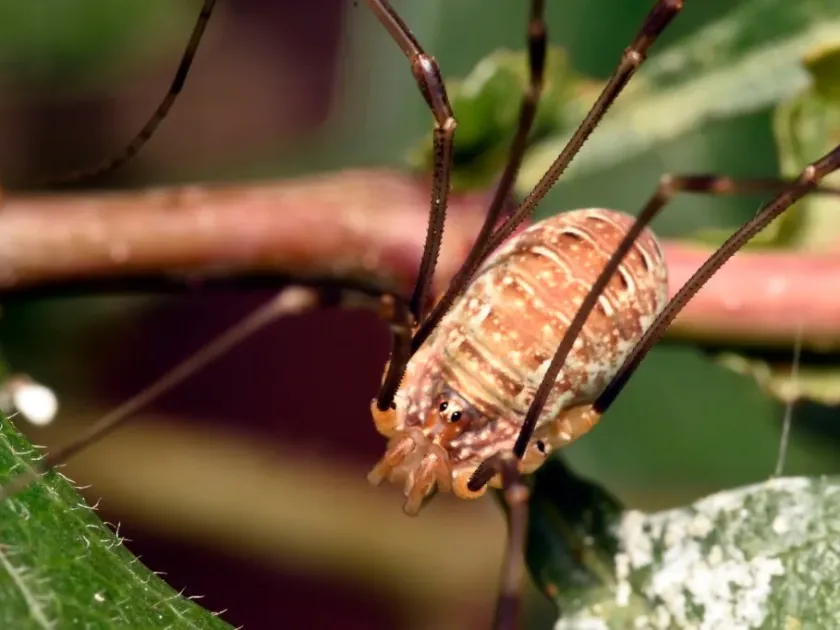
Canestrini's harvestman (Opilio canestrinii) is a member of the order Opiliones, family Phalangiidae. Unlike true spiders, they lack a pedicel, meaning their body appears as a single oval unit.
They are characterized by exceptionally long and slender legs, which are extremely fragile and can be autotomized as a defense mechanism against predators.
Adult specimens usually display a distinct dark, longitudinal stripe on the dorsal part of their body, which is a key diagnostic feature for this species.
The general body coloration ranges from reddish-brown to grayish, providing camouflage against bark, soil, and leaf litter.
They are primarily nocturnal, preferring dark and humid environments where they remain inactive during the bright daylight hours.
What it damages
While primarily predatory, Opilio canestrinii can occasionally cause direct damage to crops when high population densities are reached.
They are known to scrape the epidermis of leaves and young plant shoots, which can weaken the plant's structural integrity and overall vigor.
In greenhouses and vegetable gardens, they have been observed feeding on softer plant tissues, leading to necrotic spots and stunted growth.
Indirect damage occurs as they prey on beneficial insects, such as aphid predators, thereby disrupting the biological balance of the agroecosystem.
Heavy infestations can lead to visible deformation of leaves, which significantly impacts the aesthetic and market value of leafy produce.
When it appears
The life cycle commences in the spring when juveniles emerge from eggs that have overwintered in the soil or protected plant debris.
Population density typically peaks during the late summer and early autumn months as the insects reach their full maturity.
Reproduction occurs in the summer, followed by the female laying eggs in crevices or hidden moist locations to ensure the next generation's survival.
As temperatures drop in autumn, harvestmen move towards overwintering sites, including barns, sheds, and dense organic matter.
The species completes one generation per year, making it easier to target their life cycle with specific interventions during egg-laying phases.
Signs of infestation
Early signs of activity include characteristic, fine scraping marks on the surface of young foliage, indicating feeding activity.
Observing the plants at night with a flashlight often reveals the presence of harvestmen resting on stems or leaves.
The presence of fine, dark excrement droplets on the underside of leaves is a strong indicator of an established colony in the vicinity.
Gradual wilting of delicate sprouts or tender shoots without obvious fungal or bacterial infection may suggest a harvestman infestation.
Detection of individuals under loose bark or in the soil layer during routine scouting is a key sign of the pest's presence.
Control measures
The primary control strategy involves sanitation, specifically the removal of leaf litter and organic debris that provide shelter for the harvestmen.
Deep autumn tillage of the soil is highly recommended to disrupt egg-laying sites and reduce the potential population for the following season.
In cases of high infestation, contact insecticides can be applied during the early evening hours when the insects are most active and exposed.
- Keep the area around plants free of weeds and moisture-retaining debris.
- Introduce natural predators such as ground-dwelling birds or beneficial insects.
- Monitor population levels using sticky traps placed at the base of plants.
- Use barriers or sticky bands on tree trunks to restrict movement.
Integrated pest management should focus on maintaining a healthy agroecosystem that discourages excessive harvestman growth through natural regulation.
Taxonomy
- Latin name
- Opilio canestrinii
- Family
- Phalangiidae
- EPPO code
- OPILCA
Discussion
No discussions yet — be the first.