
Ophyra
Ophyra
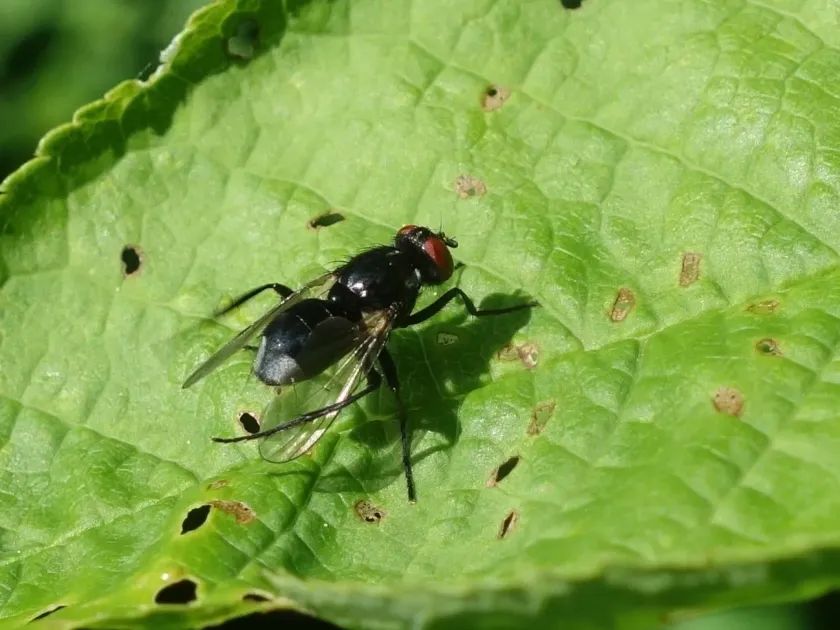
Description
How to identify
The genus Ophyra belongs to the family Muscidae (house flies) within the order Diptera. These are typically small, black, metallic-looking flies that are often found in environments rich in decomposing organic matter.
Adult flies are identified by their morphology, specifically the structure of the wing venation and the bristles on the thorax. The larvae are characteristic of the family, featuring a cylindrical, tapered body shape common to saprophagous Diptera.
What it damages
Ophyra species are primarily saprophagous, meaning they feed on decaying organic substances. However, in agricultural settings, they can become pests when their larvae invade weakened plant tissues or contact the root systems of crops grown in high-organic substrates.
Their primary threat to agriculture is the transmission of pathogens to crops and their potential to exacerbate root rot or stem decay in vegetables, especially when these plants are stressed or already compromised by environmental factors.
When it appears
The activity of Ophyra peaks during the warm season, from late spring through early autumn. Their development is highly dependent on ambient temperature and the availability of moist organic breeding sites, which serve as the primary habitat for larval growth.
Under favorable conditions, the lifecycle from egg to adult can be completed rapidly. The insects thrive in places where moisture and organic decomposition are present, ensuring a constant supply of food for the larval stages.
Signs of infestation
Common signs of infestation include high populations of adult flies hovering around manure piles, compost heaps, or damp plant debris. Larval activity is typically detected by examining the moisture-rich soil surrounding the plant base.
Plant damage is visible as the softening or necrosis of the lower stem and roots. This decay is often accompanied by an unpleasant odor and the presence of larvae inside the damaged plant tissue, which confirms the involvement of saprophagous flies.
Control measures
Effective management focuses on sanitation and the proper handling of agricultural waste. Removing potential breeding sites is the most crucial step in preventing the buildup of Ophyra populations within the farming ecosystem.
- Regular removal and proper composting of organic debris.
- Maintaining proper drainage to prevent waterlogged, anaerobic soil conditions.
- Use of sticky traps for monitoring and reducing adult fly populations.
- Targeted application of biological control agents where appropriate.
Taxonomy
- Latin name
- Ophyra
- Order
- Diptera (flies)
- Family
- Muscidae
- EPPO code
- OPHYSP
Discussion
No discussions yet — be the first.