
Slender Glass Lizard
Ophisaurus attenuatus
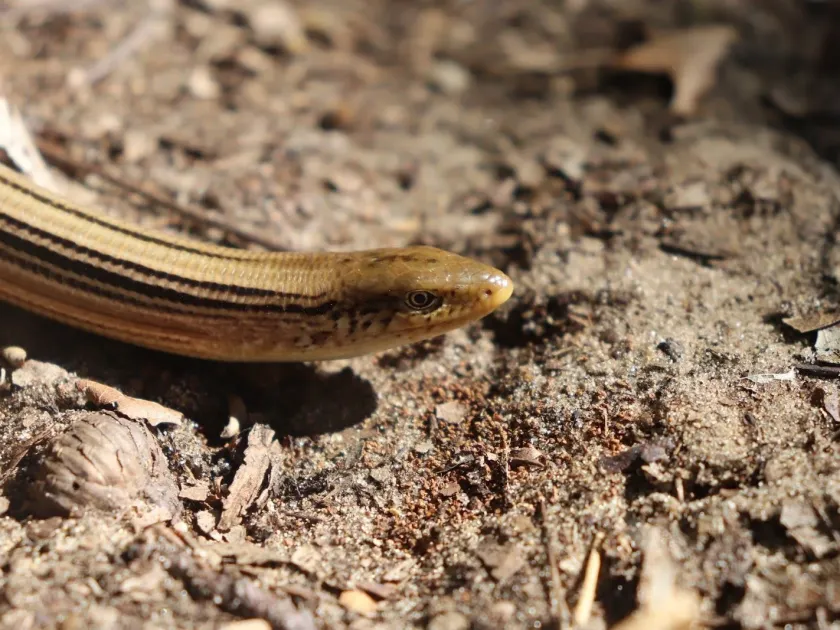
Description
How to identify
The Slender Glass Lizard (Ophisaurus attenuatus) is a legless lizard belonging to the Anguidae family. Often mistaken for a snake, it is distinguished by the presence of movable eyelids and an external ear opening, features absent in snakes.
The species features a lateral skin fold along its body, which allows the abdomen to expand during feeding or egg development. The body is covered in rigid, armor-like scales containing osteoderms, providing protection against predators.
Adults can grow up to 3 feet in length, with the tail accounting for two-thirds of the total body size. The tail is fragile and can be autotomized (broken off) to distract predators, hence the name "glass lizard."
These lizards inhabit open grasslands, meadows, and agricultural borders. They are secretive and spend most of their time hidden under debris or within the ground cover, making them difficult to spot during routine garden work.
Their biological lifecycle includes hibernation during colder months. They mate in spring, and females typically lay eggs in protected, moist environments, often under decaying organic matter.
What it damages
The Slender Glass Lizard is not an agricultural pest. It does not feed on plant tissues, seeds, roots, or fruits, as it is strictly a carnivorous reptile, focusing exclusively on animal prey.
Their diet consists of insects, spiders, snails, slugs, and occasionally small rodents. By consuming these, they provide a valuable service in controlling common garden pests that do damage plants.
No instances of crop damage have been attributed to this species. Any soil disturbance associated with these lizards is purely incidental and occurs while they are hunting or seeking shelter.
They possess no biological capability to damage crops. Their teeth are small and designed for gripping invertebrates, not for masticating plant fibers or stems.
In a balanced agricultural environment, they are considered beneficial predators. Encouraging their presence can help naturally manage populations of harmful slugs and garden insects without chemical intervention.
Control measures
As the Slender Glass Lizard is a beneficial predator, no control methods are recommended. They do not pose a threat to agricultural productivity or plant health in any significant way.
If you wish to discourage their presence near houses or specific areas, remove potential hiding spots such as rock piles, wood stacks, and tall vegetation where they seek cover and thermal regulation.
Avoid excessive use of pesticides on your land. These chemicals can eliminate the lizard's prey and introduce toxins into the food chain, which could negatively impact the local population of beneficial wildlife.
Use physical barriers like fine mesh screens for greenhouses and garden structures to prevent small animals from wandering into sensitive cultivation areas.
Focus on maintaining a healthy biodiversity on your farm. Predators like the Slender Glass Lizard are indicators of a well-functioning ecosystem capable of natural pest suppression.
Taxonomy
- Latin name
- Ophisaurus attenuatus
- Family
- Anguidae
- EPPO code
- OQHSAT
Discussion
No discussions yet — be the first.