
Slow worm
Ophisaurus
Description
How to identify
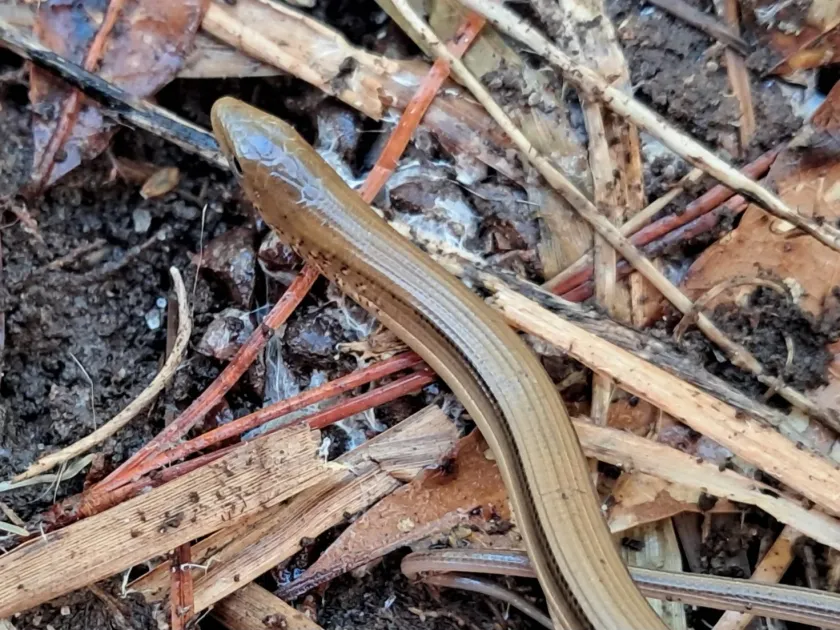
The slow worm (Anguis fragilis) is a legless lizard often mistaken for a snake. Despite its appearance, it is a completely harmless reptile with specific morphological features that distinguish it from snakes, such as movable eyelids and a tail that can be shed to escape predators.
Its body is covered in smooth, shiny scales that give it a metallic appearance. The coloration ranges from silvery-grey to bronze-brown, sometimes featuring dark stripes along the back in certain individuals.
The head of the slow worm transitions smoothly into the body, lacking the distinct neck constriction commonly found in many snake species. Adults typically reach a length of 30 to 45 centimeters.
Biologically, it belongs to the family Anguidae. It is a shy creature that prefers to hide under logs, rocks, or composting organic material, making it an infrequent sight during standard gardening tasks.
It is important to emphasize that this animal is not a threat to human safety. It lacks teeth capable of biting through skin and is fundamentally a docile and beneficial member of the local ecosystem.
What it damages
The slow worm is not a plant pest. It does not cause damage to crops, seedlings, roots, or fruits, as it has no interest in plant matter as a food source.
Its diet consists exclusively of invertebrate pests. Slow worms feed on slugs, snails, worms, and various soil-dwelling insect larvae, making them valuable allies for any gardener facing slug infestations.
From an agronomic perspective, the presence of slow worms is entirely positive. They provide natural pest control, effectively reducing the population of harmful organisms without the need for chemical intervention.
There are no recorded instances of slow worms damaging commercial or domestic plant yields. Any perception of them as a "pest" is based on misinformation or confusion with venomous snakes.
Therefore, no damage management is necessary for this species. Integrating them into the garden ecosystem is a recommended strategy for organic farming and sustainable cultivation.
Signs of infestation
Presence of slow worms in a garden is usually indicated by sightings in damp, sheltered areas. They are frequently found under wood piles, garden debris, or thick mulch layers where the soil moisture is high.
Since they are active during twilight or overcast weather, they are often encountered when turning compost heaps or moving piles of leaves, which are their preferred hunting grounds.
Unlike rodent pests, slow worms do not create burrows or tunnels that damage root systems. Their presence is usually solitary, and they do not live in large colonies that would cause soil instability.
Finding shed skin fragments in moist parts of the garden is a sign of a healthy population thriving on the local insect and slug abundance, confirming that your soil ecosystem is active and productive.
No specific visual damage to leaves or stems should be associated with this species. If you observe damage to your plants, it is caused by other organisms, and the slow worm may actually be helping to control those culprits.
Control measures
Control measures are not required for slow worms, as they are non-pests. In many regions, they are legally protected species that should be actively conserved rather than eradicated.
The best practice for managing a garden with slow worms is to avoid the use of broad-spectrum pesticides, which kill their prey and can directly poison the lizards themselves.
If you wish to discourage them from specific areas, clearing vegetation and removing temporary ground covers will naturally prompt them to relocate to more suitable, undisturbed habitats nearby.
Creating a "wild corner" in the garden, such as a log pile or a compost bin, encourages slow worms to stay and continue their beneficial work of controlling slugs and other soft-bodied pests.
- Avoid harsh chemical pesticides.
- Maintain natural habitats like log piles.
- Educate gardeners about their benefits.
Taxonomy
- Latin name
- Ophisaurus
- Family
- Anguidae
- EPPO code
- OQHSSP
Discussion
No discussions yet — be the first.