
Asparagus miner
Ophiomyia simplex
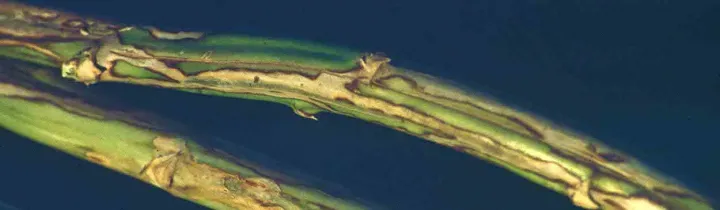
Description
How to identify
The asparagus miner (Ophiomyia simplex) is a small fly belonging to the family Agromyzidae. The adult fly is metallic black and measures approximately 2 to 3 mm in length, making it difficult to spot without close inspection.
The larvae are white or yellowish maggots that grow up to 4 mm long. They live entirely within the cortical tissue of the asparagus stalks, where they feed and complete their development.
Pupae are dark brown and oval-shaped, often found under the epidermis of the stalks near the soil line. They serve as the overwintering stage for the pest.
Adult flies emerge in the spring, feed on nectar, and mate. Females then deposit eggs in the stems of asparagus, usually near the base, initiating a new generation.
Depending on the climatic zone, the asparagus miner can complete one to two generations per year, with the final generation overwintering as pupae in the plant stalks.
What it damages
The asparagus miner exclusively targets Asparagus officinalis. It is most damaging to plantings that are established and have developed mature ferns, which provide necessary shelter for the larvae.
The larvae create serpentine tunnels (mines) beneath the epidermis. These tunnels disrupt the plant's vascular system, preventing the efficient movement of water and nutrients.
The physical damage caused by these tunnels can cause the stems to become brittle, leading to premature yellowing and lodging of the fern stalks during windy conditions.
The miner's activity is often associated with the entry of soil-borne pathogens, which can accelerate the decay of the stems and contribute to crown rot in severe cases.
Although the yield of the spears themselves is not directly consumed, the damage to the fern significantly weakens the crown, resulting in reduced spear production in subsequent years.
When it appears
Adult flies typically emerge in late spring or early summer, depending on the temperature, coinciding with the time when the asparagus ferns begin their active growth phase.
Larval feeding peaks during the summer months when the temperature is optimal for their development, leading to the creation of extensive mine patterns on the stalks.
A second generation of flies may emerge in late summer. This generation is often responsible for the damage observed on the ferns late in the growing season as they prepare for winter.
As autumn approaches, the final generation of larvae pupates within the stalks. These pupae remain dormant through the winter, protected by the dead plant tissues.
Monitoring for the presence of adult flies using sticky traps is most effective in late May and June to determine the timing and density of the first generation.
Signs of infestation
The primary diagnostic sign is the presence of long, slender, light-colored or greyish tunnels on the lower part of the asparagus stalks, often extending vertically for several inches.
In cases of heavy infestation, the skin of the stem may crack or peel away, revealing the underlying tunnels and the remnants of larval feeding.
Infected plants may exhibit early yellowing or premature senescence of the fern, starting from the lower sections of the stalk and moving upwards.
Close examination of the base of dead stalks during the fall or winter often reveals the dark pupal cases tucked under the outer layer of the stem.
- Vertical serpentine mines on stalks.
- Premature yellowing of fern foliage.
- Cracking of the epidermis near the soil line.
- Overall loss of plant vigor.
Control measures
The most important cultural control practice is the thorough destruction of all crop debris at the end of the season. Removing and burning the ferns eliminates the overwintering pupae.
Deep cultivation of the soil around the base of the plants after harvest can help destroy pupae located in the topsoil, reducing the emerging population for the following year.
Chemical control is generally difficult because the larvae are protected inside the stem. Insecticides, if used, must be timed carefully to target adult flies before they lay eggs.
Maintaining high plant health through proper fertilization and irrigation helps the asparagus crop tolerate the stress caused by the miner's activity.
New plantings should be established away from old, infested fields to prevent the rapid migration of the adult flies to young, susceptible plants.
Taxonomy
- Latin name
- Ophiomyia simplex
- Order
- Diptera (flies)
- Family
- Agromyzidae
- EPPO code
- MEAGSM
Discussion
No discussions yet — be the first.