
Leaf mining fly
Ophiomyia pinguis
Description
How to identify
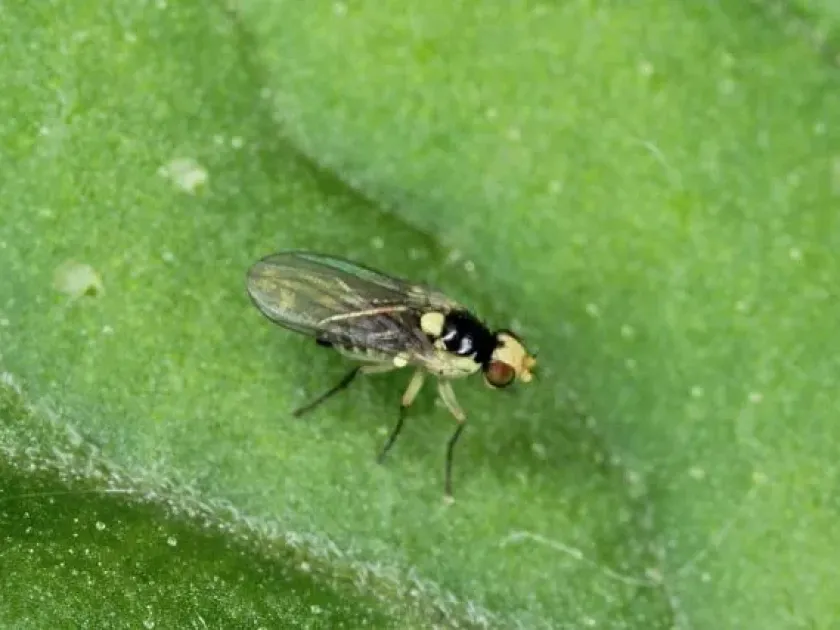
Ophiomyia pinguis is a species of dipteran insects belonging to the family Agromyzidae, commonly known as leaf mining flies. The adult fly is characterized by a small, dark body with a metallic sheen.
The life cycle of this pest is intricately linked to its host plant. Females deposit eggs directly into the leaf tissue, ensuring that larvae have immediate access to food upon hatching.
The larvae are typically legless and adapted to burrowing within the mesophyll layer of the leaf, which provides them with significant protection from environmental stresses and many external chemical applications.
Pupation may occur either within the mined leaf at the end of the gallery or in the soil, depending on the specific environmental conditions and the seasonal phase of the insect's life cycle.
Accurate identification of this species often requires professional morphological analysis, particularly of the male genitalia, as many species within the Ophiomyia genus appear superficially identical.
What it damages
The primary hosts for Ophiomyia pinguis are plants within the Asteraceae family, with a strong preference for the genus Artemisia (wormwood), which often dictates the pest's local distribution.
The larvae feed on the leaf parenchyma while leaving the epidermis intact, creating distinctive serpentine mines that disrupt the plant's ability to perform photosynthesis efficiently.
Heavy infestations can lead to extensive mining of the leaf surface, causing premature leaf yellowing, desiccation, and eventually necrosis of the entire leaf structure.
Beyond direct tissue destruction, the mining activity stresses the plant, making it significantly more susceptible to secondary fungal pathogens and bacterial infections.
Although typically found on wild hosts, the fly can present an economic threat to commercial crops if their chemical composition is sufficiently similar to the preferred hosts during high population pressure.
Signs of infestation
The most visible sign of infestation is the presence of winding, whitish-grey trails on the leaf surface, which gradually increase in length as the larva matures.
The presence of small, dark fecal spots deposited in an alternating pattern along the length of the mine is a classic diagnostic feature distinguishing agromyzid activity from other leaf damage.
Severe infestations often result in visible chlorosis of the foliage, as the loss of functional leaf tissue reduces the plant's overall energy production capacity.
Careful inspection of the underside of the leaves may reveal small, circular emergence holes where the adult fly has exited the mine after completing its pupal stage.
Patches of stunted growth in a crop field can indicate focal areas of infestation, often spreading outwards from neglected weed-heavy field margins.
Control measures
Effective management requires the use of systemic insecticides that are absorbed by the plant tissue, as contact chemicals are generally ineffective against larvae protected inside the leaves.
Integrated pest management should include the rigorous removal of wild host plants, particularly wormwood, from field perimeters to eliminate secondary sources of infestation.
Yellow sticky traps are highly recommended for monitoring the adult fly population, allowing for precise timing of chemical applications before egg-laying begins.
Promoting a healthy environment for natural parasitoids, such as braconid wasps, can provide significant biological control by predating on the mining larvae.
Cultural practices, including deep plowing and crop rotation, can help disrupt the life cycle of the pest, particularly for populations that pupate in the soil environment.
Taxonomy
- Latin name
- Ophiomyia pinguis
- Order
- Diptera (flies)
- Family
- Agromyzidae
- EPPO code
- OPHOPI
Discussion
No discussions yet — be the first.