
Bean fly
Ophiomyia phaseoli
Description
How to identify
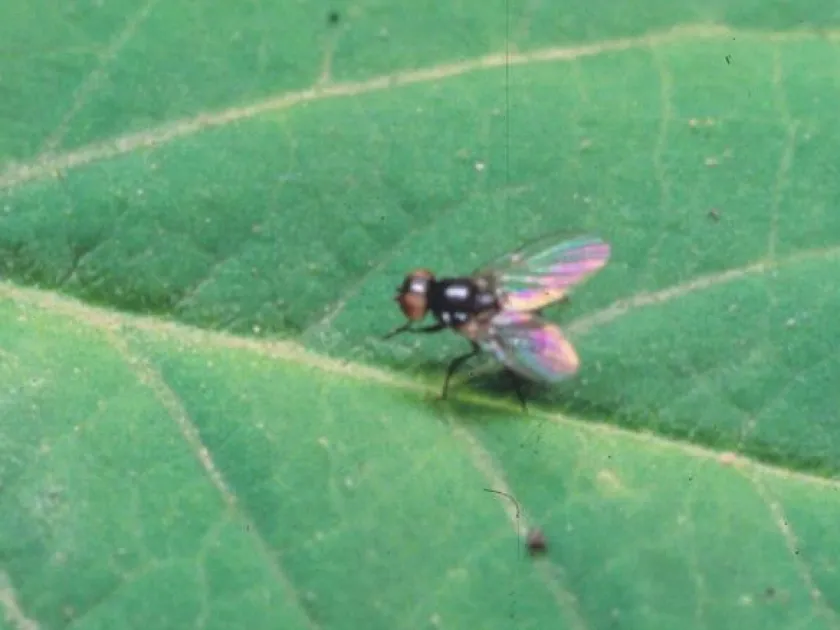
The bean fly (Ophiomyia phaseoli) belongs to the order Diptera and the family Agromyzidae. This tiny insect measures approximately 2 mm in length and possesses a shiny black body.
Adult flies have transparent wings with a distinct venation pattern. Both the head and legs of the insect are dark-colored, which is a characteristic trait for this specific genus.
The eggs are whitish and oval in shape. They are extremely small and are laid by the females directly into the epidermal tissue of the plant leaves.
The larva, which is the most destructive stage, is yellowish-white and can grow up to 3 mm long. It is legless and equipped with chewing mouthparts adapted for tunneling through plant tissues.
The pupa is formed inside the plant stems or in the soil. It has a barrel-like shape and a brown color, allowing it to survive harsh environmental conditions efficiently.
What it damages
The primary hosts of this pest are members of the Fabaceae family. Common beans are the most severely affected, but the bean fly also attacks mung beans, chickpeas, soybeans, and peas.
Damage is primarily caused by larvae that mine the tissues of the plant stems and leaves. Adults cause minor damage by feeding on plant sap through small punctures.
Initial infestation occurs near the cotyledonary leaves and stems of young seedlings. In cases of high infestation, entire crops can be destroyed within the first weeks of growth.
Larval feeding inside the stem disrupts nutrient transport and stunts the development of the root system, often leading to plant death or significantly weakened growth.
Secondary infections, such as fungal pathogens, often enter the damaged tissues, further compromising the health of the crop and leading to substantial yield losses.
When it appears
The bean fly is most active during hot and dry weather conditions. The optimal temperature for its development cycle ranges from +25 to +30 degrees Celsius.
The development cycle from egg to adult can be completed in 15 to 20 days under favorable conditions, allowing the pest to produce multiple generations in a single growing season.
The highest risk of damage occurs during the seedling stage, as young plants are highly susceptible to larval penetration immediately after germination.
Migration of these pests into fields is often correlated with the flowering stages of wild legumes, which serve as intermediate hosts for the fly to breed.
As temperatures drop, the reproductive rates slow down significantly, and pupae may enter a state of diapause, remaining in the soil until the next favorable period.
Signs of infestation
One of the earliest signs of infestation is the appearance of small white dots on leaves, created by adult females during puncturing for feeding or oviposition.
As larvae feed within the leaf or stem, they create visible light-colored, winding tunnels known as mines. These often expand and turn brown as the plant tissue dies.
Upon inspecting the base of the stem near the soil surface, one can often find longitudinal cracking of the epidermis, which is a direct consequence of larval tunneling inside.
Plants affected by a heavy infestation show yellowing, curling, and gradual wilting despite adequate soil moisture levels.
The root collar of infested plants often becomes swollen, indicating a defensive response by the plant as it attempts to develop callus tissue around the points of larval entry.
Control measures
Management starts with crop rotation. It is highly recommended not to grow legume crops in the same location more than once every three years to break the pest cycle.
Deep plowing (tillage) is an essential agricultural practice that helps to destroy pupae overwintering in the upper soil layers.
- Treatment of seeds with systemic insecticides before planting.
- Regular weeding to remove alternative wild hosts of the pest.
- Adjusting planting dates to avoid peak periods of adult fly activity.
- Earthing up (hilling) plants to stimulate the development of secondary adventitious roots.
Chemical control involves the application of systemic or contact-stomach insecticides during the peak flight of adults or the initial egg-hatching phase.
Monitoring pest populations using yellow sticky traps is crucial for detecting the initial arrival of flies, allowing for timely intervention and targeted spraying.
Taxonomy
- Latin name
- Ophiomyia phaseoli
- Order
- Diptera (flies)
- Family
- Agromyzidae
- EPPO code
- MEAGPH
Discussion
No discussions yet — be the first.