
Lantana seed fly
Ophiomyia lantanae
Description
How to identify
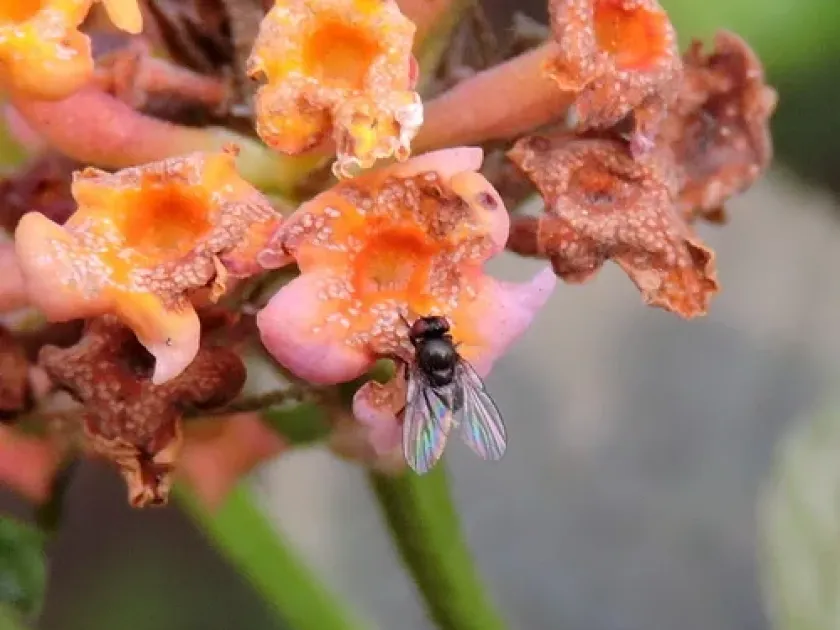
The Lantana seed fly (Ophiomyia lantanae) belongs to the family Agromyzidae within the order Diptera. This small insect is highly specialized, focusing its life cycle exclusively on plants of the genus Lantana.
Adults are small, black flies with a shiny chitinous exoskeleton. Their life cycle is intrinsically linked to the generative organs of the host plant, classifying them as specialized phytophagous insects.
The larvae are typical of agromyzids: legless, maggot-like, and range from translucent to yellowish-white. Pupation occurs directly inside the damaged fruit tissues, providing the pupa with a protective environment.
The biology of this species has been extensively studied due to its role in biological control programs, as Lantana camara is an invasive weed in many tropical regions. The fly was intentionally introduced to various countries to limit the plant's spread.
The developmental cycle consists of the egg stage, three larval instars, and the pupal stage. Generation turnover is temperature-dependent, with humid tropical and subtropical climates providing the most favorable conditions for rapid population growth.
What it damages
The larvae feed primarily on the fruit of the lantana plant. Unlike many other leaf-mining flies, Ophiomyia lantanae targets the flesh and seeds inside the berries, making it a specialized seed predator.
Larvae penetrate the developing fruit shortly after fertilization. They tunnel through the pulp and seeds, feeding on the interior tissue, which prevents normal seed development and causes the berry to rot or wither.
In regions where lantana is considered an invasive weed, this fly acts as a beneficial biological agent, significantly reducing the plant's fertility and limiting its reproductive success via seeds.
In ornamental horticulture, the presence of this pest may reduce the aesthetic value of the plant, causing premature fruit drop and damaging the appearance of the flower clusters.
Heavy infestations can result in the destruction of a significant portion of the seasonal seed crop, effectively rendering the plant unable to propagate through natural self-seeding.
Signs of infestation
Visible signs of infestation include premature discoloration of lantana berries, which often turn yellow, brown, or shriveled long before reaching maturity.
Microscopic examination of the berries reveals small entry holes created by the female during oviposition or by the larvae upon entering the fruit pulp.
Inside the berry, one can typically find larval frass (excrement) and damaged, softened pulp. The seeds are often found to be deformed or entirely consumed by the larvae.
The premature drop of unripe berries from the shrub is a strong indicator of an active infestation, as fallen fruit often contains larvae or puparia inside.
In areas of high pest density, the clusters of fruit may appear stunted and lack the healthy, glossy sheen typical of undamaged lantana berries, reflecting internal tissue disruption.
Control measures
In agricultural settings, active control measures are rarely required, as the fly is generally viewed as a positive agent for biological weed management.
For ornamental growers wishing to protect their plants, manual removal and destruction of infested berries is the most effective and eco-friendly way to suppress the local pest population for the next season.
Systemic insecticides may be used during the peak oviposition period, though strict adherence to safety guidelines is required to prevent negative impacts on beneficial insects and the environment.
Yellow sticky traps are recommended for monitoring population density in nurseries, allowing growers to track adult fly activity and determine the appropriate timing for any intervention.
Standard horticultural sanitation practices, such as deadheading or removing spent flowers, effectively prevent fruit set, thereby removing the food source and interrupting the life cycle of the fly.
Taxonomy
- Latin name
- Ophiomyia lantanae
- Order
- Diptera (flies)
- Family
- Agromyzidae
- EPPO code
- OPHOLA
Discussion
No discussions yet — be the first.