
Daylily leafminer
Ophiomyia kwansonis
Description
How to identify
The daylily leafminer (Ophiomyia kwansonis) is a small insect belonging to the family Agromyzidae within the order Diptera.
Adult flies are dark-colored and minute, making them exceptionally difficult to spot in home gardens or nurseries without specialized monitoring.
The damage is caused primarily by the larvae, which are specialized leaf miners that burrow into the foliage of their host plants.
This species is specifically adapted to daylilies (Hemerocallis), making it a significant concern for ornamental plant collections.
Understanding its lifecycle is crucial for any gardener dealing with daylily cultivation to prevent large-scale infestations.
What it damages
The primary hosts of this pest are daylilies, which are widely grown for their ornamental value in temperate gardens worldwide.
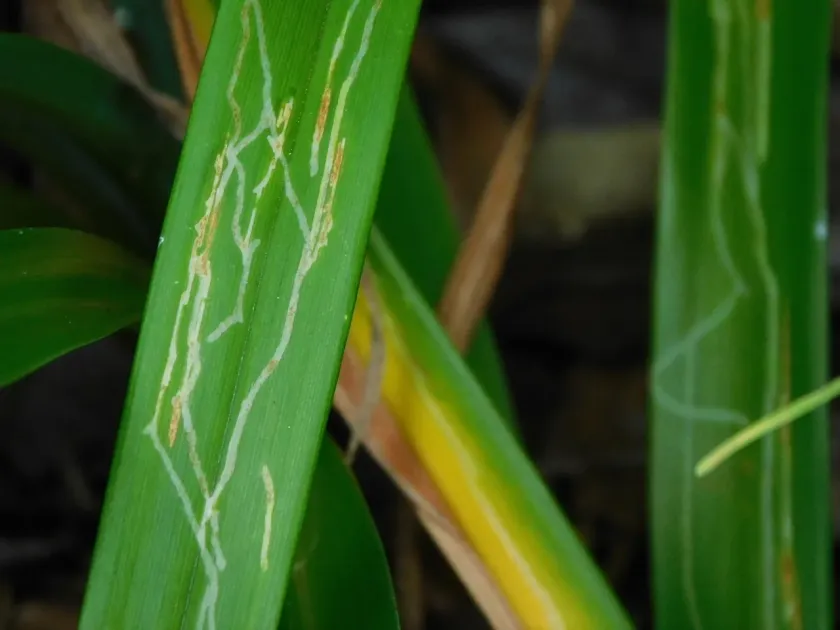
Larvae consume the internal tissues of the leaves, resulting in distinctive winding tunnels that become visible as the damage progresses.
These mines disrupt the plant's ability to photosynthesize effectively, leading to reduced vigor and stunted growth of the entire plant.
The aesthetic value of the garden is significantly diminished as the foliage becomes spotted, yellowed, and eventually necrotic.
In addition to physical tissue loss, the tunnels provide entry points for secondary pathogens like fungi and bacteria, further damaging the host.
When it appears
Adult flies emerge in the spring as temperatures rise, signaling the beginning of the growth season for their host plants.
The activity of the pest is synchronized with the flush of new growth, which provides ample resources for the developing larvae.
Multiple generations can occur throughout a single season, leading to a continuous presence of the pest from spring until autumn.
As the weather cools down, the insect prepares for overwintering, typically in the soil or within decaying leaf tissue.
Warm and humid conditions create the most favorable environment for the pest's reproduction and rapid spread throughout a plantation.
Signs of infestation
The most reliable sign of an infestation is the presence of winding, translucent white lines or mines on the surfaces of the leaves.
Small stippling or puncture marks on the leaves indicate where the female flies have fed or deposited eggs into the epidermis.
As the larvae mature, the mines become wider and may turn brown or grey, leading to the overall chlorosis of the affected leaf segment.
Affected plants often display signs of stress, such as wilting or delayed blooming, despite adequate care and soil moisture levels.
- Winding white trails on foliage.
- Small puncture marks on leaf surfaces.
- Premature yellowing of leaves.
- Necrotic brown patches on foliage.
- Reduced overall vigor of the daylily clump.
Control measures
Chemical control involving systemic insecticides is often necessary, as the pest lives protected inside the leaf tissues.
Sanitation practices, such as removing and destroying infested foliage at the end of the season, are effective in reducing local overwintering populations.
Improving the overall health of the daylilies through proper fertilization and watering helps the plants better tolerate minor infestations.
Monitoring the plants closely during the early spring allows for early intervention before the population reaches an uncontrollable level.
Preventative measures, such as inspecting new plant material for signs of mines before introducing it to the garden, are essential to avoid outbreaks.
Taxonomy
- Latin name
- Ophiomyia kwansonis
- Order
- Diptera (flies)
- Family
- Agromyzidae
- EPPO code
- OPHOKW
Discussion
No discussions yet — be the first.