
Stem mining fly
Ophiomyia centrosematis
Description
How to identify
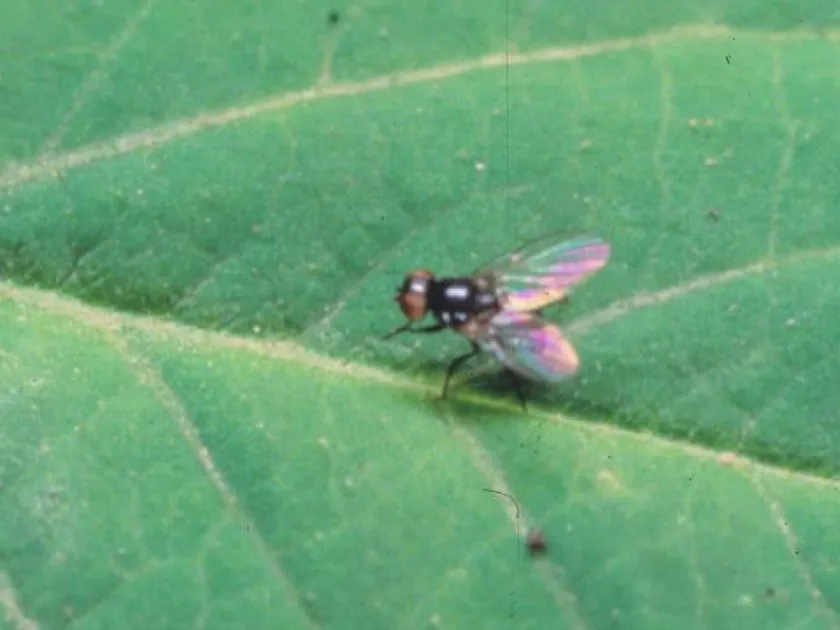
The stem mining fly belongs to the Agromyzidae family within the Diptera order. These are small insects, typically measuring about 2 mm in length, with a characteristic black, shiny body appearance.
The life cycle encompasses four stages: egg, larva, pupa, and adult. Females typically deposit their eggs into the plant tissue, often selecting the base of the stem near the soil surface.
Larvae are elongated and lack distinct head capsules, making them well-adapted for burrowing and feeding within the internal vascular tissues of the legume host plants.
Pupation occurs within the mines constructed by the larvae inside the stem, or occasionally in the soil immediately adjacent to the base of the damaged plant.
Identification is frequently challenging due to the endophagous habit of the larvae, which complete most of their development entirely hidden from external view.
What it damages
This pest primarily infests legumes, with significant impacts reported on crops such as soybean, beans, and cowpea, which are highly susceptible to its feeding activities.
The feeding larvae disrupt the internal vascular structure of the stem, interfering with the plant's ability to transport water and essential nutrients throughout its height.
Young seedlings are particularly vulnerable; high infestation levels at this critical stage often lead to stunted growth, reduced vigor, and increased susceptibility to secondary infections.
The cumulative damage often results in decreased yield due to the plant's inability to support normal pod development and seed filling during the reproductive phase.
In addition to cultivated crops, the fly utilizes various wild leguminous plants as host reservoirs, ensuring the pest remains present in the landscape across seasons.
Signs of infestation
Visible signs begin as fine, winding trails or mines on the stem surface, typically concentrated around the root collar, which eventually turn brown and may split.
Plants affected by the pest often exhibit premature yellowing of leaves and reduced turgor, especially during peak temperature hours, indicating compromised vascular transport.
Mechanical weakness of the stem base is a key symptom; affected plants may snap at the base when subjected to wind or during field maintenance operations.
Swelling or gall-like formations on the stem are common plant defense responses to the larval mining activity, serving as a clear indicator of a current infestation.
Examination of the stem base may reveal small emergence holes, indicating that the adult fly has successfully completed its cycle and exited the plant tissue.
Control measures
Crop rotation is the fundamental preventive measure, as it disrupts the life cycle of the pest by removing the host source from the field in successive seasons.
Post-harvest management, including the removal and destruction of crop residues, significantly reduces the overwintering population of the pest in the field soil.
Chemical control involving systemic insecticides can be applied during the early vegetative stages to target adults and prevent initial egg-laying on the seedlings.
Adopting integrated pest management (IPM) practices, including the use of pest-resistant cultivars, provides a sustainable approach to maintaining crop health.
- Regular field monitoring using yellow sticky traps to track adult populations.
- Weed control, focusing on leguminous weeds that act as pest reservoirs.
- Optimizing planting density to ensure healthy crop canopy development.
Taxonomy
- Latin name
- Ophiomyia centrosematis
- Order
- Diptera (flies)
- Family
- Agromyzidae
- EPPO code
- MEAGCE
Discussion
No discussions yet — be the first.