
Alder leafhopper
Oncopsis alni
Description
How to identify
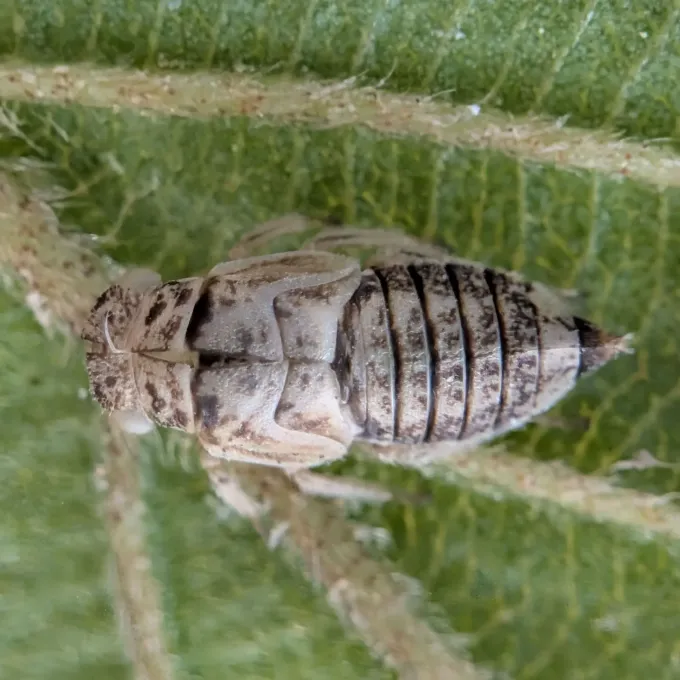
The alder leafhopper (Oncopsis alni) is a sap-sucking insect belonging to the Cicadellidae family, commonly found in areas where alder trees grow throughout Europe.
Adult leafhoppers typically range from 4 to 6 mm in length and exhibit variable body coloration, which provides excellent camouflage against the textured bark of alder trees.
These insects undergo a life cycle consisting of egg, nymph, and adult stages, with nymphs showing high mobility despite lacking fully developed wings.
Their hind legs are specialized for jumping, an essential defense mechanism that allows them to escape rapidly when disturbed by predators or human activity.
Entomological identification often requires close inspection of morphological features, as these leafhoppers are part of a complex species group with similar appearances.
What it damages
Oncopsis alni primarily feeds on various species of alder (Alnus), using its specialized mouthparts to pierce the leaf tissue and extract essential plant sap.
Constant feeding by large populations can cause significant stress to the host tree, leading to stunted growth and reduced vigor, especially in younger saplings.
The loss of nutrients through sap extraction results in leaf chlorosis, curling, and in severe cases, premature leaf drop, affecting the tree's overall photosynthesis process.
Weakened trees become more susceptible to secondary infections, such as fungal pathogens or infestation by wood-boring insects, which can be fatal for the plant.
In ornamental settings, the visual damage caused by leafhoppers significantly diminishes the aesthetic quality of landscape trees and recreational forest zones.
When it appears
The seasonal activity of the alder leafhopper is strictly aligned with the growing season of its host plant, ensuring a steady food supply for developing offspring.
Overwintering occurs in the egg stage, with eggs embedded securely into the bark or young twigs, where they remain protected until the following spring.
Nymphs emerge early in the season, coinciding with the bud burst, to immediately start feeding on the succulent, newly emerged foliage of the alder trees.
The adult phase, marked by higher mobility and dispersal, generally occurs in the early to mid-summer period when the population reaches its reproductive peak.
Depending on the climatic conditions, the population may exhibit a single generation, although warmer regions may see partial or full second generations annually.
Signs of infestation
Initial signs of infestation appear as small, whitish or pale yellow spots on the leaves, marking the precise locations where the leafhoppers have fed.
Over time, these spots can expand, causing leaves to curl and yellow, eventually leading to reduced canopy density if the infestation remains uncontrolled.
The presence of honeydew on the leaf surfaces is a common sign, often leading to the growth of sooty mold, which blocks sunlight and hinders photosynthesis.
Careful examination of the underside of the leaves, especially near the veins, will reveal the presence of nymphs during the active growing months.
Physical jarring of tree branches will trigger an immediate escape response, resulting in a visible shower of adult leafhoppers jumping from the foliage.
Control measures
Effective management strategies include the application of systemic or contact insecticides during the early nymph stage to prevent further population expansion.
Cultural control measures, such as removing heavily infested branches and maintaining tree health, can significantly reduce the overall pest pressure in the environment.
Promoting a healthy ecosystem that includes natural predators like spiders, ladybirds, and lacewings provides a biological check on the leafhopper population.
In nurseries and gardens, the use of yellow sticky cards is an effective way to monitor adult population levels and determine the optimal timing for intervention.
- Regular inspection of alder foliage during spring and summer.
- Use of horticultural oils or soaps for early-stage infestations.
- Integrated Pest Management (IPM) practices to reduce chemical reliance.
Taxonomy
- Latin name
- Oncopsis alni
- Order
- Hemiptera (bugs, aphids, leafhoppers)
- Family
- Cicadellidae
- EPPO code
- ONCSAL
Discussion
No discussions yet — be the first.