
Oncopera rufobrunnea
Oncopera rufobrunnea
Description
How to identify
Oncopera rufobrunnea is a species of moth belonging to the family Hepialidae, commonly known as ghost moths or swifts. These insects are well-adapted for camouflage, blending into tree bark or dead vegetation during the day.
The adult moths have a distinct wing pattern that provides excellent concealment from predators and observers. While the adults are primarily nocturnal, the larval stage is responsible for the significant agricultural impact.
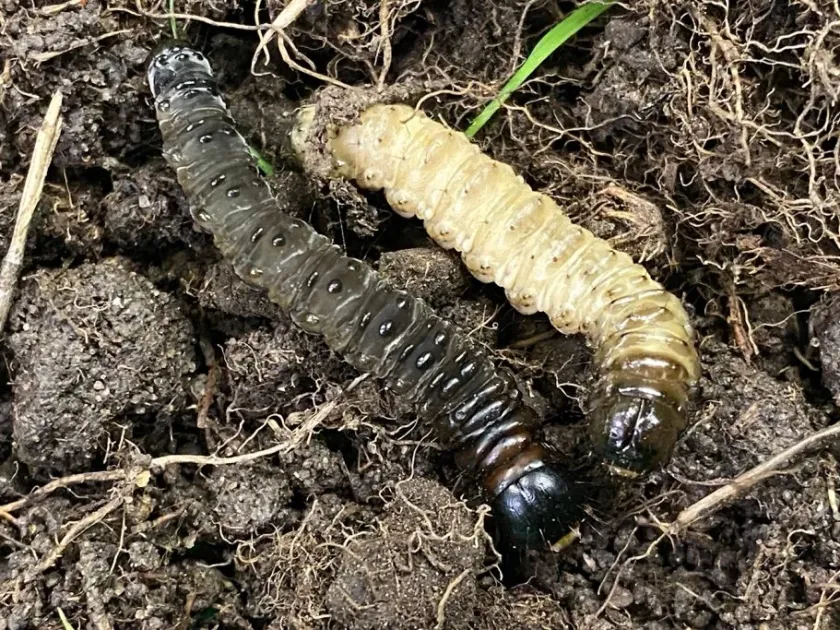
The larvae are cylindrical, with robust mouthparts designed for chewing through tough fibrous plant tissues. They are generally brownish in color, which helps them remain unnoticed when they move through soil or dense thatch.
The life cycle of this species is heavily dependent on soil moisture and ambient temperature. Population outbreaks often correlate with periods of high rainfall, which increase the survival rate of eggs laid in the soil.
As part of the order Lepidoptera, these moths follow a specific developmental sequence. Understanding their biology is essential for farmers to predict emergence patterns and implement timely pest management.
What it damages
This pest primarily targets grasses, causing substantial damage to pastures, rangelands, and turf. The loss of biomass can be severe, impacting both livestock productivity and soil stability.
Larvae feed by grazing on the base of grass stems and roots. By destroying the root systems, they cause the grass to die, leading to large bare patches across the field that significantly decrease yield.
The disturbance of the root zone also makes the pasture susceptible to soil erosion. Once the grass is weakened, weeds often invade the affected areas, further degrading the quality of the forage for livestock.
High larval density can lead to the complete destruction of the turf layer. This often forces farmers to invest in costly reseeding operations to restore the affected areas to full productivity.
Agricultural cereal crops adjacent to infested grasslands may also be affected, especially if the infestation spreads from natural reservoirs where the larvae complete their early developmental stages.
When it appears
The adult flight and mating period typically occur during the warmer months of the year. During this time, females lay eggs directly into the soil or the base of dense vegetation to ensure larval access to food.
Larvae emerge in the latter half of the season, beginning a period of active feeding that continues through autumn and resumes in early spring. The spring phase is particularly critical for crop damage.
Overwintering occurs primarily in the larval stage within underground tunnels. As the soil warms in spring, larvae become hyper-active and consume large amounts of emerging green shoots, causing widespread crop loss.
Pupation takes place in the soil, often peaking in late spring or early summer. Following pupation, the cycle repeats as adults emerge to begin the next generation's life cycle.
Regular field scouting is recommended starting in early spring. Identifying the larvae before they reach maturity is the most effective way to manage their population and prevent major damage.
Signs of infestation
The most visible sign of an infestation is the appearance of yellowing or dying patches in a pasture. Upon closer inspection, one may find that the turf in these areas is loose and easily pulls away from the soil.
Small, distinct entrance holes in the ground, often surrounded by granular frass (larval waste), indicate the presence of tunnels. These are the daytime hiding spots for the larvae.
Nocturnal observation is highly effective; using a light at night allows you to spot larvae on the surface as they emerge from their burrows to feed on the foliage.
Significant thinning of the grass sward and the presence of exposed soil are secondary signs. Additionally, increased bird activity in specific sections of the field can alert farmers to high larval concentrations below the surface.
If the field appears patchy and root integrity is compromised, it is highly likely that a population of Oncopera rufobrunnea is present and active, requiring immediate management assessment.
Control measures
Mechanical control, such as soil cultivation, is highly effective. Tilling the soil disrupts the larvae's tunnels and exposes them to the surface, where they become vulnerable to predators and desiccation.
Biological control agents, including entomopathogenic fungi or bacteria, can be applied to infested fields. These methods are generally safer for the environment and livestock while effectively suppressing larval numbers.
Chemical control should be used judiciously, targeting the period when larvae are active at the surface, usually in the evening. Proper timing ensures maximum efficacy while minimizing collateral damage to beneficial insects.
Crop rotation and pasture management are crucial preventive measures. Rotating out of grass-dominant cycles or introducing diverse forage species can disrupt the pest's life cycle and reduce long-term infestation risks.
Continuous monitoring using traps or field inspections allows for early detection. By catching the infestation in its early stages, farmers can apply targeted controls, saving the crop from widespread destruction.
Taxonomy
- Latin name
- Oncopera rufobrunnea
- Order
- Lepidoptera (butterflies)
- Family
- Hepialidae
- EPPO code
- ONCARU
Discussion
No discussions yet — be the first.