
Oncopera fasciculata
Oncopera fasciculata
Description
How to identify
Oncopera fasciculata belongs to the Hepialidae family within the order Lepidoptera. Adult individuals are relatively large nocturnal moths with a wingspan ranging from 40 to 50 mm.
The wings exhibit a brownish-gray coloration adorned with an intricate pattern of dark spots and transverse lines, providing excellent camouflage against tree bark or dry vegetation.
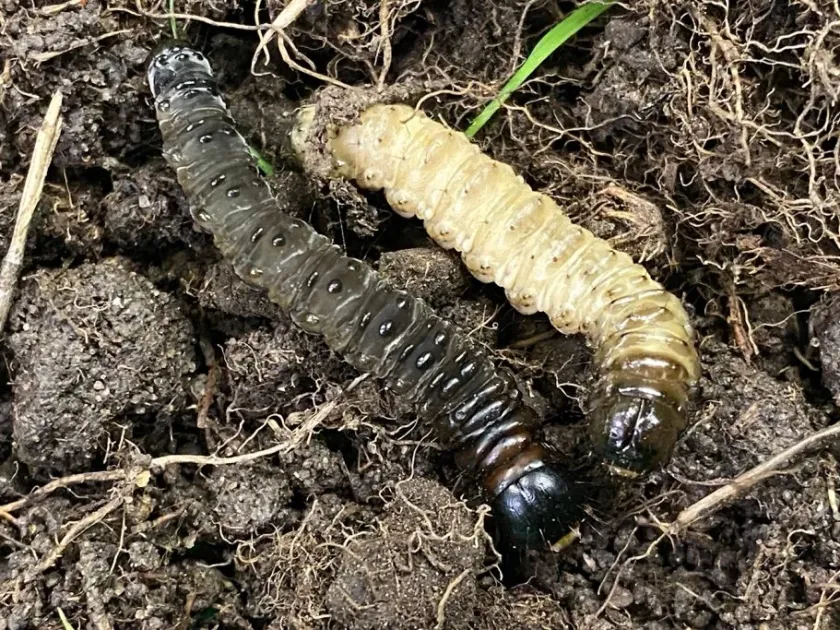
Larvae of this species grow up to 50 mm in length, featuring a dense cylindrical body with a brownish-gray hue and a dark head, characteristic of soil-dwelling pests.
These caterpillars lead a secretive life, residing in vertical soil tunnels lined with silk, which facilitate their movement between the roots and the surface of the ground.
The life cycle involves one generation per year, with the larval stage being responsible for all significant damage as they actively feed on plant vegetative matter.
What it damages
Key crops targeted by Oncopera fasciculata include various grass species, pasture crops, and cereal crops such as oats, barley, and wheat.
The pest poses a severe threat to young seedlings and crops during the tillering stage, as larvae graze on the stems at ground level, often leading to total crop failure.
Furthermore, the larvae can damage the root system, impairing the plant's ability to absorb moisture and nutrients, which renders the crops increasingly vulnerable to drought stress.
In pastures, heavy infestations result in the destruction of significant portions of the sward, reducing forage quality and necessitating expensive reseeding operations.
While damage is often localized in patches, high population densities can lead to widespread destruction across agricultural fields.
When it appears
Adult moth emergence typically occurs in late summer or early autumn, when mating takes place and eggs are laid directly onto the soil surface or plant debris.
Embryonic development is completed during the autumn months, followed by the hatching of larvae that begin to feed before burrowing deeper into the soil for overwintering.
The peak feeding phase occurs during early spring as temperatures rise, prompting the larvae to emerge from their tunnels to feed on young green shoots.
By late spring or early summer, the larvae pupate within their soil burrows, remaining there until the next generation of moths emerges in the warmer season.
Infestation risk is particularly high following a wet autumn, which provides optimal conditions for egg survival and the early development of young larvae.
Signs of infestation
The primary visual indicator of an infestation is the appearance of bare patches in lawns or pastures where the grass has been cut to the ground or completely consumed.
Close inspection of affected areas reveals the presence of vertical tunnels, often marked by small mounds of frass (excrement) or silk webbing near the entrance.
In cereal fields, signs include the yellowing and wilting of individual plants, which can be easily pulled from the ground due to the destruction of the root zone.
An increased presence of birds foraging on specific sections of the field often indicates a mass emergence of caterpillars feeding at the surface.
Nighttime monitoring with a flashlight allows for the detection of larvae as they emerge from their burrows to graze on the foliage of grasses.
Control measures
Effective management includes deep plowing or soil cultivation during periods when larvae are vulnerable, which destroys their burrows and reduces the population.
Chemical control using stomach or contact insecticides is recommended when population numbers exceed established economic thresholds for the specific crop.
The application of biological products containing entomopathogenic fungi or bacteria offers a sustainable method for reducing pest numbers without harming the field ecosystem.
Crop rotation is vital; avoiding the planting of cereals immediately after perennial grasses helps prevent the establishment of the pest in the field.
Agrotechnical practices that promote vigorous crop growth assist plants in quickly passing through the most sensitive growth stages where the risk of mortality is highest.
Taxonomy
- Latin name
- Oncopera fasciculata
- Order
- Lepidoptera (butterflies)
- Family
- Hepialidae
- EPPO code
- ONCAFA
Discussion
No discussions yet — be the first.