
Huntsman spider
Olios
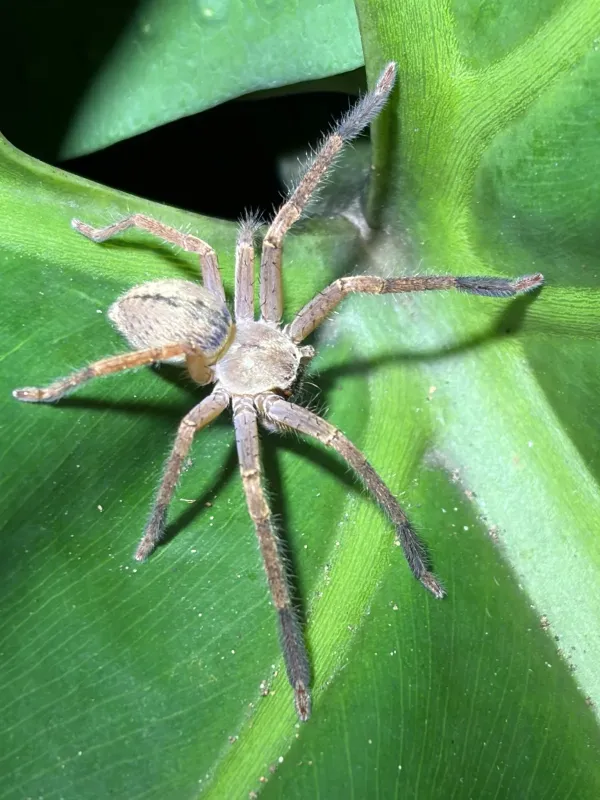
Description
How to identify
Huntsman spiders, belonging to the genus Olios and the family Sparassidae, are large, flattened spiders. They are well-known for their long legs and agile movement across flat surfaces.
Unlike web-building spiders, Olios species are active hunters. They rely on their speed and excellent eyesight to capture prey, often hiding in crevices, under loose bark, or among dense foliage.
Their body color is typically earth-toned, providing perfect camouflage in both natural habitats and agricultural settings, which makes them difficult to spot.
Systematically, they are classified under the order Araneae. They are strictly predatory and do not have the specialized mouthparts needed to feed on plant tissues.
Identifying these spiders is easy due to their size and their characteristic leg posture, which is spread out sideways rather than tucked under the body.
What it damages
It is crucial to state that the Huntsman spider is not a plant pest. It feeds exclusively on insects and other small invertebrates, making it a beneficial organism rather than a threat to agriculture.
They do not consume sap, root systems, or leaf tissues, nor do they lay eggs inside plant parts in a way that would cause mechanical damage or structural deformation.
Any perceived "damage" is usually limited to human anxiety regarding their size; however, they pose no risk to the physiological health of your crops.
In many cases, the presence of Olios in a field or greenhouse helps regulate populations of actual crop-destroying insects such as beetles or moths.
Therefore, they should be considered valuable components of the biodiversity within an agricultural ecosystem, contributing to natural biological control.
When it appears
The seasonal activity of Olios spiders is closely linked to ambient temperature. They are most active in warmer climates and during the peak of the growing season.
In greenhouses or protected cropping structures, these spiders can remain active year-round, as they benefit from the stable temperatures and constant prey availability.
During the warmer months, their metabolic activity increases, leading to higher rates of hunting and reproduction, which corresponds with the peak presence of pest insects.
As winter approaches or temperatures drop, their activity levels decline significantly, and they often seek shelter in protected areas to survive the colder weather.
Growers often notice them more frequently during harvest times when disturbance of the foliage causes them to move and reveal themselves.
Control measures
No chemical control measures should be taken against Huntsman spiders. Because they are beneficial predators, using insecticides against them is counterproductive.
If their presence is undesirable for workers, the best approach is to carefully relocate them manually rather than using harsh chemicals that could harm the overall ecosystem.
Integrated Pest Management (IPM) strategies encourage the preservation of such spiders as they naturally suppress insect pest populations without the need for additional chemicals.
Maintaining a balanced environment where these spiders can exist helps keep populations of truly harmful pests at manageable levels.
Education is the best "control" measure; understanding that these spiders are allies in the field helps farmers appreciate their role in sustainable agriculture.
Taxonomy
- Latin name
- Olios
- Family
- Sparassidae
- EPPO code
- OLISSP
Discussion
No discussions yet — be the first.