
Huntsman spider
Heteropoda venatoria
Description
How to identify
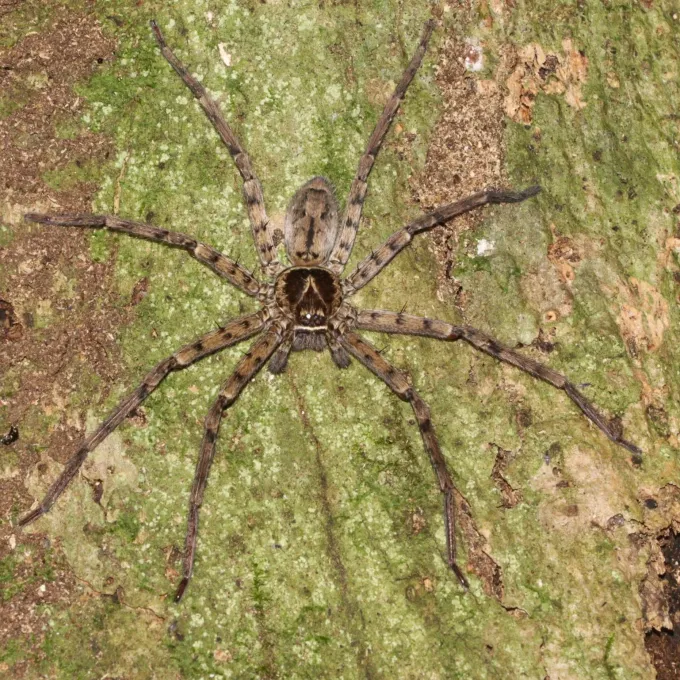
The huntsman spider (Heteropoda venatoria) is a member of the Sparassidae family, recognized by its large size and flattened body shape.
These spiders can reach a leg span of up to 12 centimeters, typically displaying a brownish or mottled coloration that provides effective camouflage.
Unlike web-building spiders, the huntsman is an active hunter, utilizing speed and sensory hairs to track and ambush prey.
They are nocturnal creatures, which makes them difficult to monitor during standard daylight working hours in agricultural facilities.
Identification is often confirmed by their distinctive gait and the characteristic way they flatten themselves against surfaces.
What it damages
The huntsman spider is not a phytophagous pest; it does not consume plants, yet it poses a threat to integrated pest management (IPM) programs.
By preying on beneficial insects such as lacewings and predatory beetles, these spiders disrupt the natural balance required for crop protection.
Mechanical damage to young plants can occur if the spider creates a nesting site or shelter near delicate stems or foliage.
Their large size often leads to alarm among staff, resulting in the unnecessary application of chemicals that harm the overall agroecosystem.
Essentially, the damage they cause is indirect, stemming from the destabilization of biological control agents within a greenhouse.
When it appears
In temperate zones, huntsman spiders primarily thrive in protected, heated environments where temperatures remain stable throughout the year.
Activity levels increase during the warmer months when insect prey populations are at their peak, providing ample food for the spiders.
Autumn triggers a search for shelter, often leading these spiders to migrate into storage areas, barns, or greenhouses for winter survival.
Developmental stages are heavily dependent on ambient humidity and warmth, with high activity observed during periods of peak greenhouse production.
They are capable of continuous breeding cycles in indoor climates, making season-based management strategies less effective than continuous monitoring.
Signs of infestation
A primary indicator is the sighting of large adult spiders on greenhouse walls or interior structures during low-light conditions.
The presence of papery, disc-shaped egg sacs hidden in crevices or behind equipment is a clear sign of an established local population.
Because they do not spin webs, the presence of empty insect exoskeletons without associated silk strands points to huntsman activity.
- Molted skins found on the soil surface or plant benches indicate the growth stages of the spider population.
A notable decline in the population of other predatory insects used for biological control suggests an increased spider presence.
Control measures
Effective control relies on habitat modification, such as sealing gaps in greenhouse infrastructure to prevent the entry of individuals.
Sanitation is critical; removing debris, wood piles, and stored containers limits the number of suitable shelters available for these spiders.
Manual removal of spider egg sacs is the most effective and least intrusive method to keep population numbers in check.
Avoiding indiscriminate insecticide use is vital, as chemicals often eliminate the natural predators that keep spider populations manageable.
Monitoring using pheromone or light traps for insects can help manage the prey base, indirectly limiting the number of huntsman spiders present.
Taxonomy
- Latin name
- Heteropoda venatoria
- Family
- Sparassidae
- EPPO code
- HTEPVE
Discussion
No discussions yet — be the first.