
Oedothorax spiders
Oedothorax
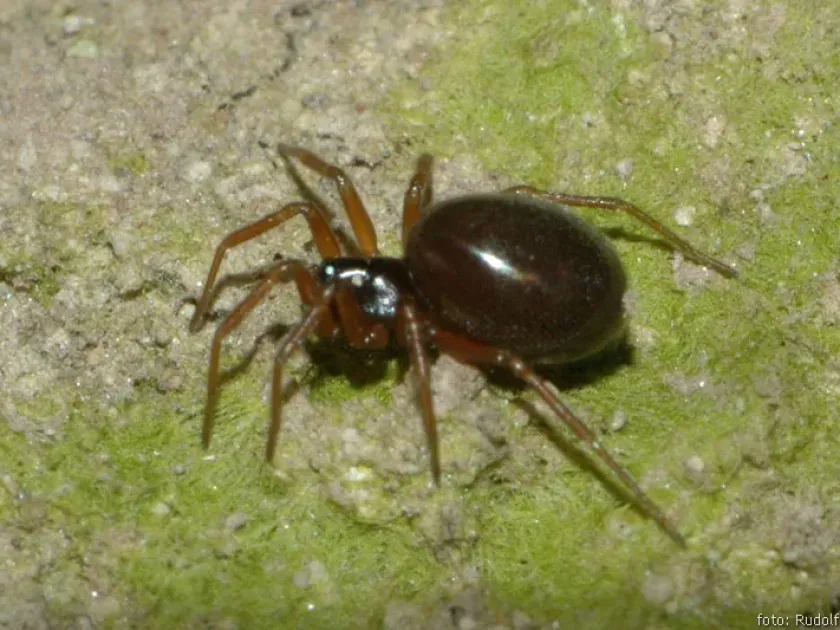
Description
How to identify
Oedothorax is a genus of tiny spiders belonging to the Linyphiidae family. In an agricultural context, they are often misidentified as pests due to their high density in crop fields, but they are actually beneficial predators.
These spiders are very small, typically measuring between 2 and 3 mm in length. Their body color is usually dark, ranging from brown to black, which helps them blend into the soil surface and plant debris.
Males often exhibit distinct modifications on their cephalothorax, which are critical diagnostic features for species identification under a microscope. In the field, they are easily overlooked due to their small size and cryptic habits.
They are known as sheet-web weavers, constructing small, horizontal, and often inconspicuous webs in the root zone or on the soil surface to capture their prey.
Their life cycle is highly dependent on soil moisture, and they thrive in well-managed fields with adequate vegetation cover and stable environmental conditions.
What it damages
It is crucial to understand that Oedothorax spiders do not damage crops. They do not feed on plant tissues, sap, or roots, and they cause no economic loss to agricultural yield.
Instead, these spiders function as active predators that contribute to the suppression of agricultural pests. They prey upon small insects, including aphids, dipteran larvae, and various soil-dwelling invertebrates.
Their presence in a crop field is a sign of a healthy, balanced agroecosystem where natural enemies are successfully regulating the populations of harmful organisms.
By consuming pest larvae and small insects, they perform a vital ecosystem service, potentially reducing the need for chemical insecticide applications.
The loss of these spider populations often occurs after the excessive use of broad-spectrum insecticides, which destabilizes the biological control within the field.
When it appears
The activity of Oedothorax begins in early spring as soon as the soil warms up. They are particularly active during periods of high humidity and rainfall.
Their population density typically peaks during the mid-summer months when crop canopy provides a favorable microclimate for their survival and reproduction.
They exhibit a high degree of cold tolerance, allowing them to remain active in winter crops well into the late autumn before deep frosts occur.
These spiders overwinter either as adults or late-stage nymphs, finding shelter in plant residues, beneath soil clods, or in non-crop field margins.
In irrigated farming systems, their period of activity can be significantly extended, maintaining stable populations throughout the entire growing season.
Signs of infestation
Since Oedothorax are beneficial predators and not pests, there are no specific signs of damage to crops (such as holes, wilting, or necrotic spots) associated with them.
The only sign of their presence is the subtle, horizontal spider silk stretched across the soil or between the lowest leaves of the plants, which often goes unnoticed.
High numbers of these spiders in pitfall traps indicate a robust presence of prey species, reflecting the biological richness of the agricultural environment.
A sudden decline in their population may be an indicator of habitat destruction, soil compaction, or the detrimental impact of chemical treatments.
Any damage observed on crops should be attributed to other species, as Oedothorax lack the morphology to feed on vegetation.
Control measures
No control measures are needed for Oedothorax spiders, as they are beneficial natural enemies that assist in protecting crops from pests.
- Minimize the use of broad-spectrum insecticides to preserve natural predator populations.
- Maintain field margins and hedgerows to provide refuge for beneficial arachnids.
- Adopt conservation tillage practices to preserve the soil surface structure.
- Implement integrated pest management (IPM) strategies to prioritize biological control.
- Regularly monitor beneficial species to avoid unnecessary chemical applications.
Taxonomy
- Latin name
- Oedothorax
- Family
- Linyphiidae
- EPPO code
- OEDOSP
Discussion
No discussions yet — be the first.