
Odontaleyrodes
Odontaleyrodes
Description
How to identify
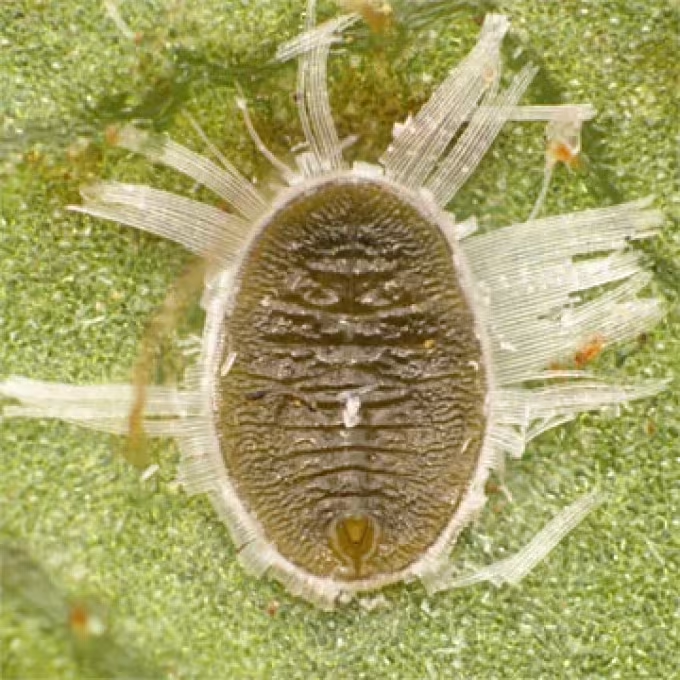
Odontaleyrodes is a genus of whiteflies belonging to the family Aleyrodidae within the order Hemiptera. These are tiny insects, where adults typically feature white wings covered in a waxy powder.
A distinctive feature of this genus is the presence of specific dentate structures on the puparia, which allows specialists to perform accurate identification under a microscope.
Externally, adult specimens resemble miniature moths, with their size rarely exceeding 1.5 to 2 millimeters.
Larvae of Odontaleyrodes lead a sedentary lifestyle, attaching firmly to the underside of the host plant's leaf surface.
They possess a flattened body, which is often translucent or yellowish, making them difficult to notice on the leaf without magnification.
What it damages
This pest affects a wide range of plants, including both ornamental species and various agricultural crops, such as citrus and tropical plants.
The greatest damage occurs in greenhouses and winter gardens, where ideal conditions for rapid population growth are provided.
The pest feeds on plant sap by piercing the leaf epidermis and sucking out nutrients, which leads to a weakening of the crop's overall metabolism.
In addition to direct exhaustion, Odontaleyrodes is a potential vector for viral diseases that can lead to the complete destruction of the plantings.
Sooty mold fungi often grow on the honeydew excreted by the insects, which impairs photosynthesis and reduces the market quality of the produce.
When it appears
The activity of Odontaleyrodes is directly dependent on the temperature regime and humidity levels in the surrounding environment.
Under greenhouse conditions, the pest is capable of reproducing year-round, completing multiple generations in a single season.
The most intense development is observed during warming periods when the air temperature remains consistently above 20–25 degrees Celsius.
Females lay eggs on the underside of leaves, attaching them to special stalks, which provides better protection against environmental factors.
The speed of the life cycle depends on the sum of active temperatures, so population outbreaks occur exponentially during hot summer months.
Signs of infestation
The first visual sign of infestation is the presence of white flying insects when shaking the branches or leaves of the plant.
On the underside of the leaves, clusters of larvae resembling small scales can be found, along with a sticky residue.
Gradually, affected leaves begin to turn yellow, curl, and drop prematurely, which leads to plant defoliation.
The presence of sooty mold, appearing as a dark, almost black coating on the leaves, is an indirect but reliable sign of a severe infestation.
General growth stunting and slowed shoot development indicate significant damage to the plant's vascular system.
Control measures
To control this pest, a comprehensive approach is recommended, combining agrotechnical, biological, and chemical methods.
An effective control method is the installation of yellow sticky traps, which attract and capture adult insects.
- Regular inspection of the underside of leaves for early population detection.
- Application of systemic insecticides during periods of active growth.
- Utilization of biological preparations based on entomopathogenic fungi to suppress larval stages.
- Maintaining optimal humidity levels and ensuring greenhouse ventilation to reduce favorable conditions for the pest.
It is crucial to rotate pesticides with different modes of action to prevent the development of insect resistance to chemical control agents.
Taxonomy
- Latin name
- Odontaleyrodes
- Order
- Hemiptera (bugs, aphids, leafhoppers)
- Family
- Aleyrodidae
- EPPO code
- ODOLSP
Discussion
No discussions yet — be the first.