
Japanese pear aphid
Nippolachnus pyri
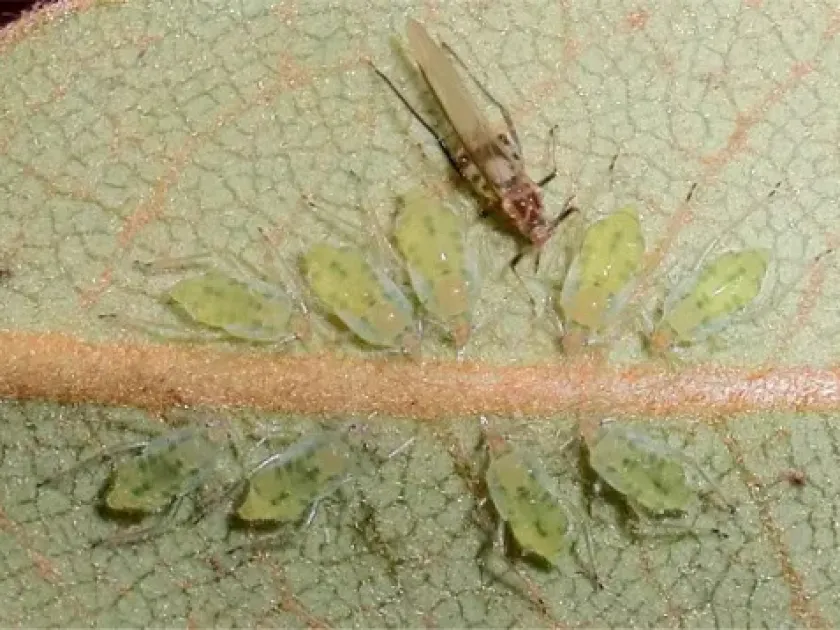
Description
How to identify
The Japanese pear aphid (Nippolachnus pyri) is a small insect belonging to the family Aphididae. It is a specialized pest primarily targeting pear trees within its geographical range.
Adult aphids exhibit a dark coloration, making them blend in with the bark or the undersides of leaves. Identifying them requires close inspection of their morphological features like their antennae and siphons.
The life cycle involves multiple generations, including both winged and wingless forms, allowing the species to spread efficiently throughout the orchard during the growing season.
These aphids tend to form dense colonies. Their social behavior and feeding patterns make them a persistent challenge for commercial pear producers.
Under laboratory conditions, entomologists analyze specific structural markers to differentiate Nippolachnus pyri from other common aphid species found in fruit orchards.
What it damages
The primary damage is caused by the aphids sucking sap from leaves and tender shoots, which disrupts the tree's metabolic functions and overall vigor.
Heavy infestations lead to leaf curling, chlorosis, and premature senescence. The withdrawal of essential nutrients significantly weakens the affected branches and buds.
Aphids secrete honeydew, a sugary substance that promotes the growth of sooty mold. This fungus creates a dark coating that prevents proper photosynthesis, further stressing the tree.
Continued feeding reduces the tree's ability to store energy for the winter, leading to lower fruit yields and poor quality in subsequent harvest cycles.
Severe infestations can lead to stunted shoot growth, which is particularly detrimental to young orchards that are still in the developmental phase.
When it appears
The seasonal activity begins in early spring, synchronized with the bud burst of pear trees, as nymphs emerge from overwintering eggs laid on the bark.
Population levels typically peak in early to mid-summer when temperatures are optimal for rapid reproduction and multiple generations can occur.
During the latter part of summer, the population often stabilizes or decreases due to environmental stressors and the increasing presence of natural predators.
As autumn approaches, the aphid population produces sexual generations that lay eggs designed to survive the harsh winter conditions on the tree branches.
The specific timing and intensity of the infestation cycles are heavily dependent on the regional climate and the meteorological conditions of each specific year.
Signs of infestation
The most immediate signs of infestation include the visible curling of leaves and the presence of concentrated dark clusters of aphids on the undersides of foliage.
A sticky, shiny residue on the leaves and branches, caused by aphid honeydew, is a hallmark sign that a large population is present and feeding.
The constant traffic of ants on the branches is a strong indicator of aphid presence, as ants protect the aphids to feed on the sugary secretions they produce.
- Curled and deformed pear leaves
- Presence of sticky honeydew coating
- Clusters of dark aphids on shoot tips and leaf undersides
- Increased ant activity on the tree trunks and branches
Regular orchard monitoring focusing on the lower leaf surface and new shoot growth is essential for early detection before the population reaches economic thresholds.
Control measures
Integrated pest management strategies should be prioritized, focusing on monitoring and the conservation of beneficial predatory insects like ladybirds and lacewings.
Chemical intervention involving systemic insecticides is effective when infestation levels threaten the health of the trees and future harvest potential.
Application of horticultural oils during the dormant season can effectively destroy overwintering eggs, reducing the initial pest population for the coming spring.
Proper orchard management, including thinning of the canopy to improve air circulation and careful nitrogen fertilization, can prevent overly succulent growth that attracts aphids.
Always adhere to local guidelines regarding pesticide use to protect pollinators and ensure that chemical control remains sustainable within the orchard ecosystem.
Taxonomy
- Latin name
- Nippolachnus pyri
- Order
- Hemiptera (bugs, aphids, leafhoppers)
- Family
- Aphididae
- EPPO code
- NIPPPY
Discussion
No discussions yet — be the first.