
Green rice leafhopper
Nephotettix nigropictus
Description
How to identify
The green rice leafhopper (Nephotettix nigropictus) is a member of the Cicadellidae family, order Hemiptera. This insect is a significant pest in rice-growing regions globally.
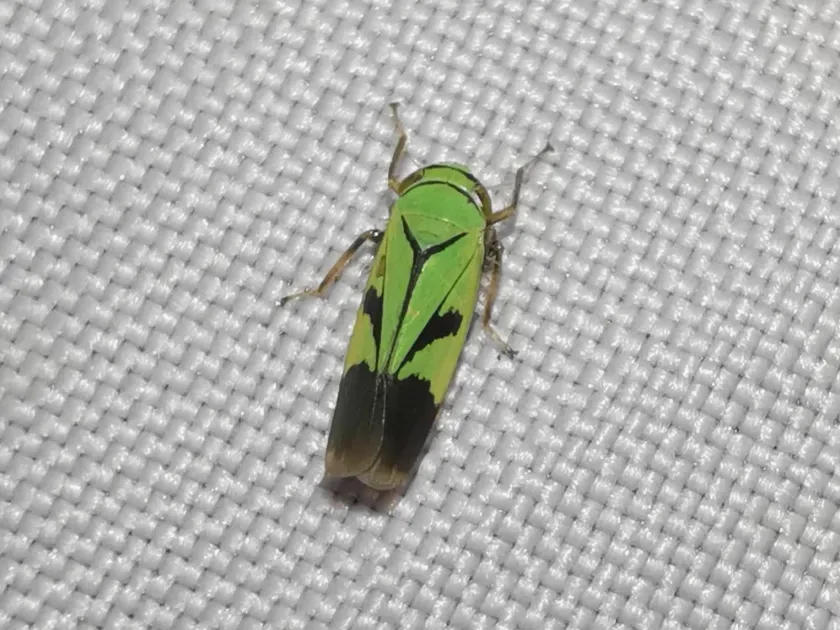
Adult leafhoppers are bright green, approximately 4–5 mm long. The head is distinct, often featuring a black transverse stripe, which is a key characteristic for field identification.
Their wings are transparent with a slight greenish tint. Males often exhibit dark spots on their forewings, while females tend to have a more uniform green appearance.
Nymphs resemble smaller adults without fully developed wings. They undergo five nymphal instars before reaching the adult stage, increasing in size during each molt.
These insects thrive in humid environments typical of paddy fields, making them highly adapted to the conditions found in rice-growing ecosystems.
What it damages
The primary host for this pest is the rice plant. They use their piercing-sucking mouthparts to extract sap from the leaves and stems of the crop.
In addition to rice, they can survive on various wild grasses found in and around rice fields, which often serve as alternative hosts during off-seasons.
The most severe impact is their role as vectors for viral diseases, most notably the rice dwarf virus, which can devastatingly reduce crop yield.
Feeding leads to leaf yellowing, stunting, and overall reduction in plant vigor, which directly affects the grain filling process.
Severe infestations can cause plants to dry out and die, particularly when the pest pressure coincides with the early growth stages of the rice crop.
When it appears
Green rice leafhoppers are active throughout the rice growing season, with population peaks occurring during warm and humid weather conditions.
The life cycle encompasses the egg, five nymphal stages, and the adult phase. Females lay eggs inside the leaf tissue or the leaf sheath of the rice plant.
Multiple generations can occur within a single cropping season, facilitating rapid population buildup if left uncontrolled by environmental factors or management.
They overwinter as adults or late-stage nymphs on perennial grasses or crop residues in areas that provide protection from cold temperatures.
Migration into rice fields usually peaks during the tillering and elongation phases, as the plants provide abundant nutritional resources for the leafhoppers.
Signs of infestation
The earliest signs of infestation include yellowing at the tips of the leaves and the appearance of chlorotic spots where the insects have been feeding.
Plants infected with viruses transmitted by these leafhoppers display classic symptoms such as severe stunting, reduced tillering, and failure to produce healthy panicles.
During the day, disturbing the rice foliage often causes the insects to jump or fly, making them easy to spot even when the population is low.
The presence of honeydew on the leaves may encourage the growth of sooty mold, which can further impede photosynthesis and damage the plant's health.
- Yellowing and rolling of leaf tips.
- Overall plant stunting and reduced height.
- Poor grain development and empty panicles.
- Presence of small green insects visible on the undersides of leaves.
Control measures
Cultural control involves the removal of alternative host weeds in and around the paddy fields, which reduces the reservoir of both pests and viruses.
Selecting and planting resistant rice varieties is one of the most effective strategies to minimize the impact of both the leafhopper and the viruses they carry.
Chemical control with systemic insecticides is often necessary when populations exceed the economic threshold, providing effective protection against sap-feeding.
Regular field scouting using light traps or sweep nets helps in detecting early arrivals, allowing for timely intervention before the population explodes.
Encouraging natural predators, such as spiders and parasitic wasps, plays a vital role in maintaining ecological balance and suppressing pest numbers naturally.
Taxonomy
- Latin name
- Nephotettix nigropictus
- Order
- Hemiptera (bugs, aphids, leafhoppers)
- Family
- Cicadellidae
- EPPO code
- NEPHNI
Discussion
No discussions yet — be the first.